






The Monsoon Mountain Dilemma
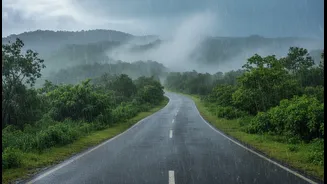
For many urban Indians, the monsoon season is a double-edged sword. While the rains bring respite from the summer heat, they also make travel to popular hill stations a risky affair. States like Himachal Pradesh and Uttarakhand, beloved for their verdant
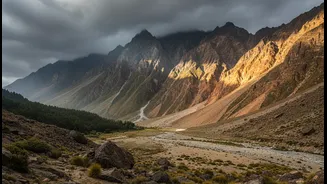
landscapes, become vulnerable to nature's fury. News headlines during July and August are often filled with reports of landslides, flash floods, and blocked roads, turning dream vacations into stressful ordeals. Recent advisories from meteorological departments frequently warn travellers about treacherous conditions in popular spots like Shimla, Manali, and Rishikesh, where heavy rainfall can lead to significant disruptions. This seasonal uncertainty has led discerning holidaymakers to look for alternatives that offer the charm of the mountains without the attendant dangers.
Geography’s Gift: The Rain Shadow Effect
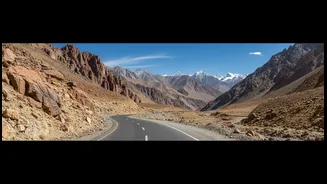
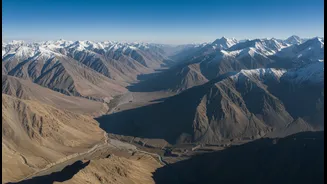
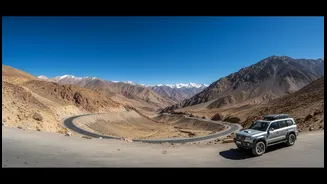
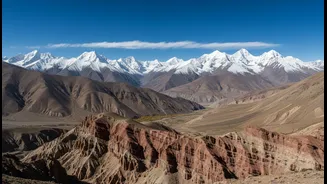
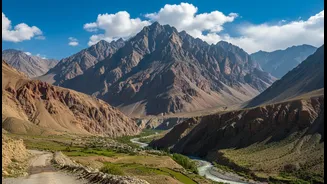
The secret to Spiti and Ladakh's monsoon appeal lies in a simple geographical phenomenon: the rain shadow effect. The towering Himalayan ranges act as a massive barrier, blocking the moisture-laden monsoon clouds that sweep across the subcontinent. As these clouds are forced to rise, they release their rain and snow on the windward side, leaving the land on the other side—the leeward side—high and dry. Ladakh, shielded by the Great Himalayan and Karakoram ranges, and Spiti, tucked behind the Pir Panjal range, are classic examples of such rain shadow regions. While the rest of the country is drenched, these cold deserts receive minimal rainfall, resulting in clear blue skies, sunny days, and open roads, making them ideal for travel when other Himalayan regions are virtually off-limits.
Ladakh: A Desert in Full Bloom
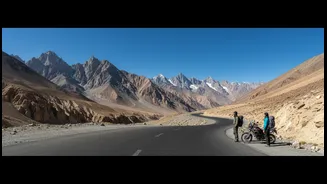
During the monsoon months of July and August, Ladakh transforms. The arid landscape, kissed by occasional light showers, reveals subtle bursts of life, with wildflowers and green patches appearing in the valleys. The weather is pleasant, with warm days perfect for exploring and cool nights for comfortable rest. Most importantly, all major tourist destinations and high passes, including Khardung La and Chang La, typically remain open and accessible. This allows travellers to visit iconic sites like Pangong Tso, Tso Moriri, and the Nubra Valley with fewer crowds than in the peak pre-monsoon season. The season also hosts vibrant cultural events, such as the Hemis Festival, offering a deep dive into the region's rich Buddhist heritage. This combination of accessibility, pleasant weather, and cultural richness makes Ladakh a prime monsoon destination.
Spiti Valley: A World Apart
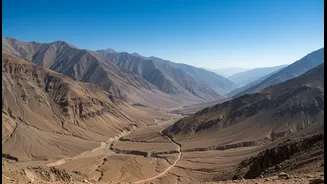
Similarly, Spiti Valley offers a surreal and starkly beautiful escape. Its high-altitude villages, ancient monasteries perched on cliffs, and moon-like landscapes provide an experience of profound tranquility. In July and August, when the approach roads are at their most reliable, Spiti is a haven for adventurers. While the approach from Shimla via Kinnaur is generally more stable, the Manali-Kaza route via Kunzum Pass also opens up, allowing for the completion of the classic Spiti circuit. The valley itself remains dry, allowing for uninterrupted exploration of landmarks like Key Monastery, the high-altitude villages of Komic and Hikkim, and the stunning Chandratal Lake, whose access road usually opens in June. The relative lack of tourists compared to the summer rush means a more intimate and peaceful journey.
A Note of Caution
While Ladakh and Spiti are significantly safer, they are not entirely without risk. The term "landslide-free" is relative. The approach roads to these regions, particularly the Manali-Leh and the Shimla-Spiti highways, pass through areas that do receive heavy monsoon rains. Landslides and road blockages can and do occur on these stretches, often causing delays. Furthermore, climate change is leading to shifting weather patterns, with Ladakh reportedly experiencing wetter monsoons in recent years, increasing the risk of localised flash floods. Travellers must plan for unpredictability by building buffer days into their itineraries, checking road status before travelling, and respecting the raw power of the Himalayan environment. High altitude also requires proper acclimatisation to prevent sickness.