



Beyond the Lone Wanderer
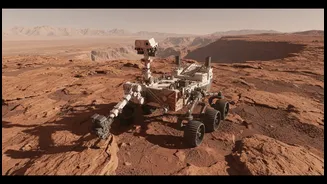
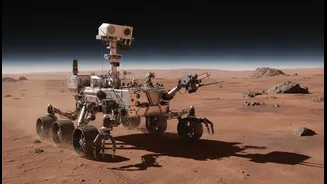
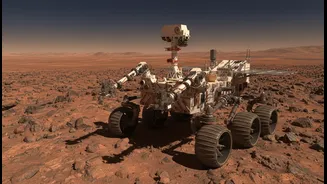
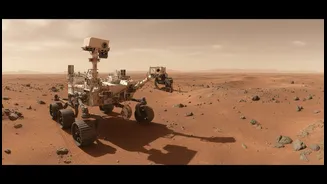
From the small Sojourner in 1997 to the car-sized Curiosity and Perseverance rovers, our robotic emissaries on Mars have been solitary explorers. These incredible machines have fundamentally rewritten our understanding of the Red Planet, confirming that
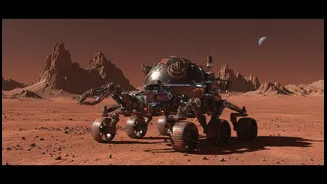
it once had conditions suitable for life. Perseverance, for example, is currently collecting rock and soil samples in Jezero Crater that could hold clues to past biological activity. However, these single, highly complex rovers are limited. They are slow, methodical, and cannot access high-risk areas like steep crater walls, caves, or rugged terrain, which may hold some of the most compelling scientific secrets.
A New Strategy: Strength in Numbers
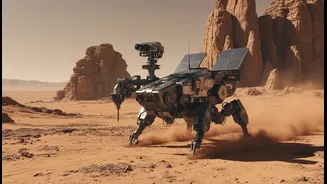
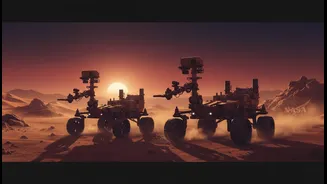
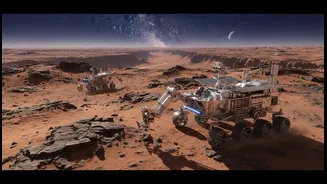
Recognising these limitations, NASA is championing a new philosophy for exploration. Instead of putting all their capabilities into one large rover, the future lies in distributed, collaborative robotic systems. A recently announced initiative called STRIDE (Science Transport and Robotic Innovation for Deployment and Exploration) perfectly encapsulates this shift. In early July 2026, NASA selected seven companies to develop next-generation robotic mobility systems. The goal is to create technologies that enable access to challenging terrain and allow for much greater travel distances, opening up vast new regions of Mars for scientific investigation.
Meet the Robotic Team
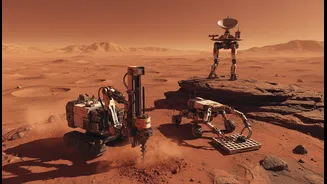
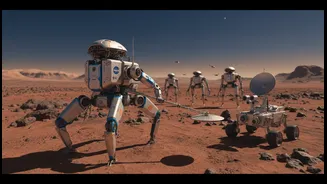
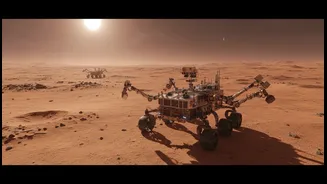
So, what does this new robotic team look like? The concepts are varied and specialised. One key element is the use of smaller, more agile scouts. A project called CADRE (Cooperative Autonomous Distributed Robotic Exploration) is developing shoebox-sized rovers that can work together autonomously. Though initially being tested on the Moon, this technology is designed for Mars, where teams of these small robots could swarm out from a larger lander to map areas or investigate features too dangerous for a primary rover. Another critical component is aerial exploration. Building on the stunning success of the Ingenuity helicopter, future missions like the proposed SkyFall concept could deploy multiple, more advanced rotorcraft to scout ahead and gather data from the air.
The Mars Sample Return Blueprint
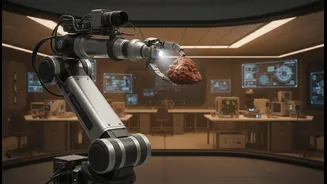
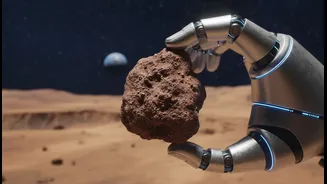
The most concrete example of this new multi-robot approach is the ambitious Mars Sample Return (MSR) campaign, a joint effort between NASA and the European Space Agency (ESA). This is not a single mission but a complex, multi-stage relay race involving several robotic players. It starts with the Perseverance rover collecting samples. Later, a Sample Retrieval Lander will arrive, deploying a small ESA-built "fetch rover" to gather the sample tubes. A sophisticated robotic arm will then load these samples into a small rocket, the Mars Ascent Vehicle, which will blast them into orbit where another spacecraft, the Earth Return Orbiter, will capture the container and fly it back to Earth. This entire sequence is a tightly choreographed dance between multiple, specialised robotic systems.
A Faster, Smarter, Wider Search
This shift to cooperative robotics will dramatically accelerate the pace of discovery on Mars. Teams of robots can cover more ground, share data, and build comprehensive 3D maps of their surroundings without constant input from mission control on Earth. This autonomy is crucial for exploring distant worlds where communication delays can take many minutes. By deploying specialised systems—some that fly, some that climb, and some that dig—NASA can conduct a more thorough and efficient search for signs of past life and the resources, like water ice, that would be essential for future human explorers. This new paradigm is not just about replacing old rovers but about building a versatile, resilient robotic ecosystem on another world.