





The Paradox of a Cold Desert
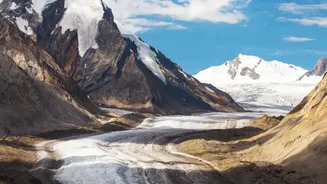
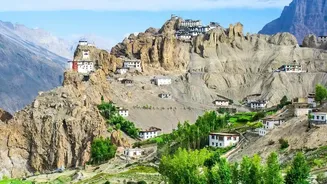
Ladakh is a cold desert, receiving less than 100 mm of rainfall annually. For centuries, its communities have relied on a predictable natural cycle: winter snow feeds glaciers, and these glaciers melt in the spring and summer, providing water for agriculture
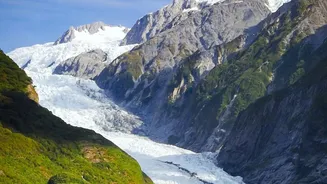
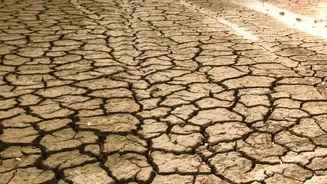
and daily life. However, climate change is disrupting this delicate balance. Glaciers are receding at an alarming rate, and winter snowfall has become erratic. The result is a dangerous seasonal mismatch: natural meltwater now often arrives too late for the critical spring sowing season, leaving farmers without the water they desperately need to plant crops like barley and apples. This threatens the very foundation of life and livelihoods in the region.
What Is an Ice Stupa?
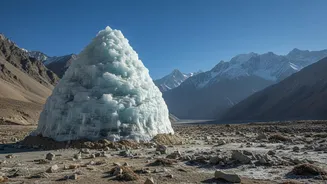
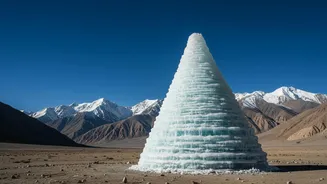
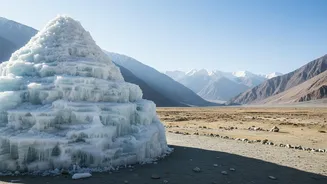
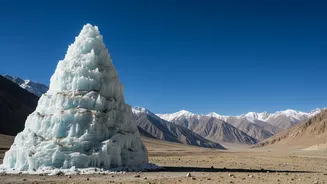
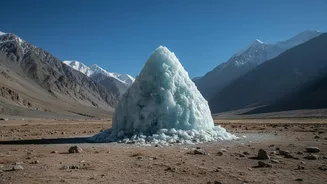
Enter the ice stupa, a revolutionary form of artificial glacier pioneered by Ladakhi engineer Sonam Wangchuk in 2013. Named for their resemblance to traditional Buddhist stupas, these are massive, cone-shaped mounds of ice built during the harsh winter months. Unlike earlier attempts at creating horizontal artificial glaciers, which required high altitudes and specific shady conditions to survive, the stupa’s conical shape is a stroke of genius. It minimises the surface area exposed to the direct sun, allowing the ice to melt much more slowly and last well into the warmer months, precisely when water is most scarce.
Simple Engineering, Profound Impact
The technology behind the ice stupa is elegantly simple and requires no electricity. A network of underground pipes channels water from streams at higher elevations during the winter, when this water would otherwise flow away unused. Using the power of gravity, the water is carried downstream to a lower, colder altitude. There, it is sprayed upwards from a vertical pipe into the sub-zero air. The water freezes almost instantly as it falls, gradually building up a towering cone of ice that can be over 30 metres high and store millions of litres of water. The first prototype, built in 2014, stored 150,000 litres and lasted until mid-May, proving the concept's viability.
A Lifeline for a Thirsty Land
The true importance of the ice stupa lies in its function as critical infrastructure for climate adaptation. As the spring sun gets stronger, the stupa begins to melt slowly, releasing a steady stream of water. This meltwater recharges groundwater tables and feeds the irrigation channels used by farmers during the crucial planting season from April to May. Each stupa can potentially irrigate dozens of acres of land, supporting the cultivation of profitable crops and thousands of newly planted trees. This provides a reliable water source exactly when nature’s failing system can no longer be counted on, bridging the dangerous gap between the end of winter and the late arrival of natural glacial melt.
From Local Idea to Global Model
The success of the ice stupa project, led by Wangchuk and his NGO, the Students' Educational and Cultural Movement of Ladakh (SECMOL), has garnered global recognition, including a Rolex Award for Enterprise. The initiative has since scaled up, with dozens of stupas now operational across Ladakh. More importantly, the concept has become a powerful symbol of community-driven, nature-based solutions. The project is being replicated in other mountain regions facing similar water crises, including Switzerland. It demonstrates how indigenous knowledge combined with modern science can create sustainable and effective responses to the urgent challenges posed by a changing climate.