

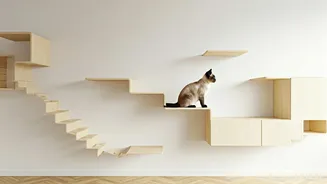




Why Cats Need to Climb
For our feline friends, height is power. In the wild, climbing is a fundamental survival skill. Cats climb to survey their territory for prey, to watch for predators, and to find safe, secluded spots to rest. This instinct doesn't disappear just because
they live indoors with a guaranteed food bowl and no natural enemies. An indoor cat without opportunities to climb is like a bird that can't fly; a core part of its identity is suppressed. By providing vertical space, you are not just giving them a toy; you are honouring their deep-seated biological and psychological needs. This vertical world gives them a sense of security and control over their environment, which is crucial for a happy, well-adjusted pet.
The Benefits of a Vertical World
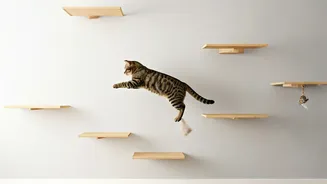
Building a cat wall is more than just an aesthetic project; it's a wellness initiative. The benefits are immense. Firstly, it’s a fantastic form of exercise. Leaping between shelves and navigating bridges keeps your cat physically active, helping to manage weight and maintain muscle tone. Secondly, it drastically reduces boredom and stress, which are often the root causes of behavioural issues like excessive grooming, aggression, or destructive scratching. A stimulated cat is less likely to shred your sofa. In multi-cat households, vertical spaces are a game-changer. They expand the available territory, allowing cats to establish their own zones and avoid conflict. A high perch can act as a safe retreat for a timid cat, giving it a place to observe the household chaos from a safe distance.
Planning Your Cat Superhighway
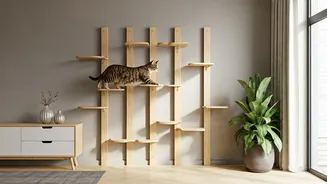
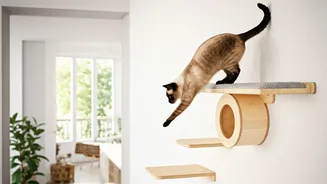
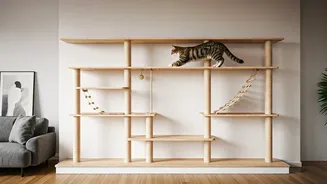
Before you drill a single hole, take some time to observe your cat. Where do they already like to perch? What paths do they take through the house? Your design should create a logical flow. A good cat highway has multiple entry and exit points, so your cat never feels trapped. Plan a route that connects key areas, perhaps from a window perch to a high shelf above a doorway. Mix and match different elements. Simple shelves can act as steps, a long plank can become a bridge, and a wall-mounted cat hammock or a small box can provide a cozy destination for a nap. Sketch out your ideas on paper, measuring your wall space to ensure everything fits. Think of it as designing a custom playground tailored to your cat's personality.
DIY vs. Store-Bought: Your Options
The choice between building from scratch and buying pre-made modules depends on your budget, time, and DIY skills. Going the DIY route can be incredibly rewarding and cost-effective. Simple wooden planks from a hardware store, sturdy L-brackets, and some carpet remnants for grip are all you need to get started. You have complete creative control to design a system that perfectly fits your space and decor. However, if power tools aren't your friend, there is a vast market for modular cat wall furniture. Companies now offer beautifully designed shelves, steps, bridges, and beds that you can mix and match. While more expensive, these systems are professionally designed for safety and are often easier to install, coming with all the necessary hardware and instructions. Many options are available on e-commerce platforms in India, catering to various styles and budgets.
Safety is Non-Negotiable
This is the most critical step. A poorly installed shelf can be dangerous for your pet and your family. The golden rule is to anchor everything securely to the wall. Whenever possible, screw brackets directly into wall studs—the solid wood beams behind your plaster or drywall. Use a stud finder to locate them. If a stud isn't available where you need a shelf, use heavy-duty wall anchors appropriate for your wall type (brick, concrete, or drywall). Never rely on a simple nail. Once installed, test every single component. Put your full weight on it (or as much as you safely can) to ensure it’s solid before you let your cat explore. Sand down any rough edges on wood and make sure all surfaces provide good grip. A layer of carpet, sisal rope, or even non-slip paint can prevent falls.