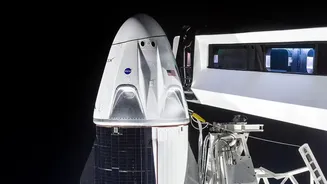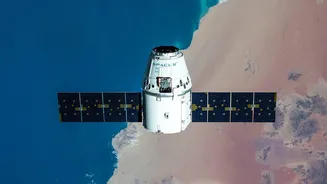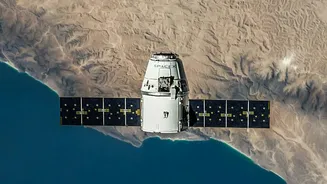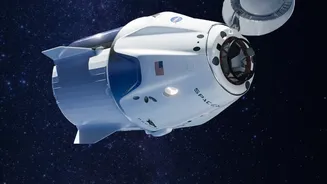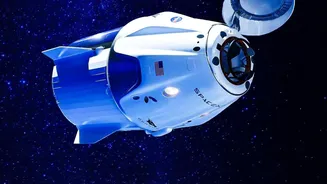


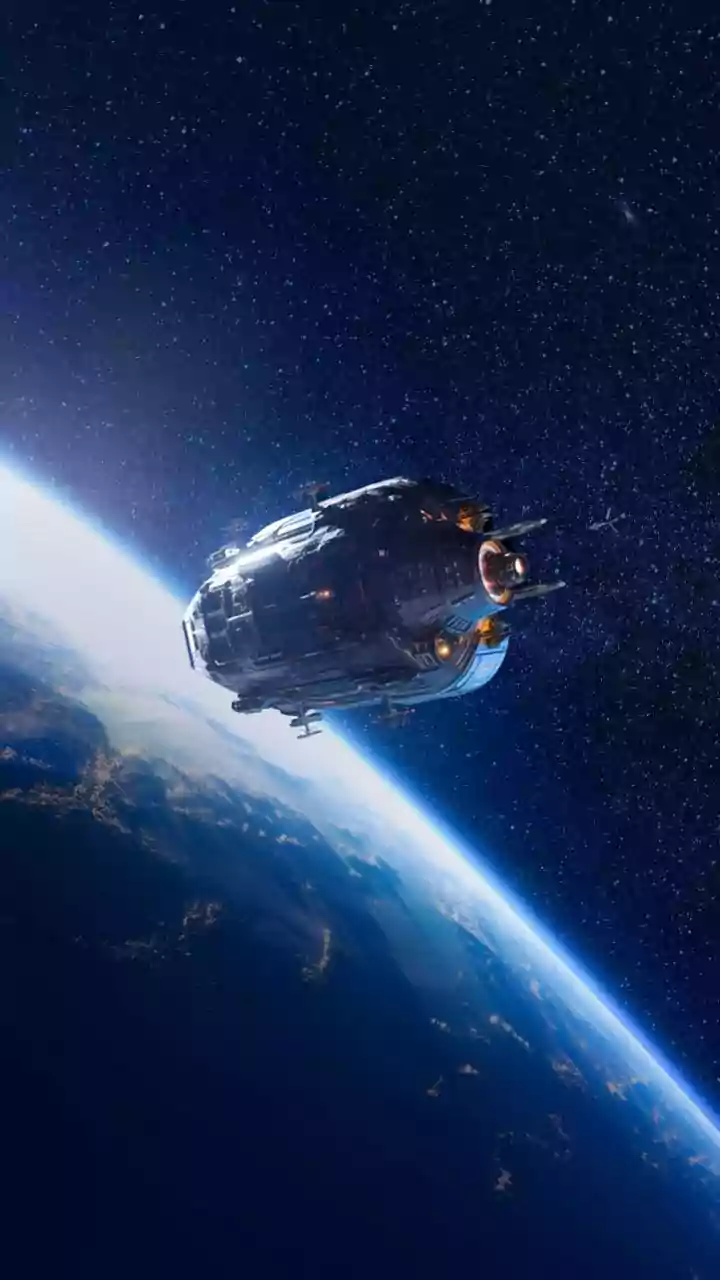

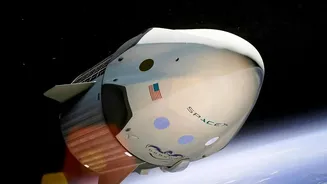
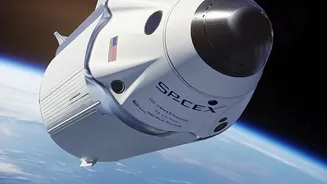

The thirty-fifth successful cargo run for SpaceX has concluded, with its Dragon spacecraft splashing down safely in the Pacific Ocean on November 21. The mission was more than just a delivery service; it was a crucial link in a chain of science.
A Perfect Return to Earth
After
undocking from the International Space Station (ISS) on November 20, the uncrewed SpaceX Dragon capsule began its 29-hour journey home. Ground controllers at SpaceX's facility in California monitored the craft as it performed a series of thruster firings to position itself for re-entry. Plummeting through the atmosphere, the capsule successfully deployed its parachutes and made a gentle splashdown off the coast of California. Recovery teams were quickly on site to retrieve the vehicle, which was packed with thousands of pounds of precious scientific cargo. This particular Dragon spacecraft was a seasoned veteran, having now completed its fourth trip to the orbiting laboratory and back.
Delivering Power and Provisions
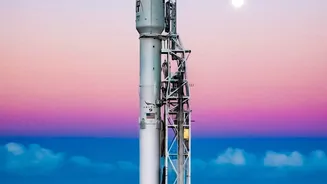
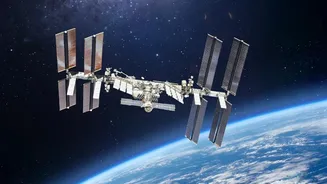
Launched on October 13 from Cape Canaveral, Florida, the CRS-35 mission carried over 6,300 pounds of supplies and hardware to the astronauts aboard the ISS. Among the most significant items in its unpressurized trunk were the final two International Space Station Roll-Out Solar Arrays (iROSAs). These new arrays complete a major power-grid upgrade for the aging station, increasing its power generation capacity by about 30 percent and ensuring it can support expanded research for years to come. The pressurized capsule contained fresh food for the crew, vehicle hardware, and a host of new scientific investigations, from materials science to student-led experiments.
Bringing Groundbreaking Science Home
While the deliveries are vital, the Dragon's unique ability to return cargo to Earth intact is what makes these missions invaluable for science. The CRS-35 return manifest reads like a wish list for researchers across multiple fields. It included a 3D-bioprinted blood vessel construct used to study cardiovascular disease in microgravity. Scientists will also analyze frozen tumor organoids that were treated with experimental drugs aboard the station, hoping to find new pathways for cancer treatment and personalized medicine. Also on board were frozen microbial samples to understand how antibiotic-resistant bacteria adapt in space, and a specialized lighting system, tested for over three years on the station to see how it can improve astronaut sleep and well-being.
The Commercial Resupply Lifeline
The success of CRS-35 is another testament to NASA's Commercial Resupply Services (CRS) program. After the Space Shuttle's retirement in 2011, NASA needed a new way to keep the ISS supplied. Instead of building its own vehicle, the agency chose to buy delivery services from private companies. This public-private partnership model, initiated through the Commercial Orbital Transportation Services (COTS) program, spurred innovation and competition, leading to SpaceX's Dragon and Northrop Grumman's Cygnus spacecraft becoming the station's primary logistics providers. The program not only restored America's ability to deliver cargo to the ISS but did so cost-effectively, allowing NASA to focus on deep space exploration. The reliability of these missions has transformed access to low-Earth orbit into a routine and dependable service.