

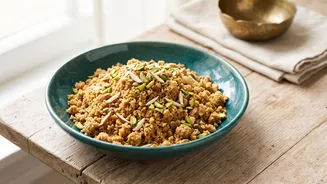
Dhaniya Panjiri
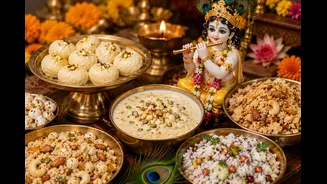
A quintessential Janmashtami prasad, Dhaniya Panjiri is a unique and aromatic sweet made from coriander powder. This nutritious offering is often used to break the fast at midnight. To prepare it, heat about half a cup of ghee in a pan and roast one cup of coriander powder on a low
flame until it turns golden and fragrant. Mix in a quarter cup of chopped dry fruits like almonds, cashews, and raisins, roasting for another few minutes. Some variations also include dried coconut or makhana (fox nuts). Let the mixture cool slightly before adding half a cup of powdered sugar and a teaspoon of cardamom powder. Mix well, and your fragrant Panjiri is ready to be offered. It’s a simple, no-fuss recipe that embodies the spirit of the festival.
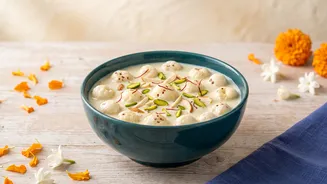
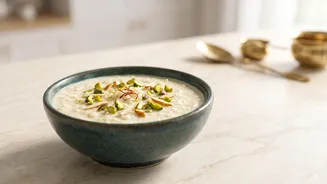
Makhana Kheer
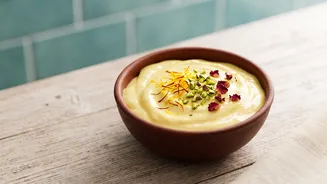
This creamy and delicious pudding is a popular choice for festivals, especially since makhana (fox nuts) are suitable for those observing a fast. Start by roasting one cup of makhana in a tablespoon of ghee until they become crisp. You can lightly crush about half of them to help thicken the kheer. In a separate pot, bring half a litre of milk to a boil. Add the roasted makhana and let it simmer until the fox nuts are soft and the milk has reduced. Stir in sugar to taste, along with a pinch of cardamom powder and your favourite chopped nuts like almonds and pistachios. Continue to simmer for another five to seven minutes until the sugar dissolves completely and the kheer reaches a desirable consistency. It can be served warm or chilled.
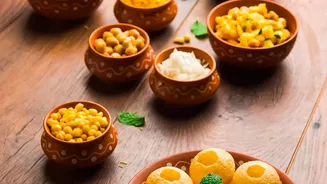
Gopalkala (Dahi Poha)
Gopalkala is a savoury dish believed to be a favourite of Lord Krishna. It’s a refreshing and easy-to-make preparation that requires no cooking, making it a perfect last-minute addition to your bhog thali. To make it, start by soaking one cup of poha (beaten rice) in water for a few minutes, then draining it completely. In a bowl, combine the soaked poha with half a cup of yogurt, finely chopped cucumber, and grated fresh coconut. For the tempering, heat a teaspoon of ghee and add cumin seeds, letting them crackle before adding finely chopped green chillies. Pour this tempering over the poha mixture, add salt to taste, and garnish with fresh coriander leaves. Mix everything well before serving.
Makhan Mishri
No Janmashtami bhog is complete without Makhan Mishri, an offering that pays homage to Krishna's famous love for butter, earning him the name 'Makhan Chor' (Butter Thief). This is perhaps the simplest prasad to prepare, symbolising purity and sweetness. It involves just two ingredients: fresh, unsalted white butter (makhan) and rock sugar (mishri). To prepare it, simply take fresh, softened white butter and gently mix in the mishri. The contrast between the creamy butter and the crunchy rock sugar is what makes this offering so special. This uncooked preparation is deeply connected to the stories of Krishna's childhood and is a central part of the midnight puja.
Panchamrit
Panchamrit, which translates to 'five nectars', is a sacred concoction used in Hindu rituals and is an indispensable part of the Janmashtami puja. It is made by combining five pure ingredients: raw milk, yogurt (curd), honey, ghee (clarified butter), and sugar. To prepare it, simply mix one cup of milk with two tablespoons each of curd, honey, and ghee, and one tablespoon of sugar in a clean bowl. It’s important to stir the ingredients gently rather than whipping them. Some recipes also include torn tulsi leaves or makhana. This holy mixture is first used for the 'abhishek' (ritual bathing of the idol) and is then distributed among devotees as prasad.
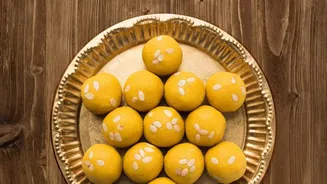
Coconut Ladoo
For a quick, easy, and universally loved sweet, Coconut Ladoos are a fantastic choice. These can often be made in under 20 minutes with just a few ingredients. A simple method involves mixing two cups of desiccated coconut with about a cup of condensed milk in a pan. Cook this mixture on a low flame, stirring continuously for about five to seven minutes until it thickens and starts leaving the sides of the pan. Add a pinch of cardamom powder for fragrance. Turn off the heat and let the mixture cool down just enough so you can handle it. Grease your palms with a little ghee, take small portions of the mixture, and roll them into firm, round ladoos. You can roll the finished ladoos in some more desiccated coconut for a classic look.