



Nolen Gurer Payesh from Bengal
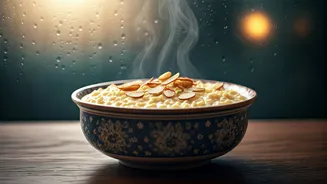
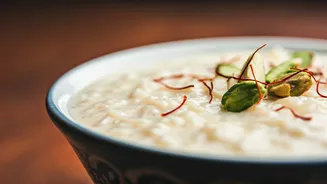
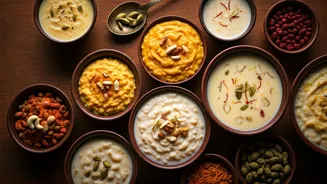
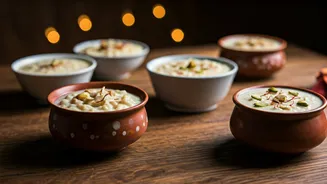
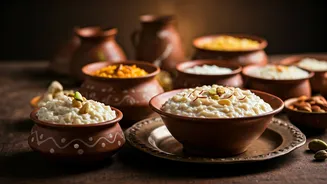
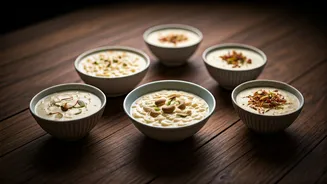
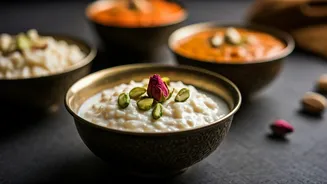
Our first stop is West Bengal, the land of sweets, for a taste of the iconic Nolen Gurer Payesh. Unlike kheer sweetened with regular sugar, this delicacy gets its soul of nolen gur, or date palm jaggery. [16] This special jaggery, available in winter
but enjoyed year-round, imparts a unique smoky aroma and a rich, caramel-like flavour that is simply divine. [20, 16] Traditionally made with fragrant Gobindobhog rice, the payesh is slow-cooked in full-fat milk until it's thick and creamy. [13, 22] The rice grains become incredibly soft, and the milk reduces to a velvety consistency, creating a dessert that is more about the richness of the milk and jaggery than a profusion of dry fruits. [13, 17] It's the perfect warm hug in a bowl on a rainy day.
Ada Pradhaman from Kerala
Journeying south to the lush landscapes of Kerala, we find Ada Pradhaman, a star of the Onam sadya feast. [25] This kheer, or payasam as it's known locally, is a world away from its northern counterparts. Instead of regular milk and sugar, its foundation is a rich blend of coconut milk and jaggery. [18, 25] The 'ada' are flakes or pasta made of rice, which are cooked until soft and then simmered in the sweet, luscious coconut milk and jaggery syrup. [21, 25] Often garnished with cashews, raisins, and tiny pieces of coconut fried in ghee, Ada Pradhaman has a syrupy, luxurious consistency and a complex flavour that is both sweet and deeply earthy. [14, 23] It’s a true taste of the coast, best enjoyed warm as the rain patters outside.
Gil-e-Firdaus from Hyderabad
From the royal kitchens of Hyderabad comes Gil-e-Firdaus, which translates to 'Clay of Paradise'. This dessert certainly lives up to its heavenly name. It’s a creamy, rich pudding that features an unusual but brilliant main ingredient: bottle gourd, or lauki. [4, 11] Grated bottle gourd is cooked until tender and then combined with milk, thickened with coarsely ground basmati rice and sometimes sago pearls (sabudana). [10, 15] This mixture is slow-cooked until it reaches a thick, pudding-like consistency. [15] Often flavoured with cardamom and saffron, and enriched with khoya or condensed milk, Gil-e-Firdaus is a testament to the sophisticated culinary heritage of the region. [4, 11] Served chilled, it offers a refreshing yet decadent experience.
Lauki ki Kheer from North India
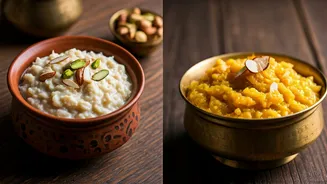
While Hyderabad has its own royal version, a simpler but equally beloved Lauki ki Kheer is a staple in many North Indian homes, especially during fasting periods like Navratri. [29] This version is a wonderful example of turning a humble vegetable into a delightful dessert. [26] Tender bottle gourd is grated, squeezed of its excess water, and then sautéed in ghee before being simmered in milk until soft. [24, 28] As the milk thickens and the lauki becomes tender, the kheer is sweetened with sugar and flavoured with cardamom powder and perhaps a dash of rose water. [27] Garnished with almonds and pistachios, it's a lighter, comforting kheer that proves simple ingredients can create something truly special. [29]
Shufta from Kashmir
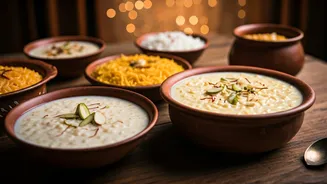
Finally, we travel to the crown of India, Kashmir, for a dessert that redefines the concept of kheer. Shufta is not a milky pudding but a luxurious, rich concoction of various dry fruits and nuts. [5, 6] Almonds, walnuts, cashews, dried dates, and raisins are soaked and then lightly fried in ghee along with pieces of coconut and paneer. [5, 9] This nutty mixture is then simmered in a fragrant sugar syrup spiced with cinnamon, black pepper, and saffron. [5, 7] The result is a warm, crunchy, and intensely flavourful dessert that is perfect for providing energy and warmth, making it an ideal treat for a cool, rainy evening. [5]