


The Persistent Threat to Indian Harvests
In agricultural heartlands like Punjab and Maharashtra, farming isn't just a job; it's the backbone of the regional economy. However, crop yields face a relentless enemy in the form of pests and diseases. Estimates suggest that these issues cause a staggering
20–40% of global crop losses annually. For a smallholder farmer, identifying a mysterious spot on a leaf or unusual wilting can be a race against time. Traditional methods often involve guesswork or waiting for an agricultural extension officer, which can be slow and costly. A wrong diagnosis might lead to the use of ineffective pesticides, wasting money and potentially harming the crop further.
A Digital Doctor in Your Pocket
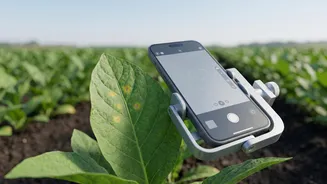
The solution highlighted in the headline is not a futuristic, expensive gadget but an application of artificial intelligence on a device most people already own. Agritech companies and non-profits are developing mobile apps that turn a smartphone's camera into a powerful diagnostic sensor. Farmers can simply take a photo of an affected plant part, upload it to an app, and within seconds, an AI-driven analysis provides a probable diagnosis and a recommended course of action. This technology effectively puts a crop expert in every farmer's hand, available 24/7.
How AI Powers the Diagnosis
The magic behind these apps is a form of AI called deep learning, specifically using computer vision. These AI models are 'trained' on massive, curated datasets containing millions of images of plants in both healthy and diseased states. By analyzing these images, the algorithm learns to recognize the subtle visual patterns—like discoloration, spots, or lesions—associated with specific diseases or nutrient deficiencies. Apps like Plantix, developed by German agritech firm PEAT, have built a database of over 800 symptoms across 60 crop types, with a significant user base in India helping to refine the system. The more images the system processes, the smarter and more accurate it becomes.
From Lab to Land: The Maharashtra and Punjab Story
While the technology is global, its application is distinctly local. In Maharashtra, the Wadhwani Institute for Artificial Intelligence, a Mumbai-based non-profit, has been a key player. Their CottonAce app, for instance, helps farmers identify and manage pest infestations in cotton crops. By uploading images of pests caught in traps, the app's AI can determine the severity of the threat and suggest appropriate action. Similarly, the Plantix app has seen significant adoption in Maharashtra, where it has helped cotton farmers diagnose fungal diseases and has been used to track the spread of pests like the pink bollworm. In Punjab, a developer created Fasal Doctor, a crop disease detection app that works entirely offline, providing diagnosis and treatment plans in Punjabi for local farmers. Other startups like AgNext Technologies, based in Mohali, Punjab, also use AI for food quality assessment, showing the region's growing agritech ecosystem.
The 'Low-Cost' and 'Small AI' Advantage
The true innovation lies in its accessibility. Many of these apps are free or available at a very low cost, a stark contrast to expensive lab tests or crop losses. This approach is often referred to as "small AI"—affordable tools designed to solve specific, local problems without needing massive computing power or perfect internet connectivity. Some apps, like Wadhwani AI's CottonAce, are designed to work offline, a critical feature for rural areas with unreliable network coverage. By compressing complex models, these powerful diagnostic tools can be less than 5MB in size, making them easy to download and run on basic smartphones. This democratizes access to crucial agricultural information.
Hurdles on the Path to Adoption
Despite the immense potential, widespread adoption faces several challenges. Digital literacy remains a barrier for some farmers. Building trust in a digital tool over generations of traditional knowledge requires time and proven results. Furthermore, the accuracy of these AI models depends heavily on the quality and diversity of their training data. An app trained on images from one region may be less accurate for crop varieties or diseases in another. Ensuring these apps support local languages and provide locally relevant treatment advice is crucial for their success. Finally, consistent internet access, while improving, is still not a given in all agricultural areas of India.