

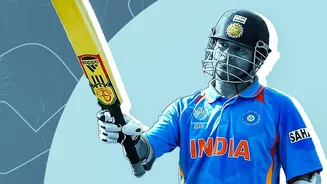
A Question of Temperament
One of the most cited reasons, often alluded to by Tendulkar himself, is a matter of temperament. Great players do not always make great coaches. A genius often operates on a level of instinct and innate understanding that is incredibly difficult to teach.
Tendulkar’s approach to batting was a product of immense talent refined by relentless, almost obsessive, practice. The challenge for such a player is to simplify their complex thought processes for 15 different individuals in a squad. There’s a prevailing theory that Tendulkar, whose own standards were stratospheric, might find it frustrating if players couldn't grasp or execute concepts that came so naturally to him. His two stints as captain, which were not as celebrated as his batting career, are sometimes pointed to as evidence that leadership and management roles may not be his natural calling.
The Mentor, Not The Manager
This isn't to say Tendulkar has completely disconnected from nurturing talent. His chosen method of engagement is telling. For years, he has served as a mentor and icon for the Mumbai Indians in the IPL. This role allows him to offer high-level guidance, share his immense experience during crucial moments, and inspire players without getting bogged down by the daily administrative grind of a head coach. A coach is responsible for everything from net sessions and team selection to media duties and managing player dynamics. A mentor, on the other hand, can pick his moments to intervene, offering wisdom from a more detached, respected position. This setup seems to be the perfect compromise for Tendulkar, allowing him to contribute meaningfully on his own terms.
The Unrelenting Pressure Cooker
The job of the Indian cricket coach or chief selector is arguably one of the most high-pressure roles in world sport. After spending 24 years under the microscope, carrying the expectations of a billion people with every innings, it's understandable that Tendulkar would not want to step back into a similar, if not more intense, cauldron of scrutiny. Selectors and coaches are constantly critiqued, with every decision debated on prime-time television and across social media. While Tendulkar faced immense pressure as a player, the nature of a selector’s or coach’s job is different—it involves making unpopular decisions that directly affect players' careers, a task that invites a unique and often toxic brand of public criticism.
A Life Beyond the Boundary Rope
After a grueling international career that kept him on the road for more than two decades, a desire for a different pace of life is a significant factor. Coaching the Indian team is a 300-day-a-year job, involving constant travel and immense time away from family. Tendulkar has embraced life after retirement, dedicating time to his family, various business ventures like his clothing line, and philanthropic activities. He has been an owner of the Kerala Blasters in the ISL, launched a sports management company, and acted as an ambassador for social causes. These commitments show a man keen on exploring interests beyond the 22-yard pitch, something a full-time coaching role would make nearly impossible.
The Shadow of 'Conflict of Interest'
In the modern landscape of Indian cricket administration, the 'conflict of interest' clause is a major hurdle. When Ravi Shastri became head coach, he reportedly expressed a desire to have Tendulkar as a consultant. However, Tendulkar was part of the Cricket Advisory Committee (CAC) at the time, and his various other professional commitments would have made such a role complicated. To take on a formal position with the BCCI, he would likely need to divest from his other roles, including his long-standing association with the Mumbai Indians—a significant step that he may be unwilling to take for a short-term or consultant position.