



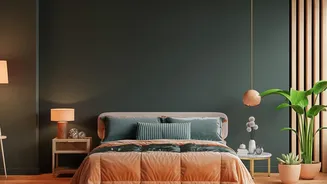
Prioritise the Window
The most important element for a light-filled room is the window itself. The golden rule is to ensure your largest pieces of furniture don't obstruct this primary light source. Avoid placing a tall bookshelf or a bulky wardrobe directly beside the window where
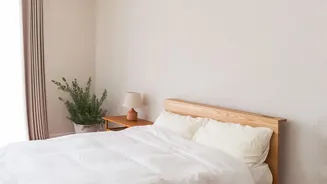
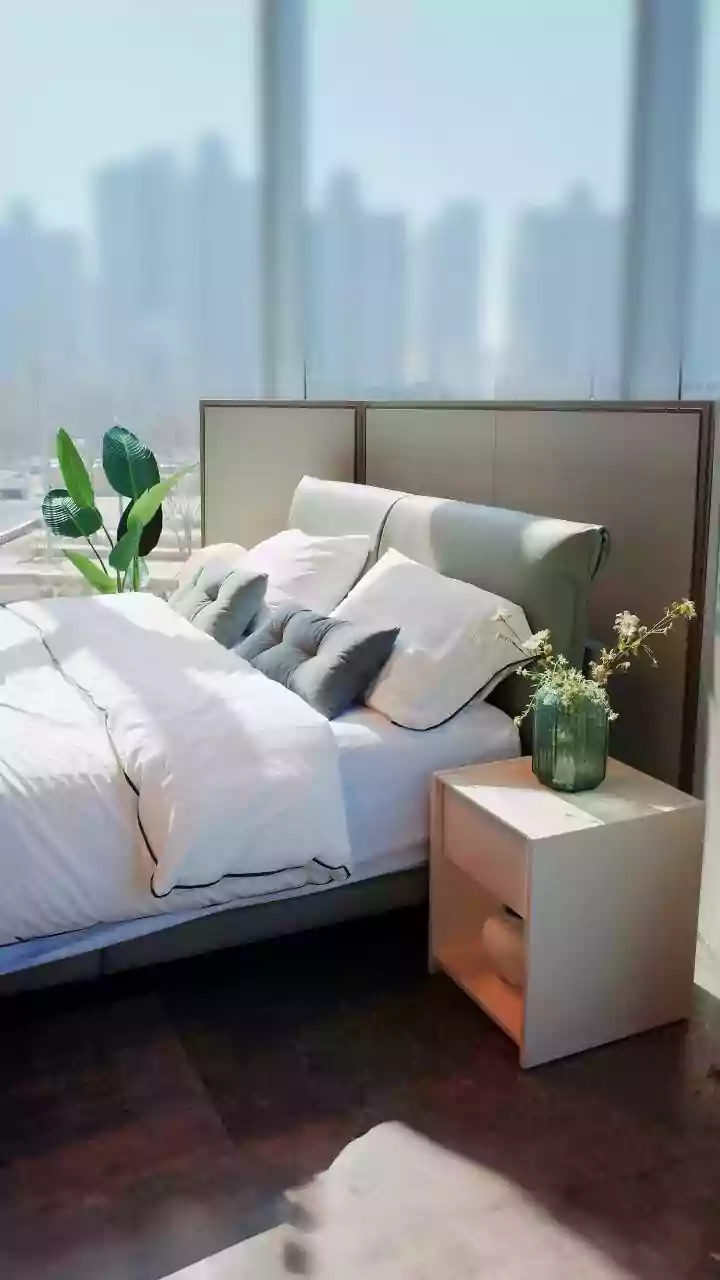
it might cast a shadow. Instead, position your bed, typically the largest item, in a way that gives the window breathing room. Placing it on the wall opposite the window can work, but also consider placing it under the window if the sill is high enough, which keeps the path clear for light to travel across the room.
Choose Low-Profile Furniture
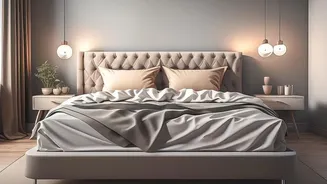
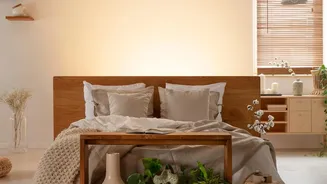
To make the most of the daylight you have, think horizontally. Low-profile furniture—pieces that are shorter and sit closer to the ground—prevents the room from feeling top-heavy and blocked off. A low bed frame, a wide but short dresser, and low nightstands allow light to flow over them and penetrate deeper into the space. This creates an unobstructed visual plane that not only helps with light distribution but also makes the ceiling feel higher, adding to the illusion of a larger, airier room.
Embrace 'Leggy' Pieces
One of the most effective strategies is to choose furniture with legs. A bed frame, nightstand, or dresser raised on slender legs allows light and air to flow underneath. This simple trick creates negative space and reduces the visual weight of the furniture. When you can see the floor underneath, the room feels more open and less cluttered. Light can travel into the corners and spaces that would otherwise be cast in shadow by a solid, blocky piece of furniture, significantly brightening the overall feel of the room.
Use Mirrors Strategically
It's a classic designer trick for a reason: mirrors are your best friend in a small, light-starved room. A large mirror placed directly opposite a window will capture the incoming daylight and bounce it back into the room, effectively doubling your light source. This not only brightens the space but also creates an illusion of depth. You don't have to stop at one. Consider a wardrobe with mirrored doors or a collection of smaller mirrors arranged on a wall to catch and reflect light from different angles throughout the day.
Go Vertical with Storage
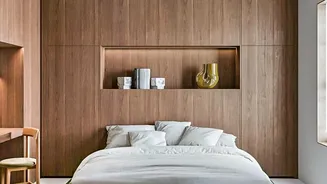
Clutter absorbs light and makes a room feel smaller. To keep the floor and surfaces clear, think vertically for your storage needs. Wall-mounted floating shelves can replace bulky nightstands, providing a spot for a book and a lamp without taking up floor space. A tall, narrow chest of drawers takes up less of a footprint than a wide, low dresser. By drawing the eye upward, you also create the illusion of higher ceilings. The goal is to keep pathways clear and surfaces uncluttered so that light has an uninterrupted journey through the room.
Rethink Your Window Treatments
Heavy, dark curtains can absorb an enormous amount of natural light, even when they're open. To maximize brightness, opt for lightweight and light-coloured window treatments. Sheer or semi-sheer curtains in white or a pale neutral will offer privacy while still allowing soft, diffused light to filter through. Another tip is to mount your curtain rod several inches higher and wider than the window frame. This tricks the eye into thinking the window is larger and ensures that when the curtains are open, the fabric stacks against the wall, not over the glass.