





Welcome to Mars on Earth
Before humanity takes its next giant leap to the Red Planet, it is first taking small, simulated steps right here on Earth. These are called analog missions, and they are designed to mimic the hostile and isolated conditions of a Martian outpost. At NASA's
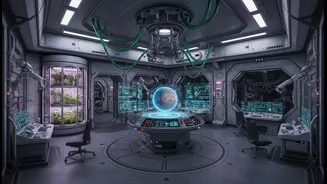
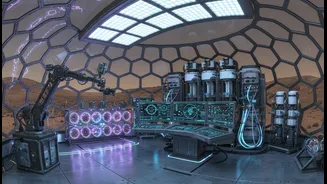
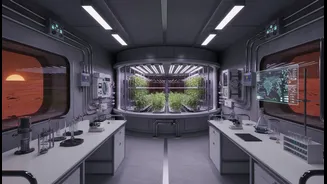
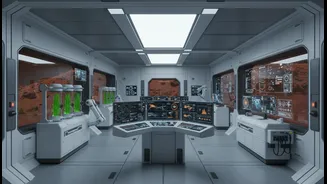
Johnson Space Center in Houston, for instance, a project named CHAPEA (Crew Health and Performance Exploration Analog) houses four volunteers in a 1,700-square-foot, 3D-printed habitat for a full year. The habitat, Mars Dune Alpha, is a self-contained world where every aspect of life is controlled and monitored, from diet and exercise to sleep and social interaction. The goal is to see how humans hold up, both physically and mentally, under the immense strain of a long-duration mission far from home.
The Psychology of Confinement
A trip to Mars will be the most isolated expedition in human history. Astronauts will be confined to a small space with the same few people for years, with communication back to Earth delayed by up to 22 minutes each way. These simulations are designed to intentionally introduce such stressors. Researchers study how crews handle monotony, interpersonal conflicts, lack of privacy, and separation from loved ones. Past studies in similarly isolated and confined environments (ICE) have shown risks of anxiety, depression, and social friction. By observing these dynamics in a controlled setting, scientists can develop better crew selection criteria and create support systems, such as mental health resources and conflict resolution protocols, to keep future Mars-bound crews cohesive and functioning.
A Day in the Martian Life
Life inside the analog habitat is a meticulously planned routine of tasks meant to mirror those of a real Martian crew. A typical day involves conducting scientific experiments, performing maintenance on the habitat, and tending to crops grown for food. The crew also undertakes simulated 'Marswalks' in a sandbox environment, wearing cumbersome suits and grappling with equipment failures. These activities are not just for practice; they generate crucial data. Scientists collect information on everything from the crew's cognitive performance under stress to their nutritional status and sleep quality. This data helps NASA understand how to optimize crew schedules, design better tools, and plan for every contingency, from a medical emergency to a sudden equipment breakdown.
The Science of Survival
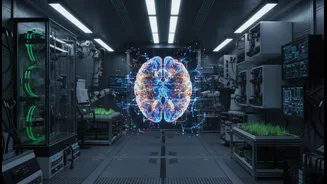
Ultimately, these simulations are large-scale data collection efforts. Everything is measured: stress hormones are tracked through saliva samples, sleep patterns are monitored with wearable devices, and team dynamics are observed through audio and video recordings. Even the crew's diet is carefully managed to understand how nutrition affects mood and performance on a limited food system similar to one that could be supported on Mars. The first year-long CHAPEA mission, which concluded in early July 2024, provided a treasure trove of information about the physical and behavioral health effects of long-term isolation. This information is vital for creating countermeasures that can mitigate the risks associated with deep space travel, ensuring that the first astronauts to walk on Mars are not just technically prepared, but also mentally and emotionally resilient.