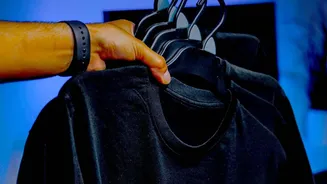







Once a coveted status symbol, the tech company hoodie is getting a rethink. At OpenAI, the powerhouse behind ChatGPT, staff have reportedly been told to avoid wearing branded clothing in public, a move that speaks volumes about the new reality for AI's
pioneers.
A Quiet Directive
According to multiple media reports, both OpenAI and rival AI lab Anthropic have advised employees to conceal their affiliation in public. This includes telling staff to forgo clothing with company logos, hide their work badges when outside the office, and generally maintain a lower profile. While not necessarily a formal, written policy, the guidance is being treated with seriousness inside the companies. The directive is part of a broader set of security measures, which also includes training staff to be wary of their surroundings, using privacy screens on laptops while on public transport, and even erasing whiteboards after meetings.
Concerns Over Safety and Hostility
The primary driver behind this move appears to be employee safety. As AI becomes more powerful and prominent, public sentiment has grown complex and, in some cases, hostile. Protests have occurred outside OpenAI's San Francisco offices, and there have been more direct threats. In one alarming instance in April 2026, CEO Sam Altman's home was targeted in two separate incidents, one allegedly involving a Molotov cocktail and another involving a firearm discharge outside the property. This rising tide of public animosity and 'techlash' means a simple company logo could make an employee a target for harassment or confrontation. The move is a preventative measure to reduce the risk for staff as they go about their daily lives.
The Threat of Espionage
Beyond physical threats, the guidance is a response to the very real risk of corporate and state-sponsored espionage. As leaders in a strategically crucial field, OpenAI and Anthropic are prime targets for intelligence gathering. Reports indicate that security training at OpenAI now explicitly warns staff about spies potentially using tactics like bribery or feigned friendship and even romance to obtain confidential information. The company has reportedly shared examples of strangers approaching employees in casual settings, such as a playground, and attempting to steer conversations toward their work. This directive to blend in is therefore not just about avoiding protesters; it's about making it harder for spies to identify and approach personnel who hold some of the world's most valuable trade secrets.
A Symptom of a Larger Problem
This isn't just an OpenAI problem; it's a barometer for the entire AI industry. The advice to go incognito reflects a significant cultural shift. For years, wearing swag from a top tech firm like Google or Apple was a badge of honour in Silicon Valley. Now, for those at the cutting edge of AI, it can feel like a liability. The tension is palpable. Internally, some employees have reportedly raised concerns for years about security weaknesses, feeling the company prioritized competitive speed over safety. The recent arrest of an OpenAI engineer in October 2026 for allegedly planting a recording device in a conference room has only heightened these internal and external security anxieties. The move by OpenAI and Anthropic signals that the era of idealistic, open-campus culture is colliding with the harsh realities of geopolitical and economic stakes.