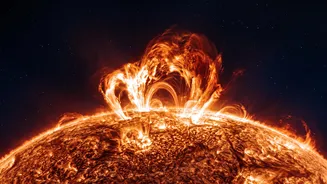

Our Sun, a seemingly constant star, is a turbulent powerhouse of violent eruptions. A new joint study by India's Aditya-L1 and Europe's Proba-3 is giving scientists a ringside seat to these events, promising to unlock long-held solar secrets.
A Tale of Two Trailblazers
At the heart
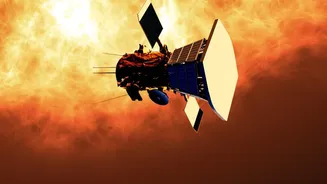
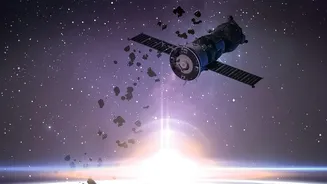
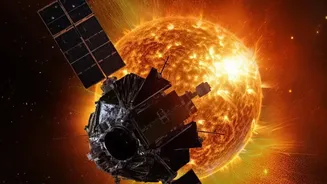
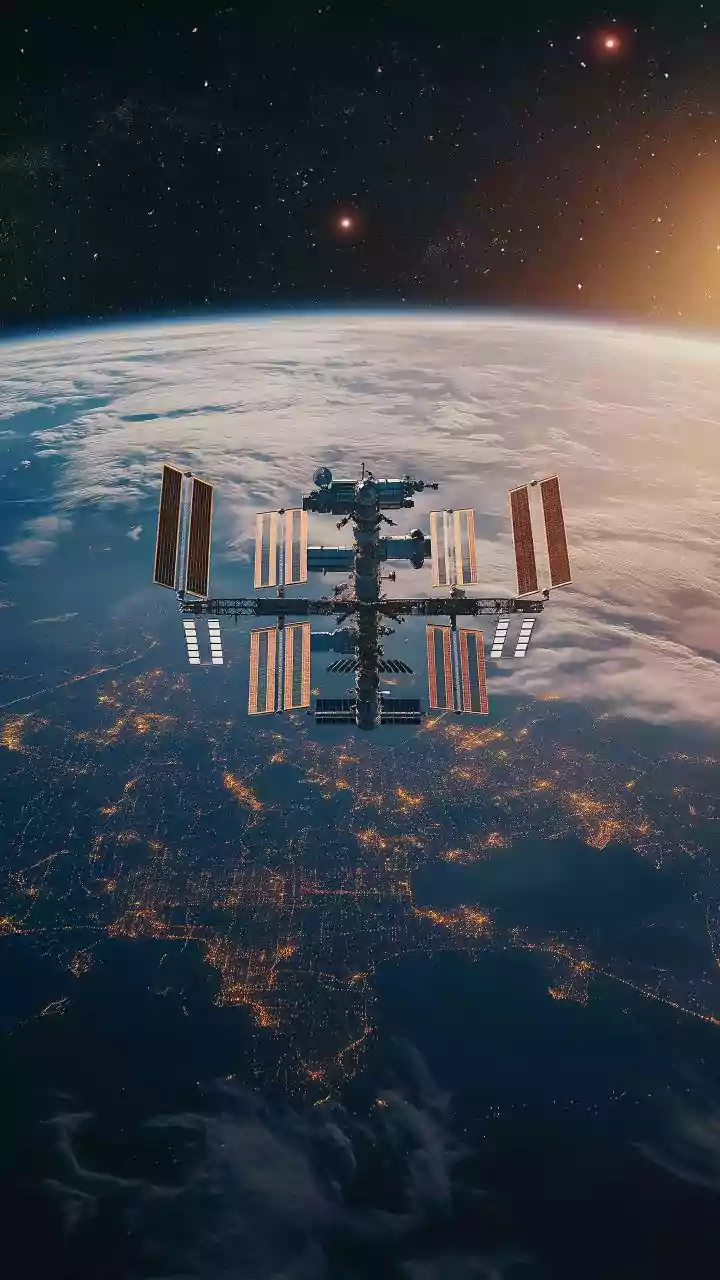
of this research are two remarkable space missions. Aditya-L1 is India's first dedicated solar observatory, launched by ISRO in September 2023. It is strategically positioned at Lagrange Point 1 (L1), about 1.5 million kilometres from Earth, which allows it an uninterrupted view of the Sun. Its key instrument, the Visible Emission Line Coronagraph (VELC), is designed to study the Sun's outer atmosphere, or corona, by analysing the light it emits. Its partner is Proba-3, a pioneering European Space Agency (ESA) mission. Famously launched by an ISRO PSLV rocket in December 2024, Proba-3 consists of two satellites flying in precise formation just 150 metres apart. One satellite acts as a shield, blocking the Sun’s bright disk to create a perfect artificial eclipse for the other satellite's coronagraph, named ASPIICS. This groundbreaking technique allows for an incredibly clear view of the Sun's faint inner corona.
The Challenge of the Corona
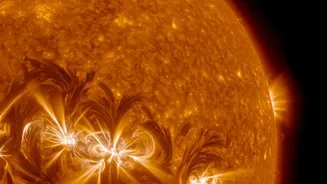
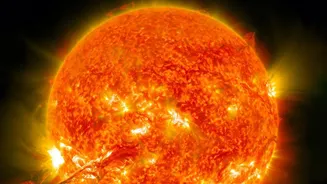
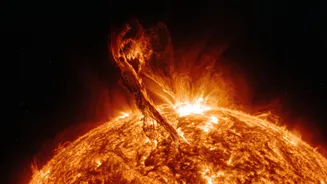
Studying the Sun's corona is notoriously difficult. This superheated plasma atmosphere is millions of times fainter than the Sun's surface, making it nearly impossible to see. It is within this region that solar eruptions, known as Coronal Mass Ejections (CMEs), are born. CMEs are colossal explosions of magnetised plasma and charged particles hurled into space at immense speeds. Understanding their origin is crucial, but observing their initial development right next to the Sun has been a major roadblock for scientists. Previous instruments struggled to track the early, faint stages of these eruptions. This critical gap in our knowledge has left many questions unanswered about how CMEs gain their enormous energy and speed.
A Breakthrough in Collaboration
This is where the synergy between Aditya-L1 and Proba-3 becomes a game-changer. For the first time, scientists at the Indian Institute of Astrophysics and international partners have combined data from both missions to analyse the same CMEs. In a study focusing on two eruptions in September 2025, the missions provided complementary views. Proba-3's ASPIICS instrument captured high-resolution images, mapping the shape, size, and movement of the eruption. Simultaneously, Aditya-L1's VELC instrument performed spectroscopy, splitting the coronal light to measure the plasma's density, temperature, and thermal energy. By combining imaging with spectroscopy, the team created a more complete, cross-checked picture of the CMEs' birth and evolution than was possible with a single spacecraft. The results, published in the journal 'Astronomy & Astrophysics', showed remarkable consistency between the two independent sets of measurements, validating this powerful new approach.
Why This Research Matters for Earth
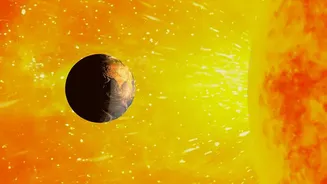
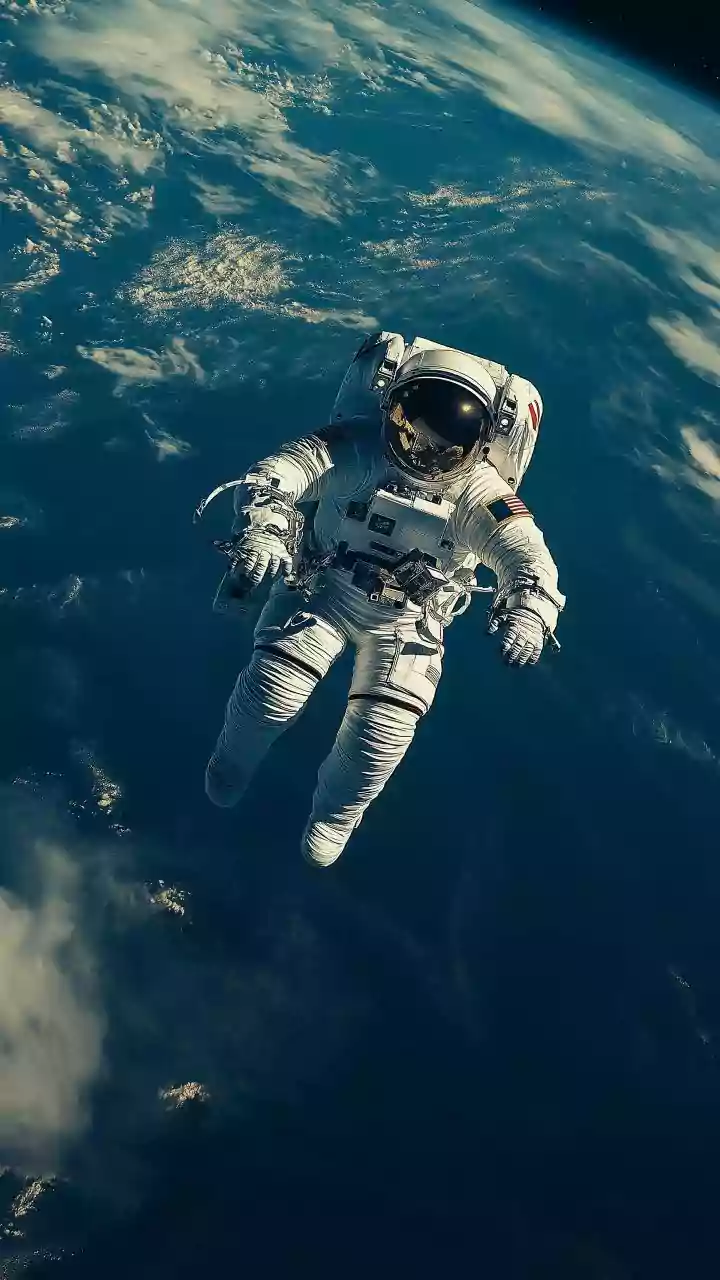
While this research focuses on our distant star, its implications are very down-to-Earth. CMEs are a primary driver of 'space weather'. When an eruption is aimed at our planet, it can trigger geomagnetic storms that have the potential to cause widespread disruption. These storms can damage or disable critical satellites, affecting GPS navigation, communications, and broadcasting. They can also induce powerful electrical currents in power grids on the ground, potentially leading to widespread blackouts. Furthermore, the radiation from these events poses a risk to astronauts in space and even passengers on high_altitude polar flights. By understanding how CMEs accelerate and develop near the Sun, scientists can improve their models for predicting space weather. Better forecasts give satellite operators, airlines, and power grid managers crucial time to take protective measures, safeguarding our technologically dependent society.