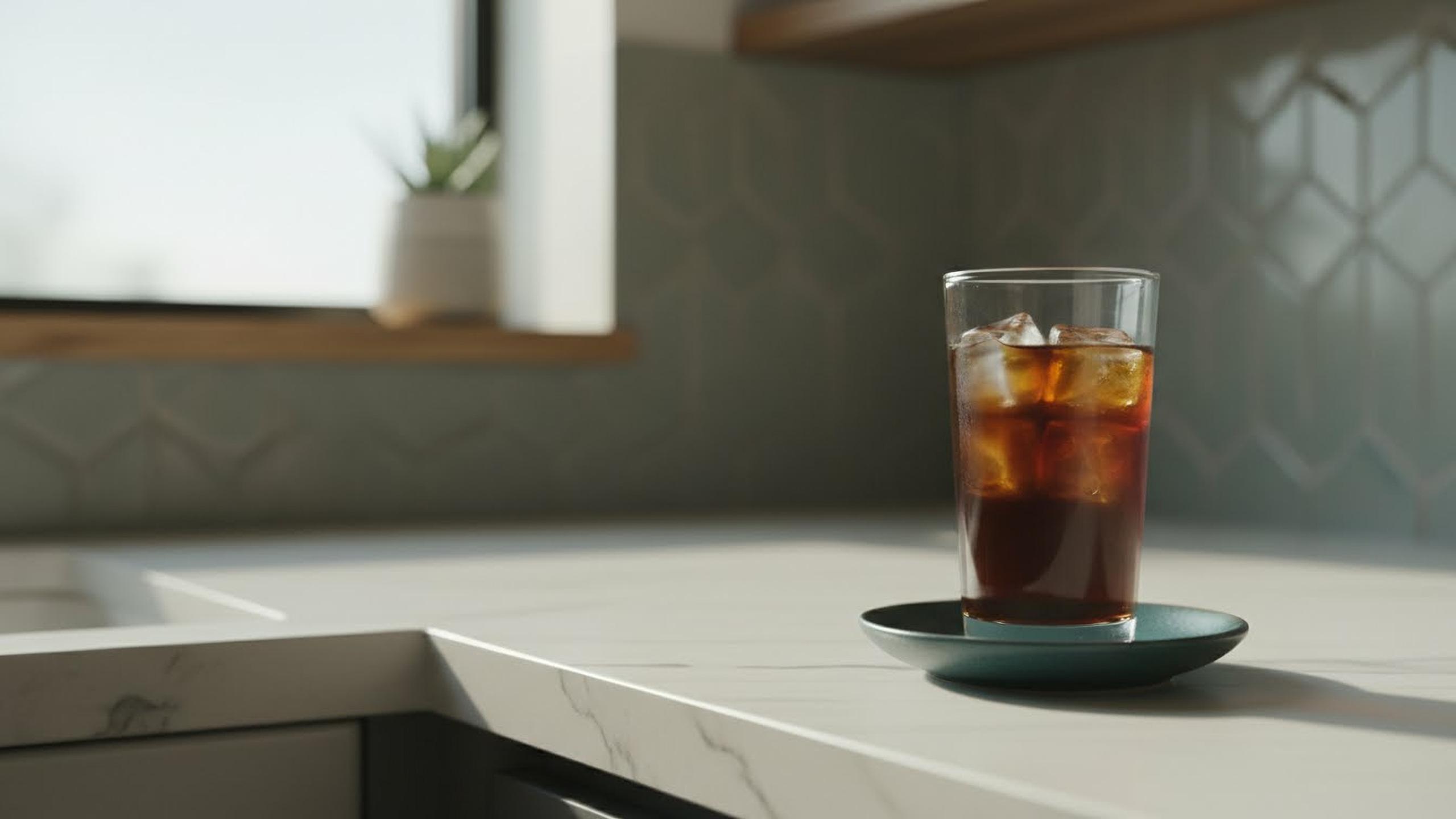





The Science of a Smoother Sip
So, what makes cold brew different from the iced coffee you get by simply chilling a hot brew? The magic lies in the extraction process. When you brew coffee with hot water, the heat rapidly pulls out oils and chemical compounds, including the acids responsible
for the sharp, sometimes bitter taste. Cold water, on the other hand, works slowly over a long period—typically 12 to 24 hours. This gentle steeping process extracts fewer of these acidic compounds. Studies have shown that cold brew can be over 60% less acidic than its hot-brewed counterpart, resulting in a naturally sweeter, smoother cup that is often gentler on the stomach and teeth. This slow, cold extraction fundamentally changes the coffee's chemical profile, mellowing the flavour and highlighting rich, chocolatey notes.
The Simple Equipment You Already Own
The best part about making cafe-quality cold brew is that you don't need expensive, specialized equipment. Forget complicated machines; if you have a large jar, a pitcher, or even a French press, you're halfway there. The essential toolkit is wonderfully basic: a container for steeping, something to strain the grounds, and a bottle or jar for storing your finished concentrate. For straining, a fine-mesh sieve lined with cheesecloth is perfect. You can also use a clean muslin sack or even a paper coffee filter set inside a strainer. The process is designed to be accessible, proving that premium coffee can be made with the simplest of kitchen staples.
Choosing Your Coffee and Grind Size
While you can use any coffee bean you enjoy, medium to dark roasts are often recommended for cold brew as their flavour profiles lend themselves well to the process. More important than the bean, however, is the grind. For cold brew, you need a coarse grind—think the consistency of rough sand or breadcrumbs. A fine grind, like one used for espresso, will over-extract during the long steeping time, resulting in a muddy and bitter brew. The coarse grind allows the water to circulate freely and extract the flavours slowly and evenly, which is crucial for achieving that signature smoothness and preventing sediment in your final cup. Most coffee shops will happily grind your beans for a coarse setting if you don't have a grinder at home.
The Ideal Ratio and Steeping Time
Finding your perfect cold brew comes down to two key variables: the coffee-to-water ratio and how long you let it steep. A common starting point for a strong concentrate is a 1:4 or 1:5 ratio of coffee to water by weight. If you're measuring by volume, a good rule of thumb is about 1.5 cups of coarsely ground coffee to 3 or 4 cups of water. This creates a potent concentrate that you'll dilute later. Once you've combined your coffee and filtered water in a jar, give it a good stir to ensure all the grounds are saturated. Then, cover it and let it steep for 12 to 24 hours. You can leave it on your counter at room temperature or in the refrigerator. A shorter steep (around 12 hours) will yield a lighter coffee, while a longer steep (closer to 24 hours) will produce a bolder, stronger concentrate.
Straining and Storing Your Liquid Gold
Once your coffee has finished steeping, it's time to separate the liquid from the grounds. Pour the mixture slowly through your prepared strainer into a clean bowl or pitcher. Don't be tempted to press down on the grounds, as this can push bitter compounds into your concentrate. Let gravity do the work. After straining, transfer your cold brew concentrate into an airtight container, like a sealed glass jar, and store it in the refrigerator. Because you've created a concentrate, it will stay fresh and flavourful for much longer than hot-brewed coffee. Most sources suggest it will last for 7 to 14 days, though the peak flavour is typically within the first week.