






First, What Is A2 Ghee?
The term 'A2' refers to the type of beta-casein protein in the milk. Most commercial dairy in India today comes from crossbred or foreign cow breeds, whose milk contains A1 protein. Indigenous Indian breeds like Gir, Sahiwal, and Tharparkar, however,
predominantly produce milk with A2 beta-casein. [14, 19] Proponents suggest that A2 protein is easier to digest because it doesn't break down into beta-casomorphin-7 (BCM-7), a peptide that some individuals find causes digestive discomfort. [14, 20] Therefore, A2 ghee is simply ghee made from the milk of these specific desi cows. [11] Many users report it feels 'lighter' and is gentler on the stomach. [7, 20]
The Magic of 'Wood-Pressed' and Bilona
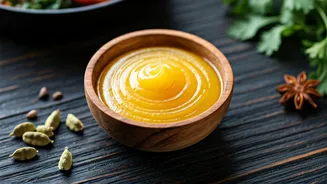
The term 'wood-pressed' often refers to ghee made using the traditional *bilona* method, an ancient process described in Ayurveda. [6, 9] This isn't your modern, industrial production line. The process is slow and deliberate: fresh A2 milk is first boiled and then set into curd overnight. [3] This curd is then churned, traditionally with a wooden churner (the 'bilona'), to separate the butter, or *makkhan*. [6, 17] Finally, this butter is slow-cooked on a low flame until the water evaporates and the milk solids separate, leaving behind pure, aromatic ghee. [3, 9] This slow, low-heat method, contrasted with high-temperature commercial processes, is believed to preserve more nutrients, develop a richer flavour, and create a characteristic grainy texture. [9, 12]
Ghee and Khichdi: A Match Made in Heaven
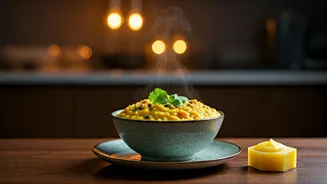
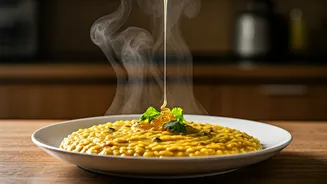
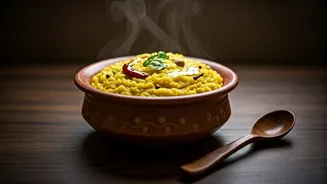
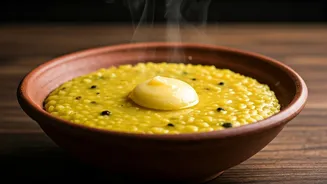
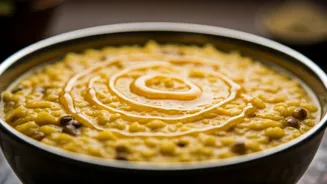
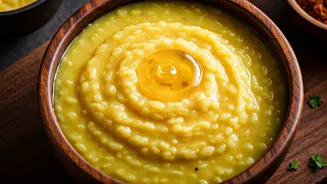
No discussion of dal khichdi is complete without honouring the role of ghee. It is the soul of the dish. According to Ayurveda, ghee kindles the digestive fire (*agni*), helps in the absorption of nutrients, and enhances *ojas*, or the body's vital energy. [25, 5] From a culinary perspective, ghee's high smoke point (around 250°C or 482°F) makes it perfect for the *tadka*, or tempering. [1, 2, 18] This allows you to bloom spices like cumin and asafoetida at high heat without the fat breaking down and turning bitter, releasing their full aromatic potential into the dish. [21] Simply stirring in ghee at the end adds aroma, but the sizzling tadka is where the deep flavour is created. [21]
The Verdict: Is It the Secret to Perfection?
So, is wood-pressed A2 ghee the ultimate secret? While 'perfection' is subjective, the evidence suggests it offers a significant upgrade. The bilona method produces a ghee with a far more complex, nutty, and aromatic flavour than its commercially produced counterparts. [9] When you add this ghee to dal khichdi, especially in the tadka, these deeper flavour notes permeate the entire dish. Furthermore, the nutritional profile, including vitamins A, D, E, and K, and its easier digestibility, adds a wellness dimension that aligns with khichdi's reputation as a healing food. [4, 15] While any good quality ghee will make a delicious khichdi, using wood-pressed A2 ghee is a conscious choice for superior flavour, aroma, and traditional authenticity. It’s less of a single 'secret' and more of a commitment to quality that you can taste in every spoonful.
How to Choose and Use Your Ghee
When buying wood-pressed A2 ghee, look for transparency. Brands should ideally mention the cow breed (e.g., Gir), the use of the bilona method, and be free from preservatives. [20, 24] Authentic bilona ghee often has a grainy, or *danedar*, texture at room temperature, which is a good sign. [9] For the perfect dal khichdi, use it generously. Sauté your initial spices in it, and most importantly, prepare a final, sizzling tadka to pour over the finished dish just before serving. [21] A final dollop on top of the warm khichdi as it’s served is never a bad idea, allowing the rich aroma to be the first thing that greets you at the table.