




The Puffed Snack Landscape
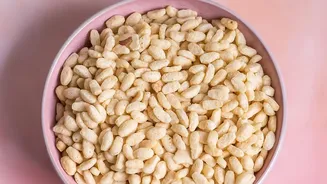
Puffed snacks hold a special place in the Indian pantry. From bhel puri to simple evening munchies, their airy texture and satisfying crunch are hard to resist. Puffed rice, or 'murmura', is incredibly popular due to its low calorie count and versatility.
A standard cup contains only about 56 calories. This has made it a go-to for calorie-conscious snackers. However, as health awareness grows, people are looking more closely at the overall nutritional value of their food, not just the calories. This is where quinoa puffs enter the picture, offering a nutrient-denser alternative.
The Main Event: Fibre Content
The single biggest nutritional difference between quinoa puffs and puffed rice is their fibre content. Puffed rice contains very little dietary fibre, with a typical cup offering only about 0.2 grams. In stark contrast, quinoa puffs are significantly richer in this essential nutrient. A serving of quinoa puffs can contain around 2.5 to 3 grams of fibre, which is more than ten times the amount found in their rice-based counterparts. While cooked quinoa has even more fibre, at about 5 grams per cup, the puffed version still retains a significant advantage over puffed rice.
Why Fibre is the Deciding Factor
Fibre is a powerhouse nutrient crucial for overall health. It aids digestion, promotes regular bowel movements, and helps prevent constipation. Its ability to slow down digestion also helps in managing blood sugar levels by preventing sharp spikes after a meal. This is particularly important for individuals managing diabetes. Furthermore, high-fibre foods contribute to a feeling of fullness, or satiety, which can help control appetite and support weight management goals. By making you feel full for longer, snacks rich in fibre, like quinoa puffs, are less likely to lead to overeating compared to low-fibre options.
Beyond Fibre: The Protein Advantage
While fibre is the star of this comparison, it's not the only area where quinoa puffs shine. Quinoa is a complete protein, meaning it contains all nine essential amino acids, which is rare for a plant-based food. A serving of quinoa puffs typically provides around 4 to 7 grams of protein, whereas puffed rice offers less than 1 gram. This higher protein content, combined with the fibre, makes quinoa puffs a much more satisfying and nutritionally balanced snack. Protein is essential for muscle repair, and its presence helps to further slow down digestion, contributing to sustained energy release.
Carbohydrates and Glycemic Index
Both snacks are primarily carbohydrate-based, but how they affect your body differs. Puffed rice has a high glycemic index (GI), which means it can cause a rapid increase in blood sugar levels. Quinoa, on the other hand, has a naturally lower GI, around 53. While the puffing process can alter the starch structure, quinoa's inherent protein and fibre content helps to moderate this effect, leading to a more gradual release of energy. For sustained energy without the subsequent crash, quinoa puffs are the superior choice.
Making the Right Choice for You
So, which puff should you pick? If your primary goal is a very low-calorie, light snack and you plan to combine it with other nutrient-rich ingredients like vegetables and legumes (as in bhel puri), puffed rice can fit into a healthy diet. However, if you are looking for a standalone snack that offers substantial nutritional benefits—particularly higher fibre and protein for better satiety and blood sugar control—quinoa puffs are the clear winner. They provide more sustained energy and a richer profile of minerals like iron and magnesium.