





Your Vehicle's Pre-Trip Health Check
Your car is your first and most important line of defence against treacherous, rain-slicked roads. Start with the most critical components a few days before your trip. First, inspect your tyres. They are your only connection to the road, and good tread
is essential for grip and to prevent hydroplaning, where your car loses contact with the wet surface. For monsoon safety, experts suggest a tread depth of at least 3mm. Also, check for correct tyre pressure, including the spare. Next, test your brakes. Wet roads significantly increase stopping distances, so your brake pads and fluid must be in top condition. Your windshield wipers are equally vital; if they leave streaks or make noise, replace them. Clear visibility is paramount. Finally, ensure all your lights—headlights, taillights, brake lights, and indicators—are working perfectly. They help you see and, just as importantly, help others see you.
Smart Planning for the Journey
Spontaneity is great, but not when it comes to driving in the mountains during the rain. Before you leave, always check the latest weather forecasts and local road advisories. Heavy rainfall can trigger landslides and flash floods, leading to unexpected road closures. It is always safer to delay your trip if severe weather is predicted. Plan to drive during daylight hours, as visibility drops dramatically at night. Share your intended route and estimated time of arrival with a friend or family member. When mapping your journey, consider that familiar routes might become hazardous and have a backup plan. Avoid shortcuts that might take you on poorly maintained or unpaved roads, which become even more dangerous in the rain.
Techniques for Driving on Wet Ghat Roads
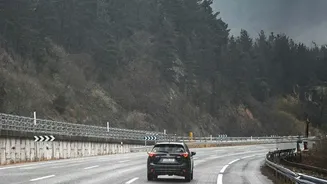
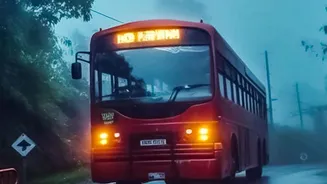
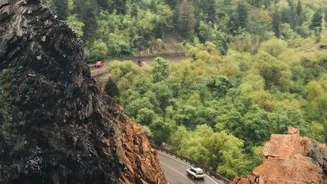
Mountain driving requires a different mindset. The most important rule is to slow down. Speed limits are designed for ideal, dry conditions. On wet, winding roads, reduce your speed significantly to maintain control. Double your following distance to at least four or five seconds to account for longer braking times. A critical technique for ghat roads is using engine braking when going downhill. Instead of riding the brakes, which can cause them to overheat and fail, shift to a lower gear. A good rule of thumb is to use the same gear to go down a slope that you would use to climb it. Be extremely cautious on blind corners and hairpin bends; honk to alert oncoming traffic. It is also customary to give way to vehicles climbing uphill, as it is much harder for them to stop and regain momentum.
Navigating Hydroplaning and Low Visibility
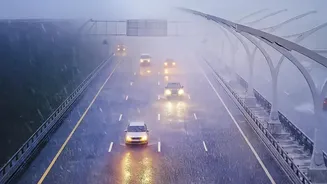
Two of the biggest dangers of monsoon driving are hydroplaning and poor visibility. Hydroplaning occurs when a layer of water builds up between your tyres and the road, causing you to lose steering and braking control. It can happen at speeds as low as 55-60 km/h. If you feel the car start to float or the steering become light, do not panic or slam the brakes. Instead, ease your foot off the accelerator and steer gently in the direction you want to go until you feel the tyres regain traction. Never use cruise control in rainy weather, as it can worsen a hydroplaning situation. Avoid driving through large puddles or flooded areas, as they can hide deep potholes or cause your engine to stall. If visibility becomes almost zero in a downpour, the safest action is to find a secure spot to pull over, away from cliffs or loose soil, and wait for the rain to subside.
The Essential Monsoon Emergency Kit
Even with perfect preparation, it pays to be ready for the unexpected. A well-stocked emergency kit in your boot can be a lifesaver. Your kit should include a comprehensive first-aid box with bandages, antiseptic, and basic medicines. Pack a powerful torch with extra batteries, as phone flashlights are often not enough. A portable tyre inflator, a puncture repair kit, and a tow rope are also crucial. For personal comfort and safety if you get stranded, include a high-visibility reflective vest, a rain poncho, a power bank for your phone, and some non-perishable food like biscuits or nuts, along with drinking water. Finally, ensure all your vehicle documents, including your license, registration, and insurance, are in a waterproof bag and easily accessible.