





Start With a Lightweight Bag
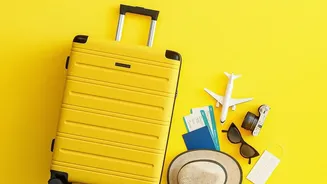
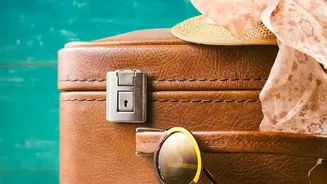
Your packing strategy begins before you even place a single item inside your luggage. The bag itself is a major contributor to the total weight. Hard-shell suitcases, while durable, often weigh 2-3kg on their own, eating up a significant portion of your allowance.
Opt for a lightweight travel backpack or a soft-shell bag, which typically weigh under 1.5kg. This simple switch can give you an extra kilogram for clothes, shoes, and other essentials, setting you up for success from the start. A lighter bag also makes navigating airports and cities much easier.
Create a Capsule Wardrobe
Instead of packing individual outfits, think in terms of a capsule wardrobe. This involves selecting a small collection of items that can be mixed and matched to create multiple looks. Choose a neutral colour palette for your main items—like trousers, shorts, or a skirt—and add variety with a few lightweight tops and accessories. Three to four tops and one or two bottoms are often sufficient for a week-long trip. The key is versatility; every piece should work with at least two other items in your bag, maximising your outfit options without adding bulk.
Wear Your Heaviest Items on the Plane
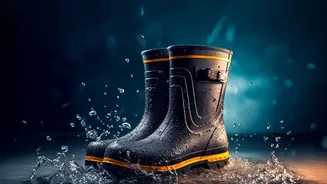
This is one of the oldest and most effective packing tricks in the book. Your travel outfit is valuable, weight-free storage space. Always wear your bulkiest items, such as hiking boots, a jacket, or a heavy jumper, onto the aircraft instead of packing them. Even a pair of jeans can be significantly heavier than travel trousers. Layering a t-shirt under a sweater or fleece is another great way to save space and weight in your bag. This single hack can free up several hundred grams, or even a full kilogram, of your precious allowance.
Switch to Solid Toiletries
Liquids are notoriously heavy and subject to the 100ml airline restriction. Drastically cut down on both weight and hassle by switching to solid toiletries. Solid shampoo bars, conditioner bars, solid perfume, and toothpaste tablets are fantastic alternatives that are lighter and last longer. You can even find solid soaps that work for your body, hair, and laundry. For any liquids you absolutely must bring, such as contact lens solution or specific medications, stick to travel-sized containers. Another tip is to buy non-essential items like shower gel or sunscreen at your destination.
Master Efficient Packing Techniques
How you pack is just as important as what you pack. Rolling your clothes tightly instead of folding them is a well-known space-saver, but you can take it a step further. Packing cubes are a game-changer for organisation and compression, allowing you to neatly segment your clothes and squeeze out excess air. For smaller items, fill every empty space. Stuff socks, chargers, and underwear inside your shoes to make use of otherwise wasted volume. This ensures your bag is not just light, but also efficiently organised.
Go Digital to Ditch the Paper
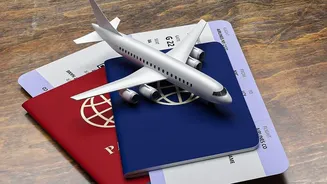
Every gram counts, and paper is surprisingly heavy. Instead of carrying physical books, download them onto an e-reader or your phone. The same goes for travel documents; save digital copies of your passport, visa, flight tickets, and hotel confirmations to your phone and a cloud service. This not only saves weight but also serves as a secure backup in case your physical documents are lost. A single e-reader can hold an entire library for less weight than one paperback novel.
Be Ruthless with 'Just in Case' Items
The biggest enemy of light packing is the 'just in case' mindset. It convinces you to pack items for hypothetical scenarios that rarely happen. Be realistic about what you will actually need and use. Instead of packing for every possible situation, pack for the most likely ones. If you're going to a warm climate, you probably don't need a heavy raincoat. If an unexpected need arises, you can almost always buy or rent what you need at your destination. Challenge every item: will I definitely use this? If the answer is 'maybe,' leave it behind.