


What Am I Looking For?
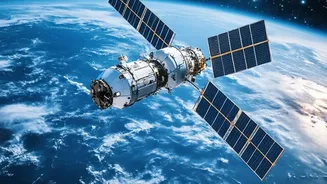
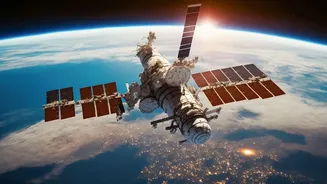
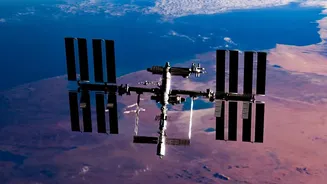
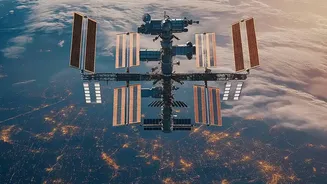
Before you start your search, it’s important to know what to look for. The ISS appears as a very bright, fast-moving point of light. It looks similar to a plane but travels much faster and, crucially, does not have flashing lights. Instead, it shines
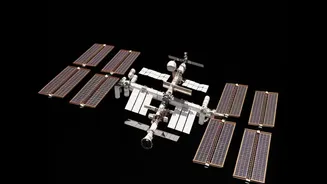
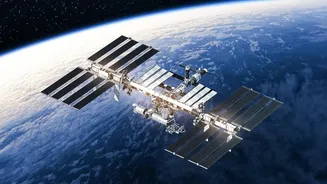
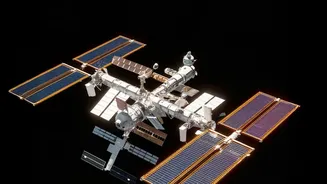
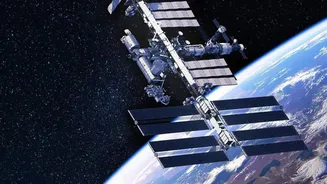
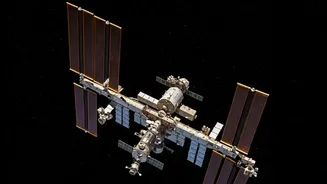
with a steady, constant glow. This is because we don't see light from the station itself, but rather the reflection of the Sun off its massive solar panels. For this reason, the best viewing times are typically a few hours before sunrise or after sunset, when the sky is dark but the station, orbiting 400 kilometres above Earth, is still bathed in sunlight. It can be surprisingly bright—often the most brilliant object in the sky besides the Moon—and is visible even from light-polluted cities.
The Essential Tools: Apps and Websites
You don't need a telescope or any special equipment to see the ISS; it's visible to the naked eye. What you do need is precise timing. The most reliable way to get this information is through specialised websites and smartphone apps. NASA's official service, "Spot The Station," is an excellent starting point. You can visit their website and sign up for email or text alerts for your specific city in India. The alerts will tell you the exact time the station will appear, how long it will be visible, its maximum height above the horizon, and the direction to look. For those who prefer a mobile solution, several highly-rated apps are available. NASA's official Spot The Station app, ISS Detector, and Heavens-Above are all popular choices that provide real-time tracking, pass predictions, and notifications.
How to Find Your Sighting Opportunity
Using these tools is straightforward. For the Spot The Station website, you simply select India from the list of countries, then choose your state and the nearest city. The site will then generate a list of upcoming sighting opportunities. For apps like ISS Detector, you allow it to use your phone's location to provide tailored alerts. A typical alert will look something like this: "Time: 5:00 AM, Visible: 5 min, Max Height: 69°, Appears: 20° above SSW, Disappears: 11° above NE." This tells you everything you need: the start time, the duration of the pass, how high it will get in the sky (90° is directly overhead), where it will first appear (South-Southwest), and where it will vanish.
Planning For a Perfect Viewing
Once you have your viewing time, a little preparation goes a long way. Try to find a spot with a clear view of the horizon, away from tall buildings or trees that might obstruct your line of sight. While the ISS is visible from cities, finding a darker location away from bright streetlights will make the experience even more spectacular. Give your eyes a few minutes to adjust to the darkness before the scheduled pass. Be ready a few minutes early; the station moves quickly and you don't want to miss the beginning of the flyover. Knowing the direction in which it will appear (e.g., 'SSW') is key. You can use your phone's compass to orient yourself. Then, just watch as a silent, brilliant light sails across the night sky.
More Than a Dot of Light
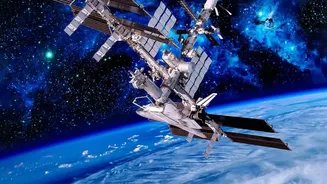
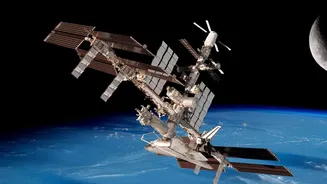
As you watch that point of light glide overhead, remember what you're seeing. The International Space Station is a marvel of engineering, roughly the size of a football field, orbiting the Earth at a staggering 28,000 kilometres per hour. It completes about 16 orbits of our planet every single day. For over two decades, it has been continuously inhabited by astronauts from across the globe, conducting scientific research that benefits us all here on Earth. In recent years, it has even hosted Indian astronauts, adding a special layer of pride and connection for skygazers in the country. Spotting the ISS is more than just an astronomical curiosity; it's a direct, visible link to humanity's ongoing journey in space.