


Beyond the Goldilocks Zone
We often talk about the 'Goldilocks Zone' as the key to finding life—an orbit where it's not too hot and not too cold for liquid water to exist. But this assumes Earth is the peak of perfection. In 2014, scientists René Heller and John Armstrong challenged
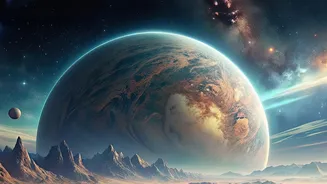
this idea. They argued that our search is too Earth-centric and proposed that planets could exist with conditions far more favorable for life— supporting greater biodiversity and biomass than our own world. This concept shifts the goal from finding an Earth 2.0 to identifying planets that are empirically better suited for life to emerge and thrive.
A Better Host Star
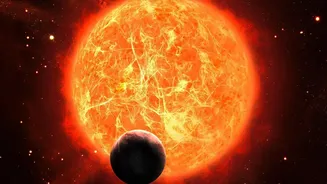
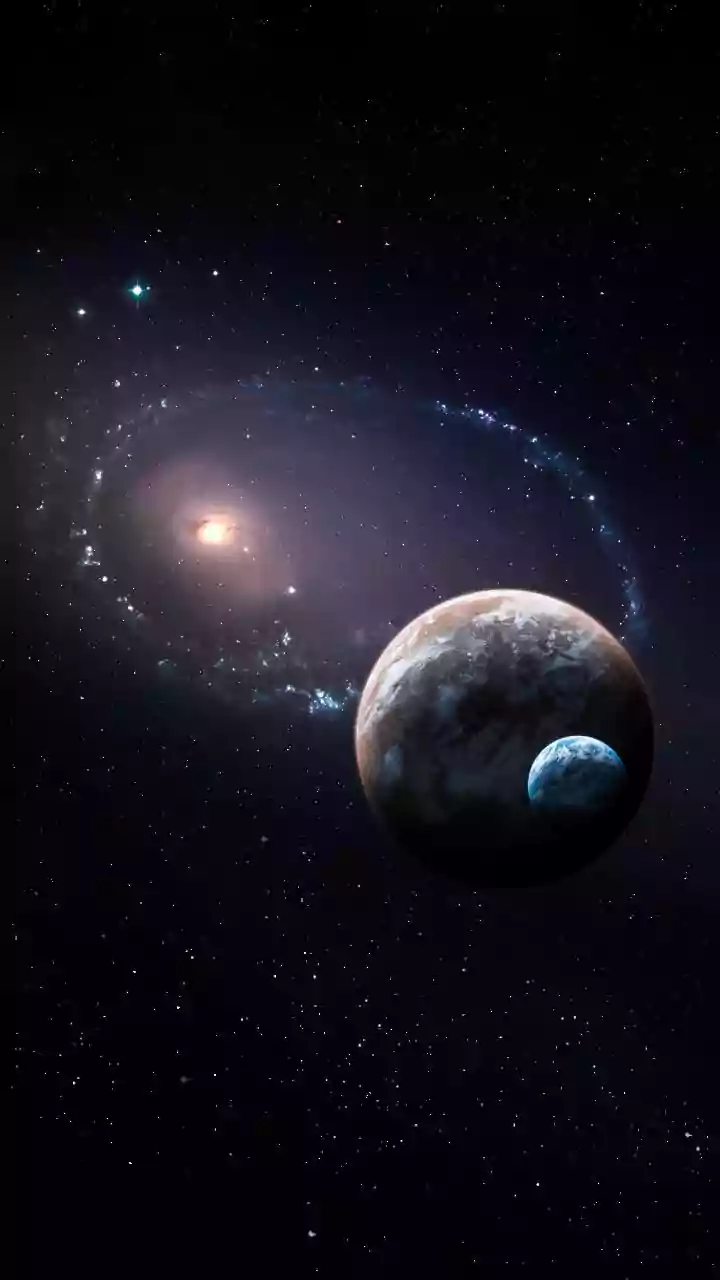
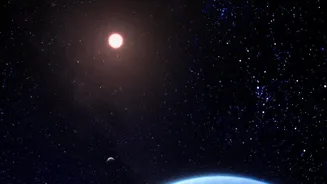
Our Sun, a G-type star, is stable, but it has a lifespan of about 10 billion years. Life on Earth took nearly 4 billion years to evolve complexity. K-type stars, often called 'orange dwarfs,' offer a significant advantage. They are less massive and burn their fuel slower, remaining stable for 20 to 70 billion years. This provides a much longer, more stable window for life to not only begin but to evolve into more complex forms. A planet orbiting one of these long-lived stars would have more time and a more consistent energy source, potentially making it a superior cradle for life.
Bigger, Warmer, and Wetter
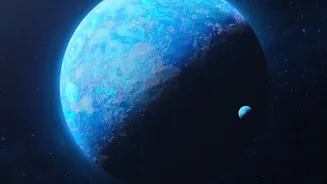
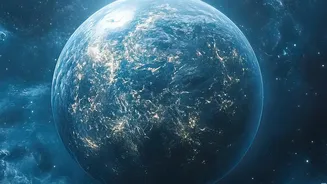
The ideal superhabitable planet would likely be different from Earth in several key ways. Scientists suggest a world about twice Earth's mass and 20-30% larger by volume would be better at retaining its atmosphere thanks to stronger gravity. It would also have more surface area for life to flourish. A slightly warmer average temperature, perhaps 5°C higher than Earth's, could expand tropical zones and boost biodiversity, similar to how Earth's rainforests are teeming with life. These worlds would also benefit from having shallower, more distributed oceans, allowing sunlight to penetrate and nourish aquatic ecosystems more effectively.
The Advantage of Age
Earth is about 4.5 billion years old, and complex life is a relatively recent development. A superhabitable planet would likely be older, somewhere between 5 and 8 billion years old. This extra time allows for a more mature and stable geological system. It also provides a longer runway for evolution to work its magic, potentially leading to a richer and more diverse biosphere. Just as a mature forest is more complex than a newly planted one, an older planet could host a more intricate web of life. Furthermore, a slightly more massive planet would retain its internal heat longer, driving plate tectonics and a protective magnetic field for billions of years, both crucial for long-term habitability.
Have We Found Any Candidates?
The search for these theoretical worlds is underway. Out of the thousands of exoplanets discovered, astronomers have identified a couple of dozen potential candidates for superhabitability. However, these are still just possibilities. Many are 'Kepler Objects of Interest' (KOIs), meaning they are unconfirmed and could turn out to be false positives. For the few that are confirmed planets, like Kepler-69c, our data is limited. We know their size and orbit, but key details like atmospheric composition and the presence of water are still unknown. So, while the list of potential superhabitable worlds exists, they remain hypothetical for now.