
The Original Hurricane: Kapil Dev
Long before sports science and Yo-Yo tests became dressing room chatter, there was Kapil Dev. For a fast-bowling all-rounder in the 1980s, his career longevity was astonishing. Spanning 16 years, he famously never missed a Test match due to injury, a testament
to a level of physical robustness that was an anomaly in his era. While his contemporaries might have viewed fitness as a secondary concern, Kapil made it his foundation. His methods were simple but effective: he ran. He believed that building a strong base through relentless running developed the muscles needed to endure long spells and demanding tours. His fitness wasn't just about gym work; it was a holistic approach that included playing other sports like squash and badminton to maintain agility and reflexes. In a time when skill was often seen as enough, Kapil Dev was the first Indian superstar to prove that supreme physical conditioning was a weapon in itself, setting a quiet but powerful precedent.
The Fielding Catalyst: Jonty Rhodes
If Kapil Dev built the foundation, Jonty Rhodes added the fireworks. The South African didn't just raise the bar for fielding; he created an entirely new dimension. Before Rhodes, fielding was a largely passive activity. After him, it became an attacking discipline. His iconic run-out of Inzamam-ul-Haq in the 1992 World Cup was a watershed moment, showcasing a level of athleticism the sport had rarely seen. Rhodes threw himself at everything, turning half-chances into dismissals and certain boundaries into saved runs. Teams quickly realised that a player who could save 20-30 runs an innings was as valuable as a batsman who scored them. He made every player on the field accountable for their physical state. His electrifying presence forced opponents to be more cautious and inspired his teammates and a generation of cricketers globally to treat fielding with the same intensity as batting or bowling. Rhodes was living proof that supreme fitness could single-handedly change the momentum of a match.
The Engine Room: MS Dhoni
MS Dhoni’s contribution to India’s fitness culture was less about chiseled physiques and more about building a relentless engine. His brand of fitness was functional, efficient, and devastatingly effective. As a wicketkeeper-batsman, his stamina was legendary, allowing him to crouch for hours and then explode for lightning-quick stumpings. However, his true impact was felt between the wickets. Dhoni turned the quick single and the hard-run two into an art form, putting immense pressure on opposition fielders. His ability to convert ones into twos was a direct result of his exceptional endurance and explosive speed. After a humbling series loss to a fitter England side in 2012, Dhoni, as captain, reportedly initiated a shift in the team's culture, demanding higher standards in fielding and overall athleticism. He began the revolution that his successor would eventually complete, proving that fitness wasn't just for fast bowlers or specialist fielders; it was the core of a winning team.
The Architect of a Revolution: Virat Kohli
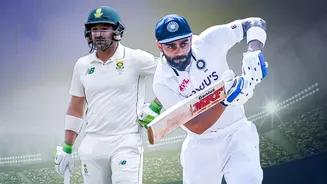
If there is one cricketer who embodies the “Ronaldo effect,” it is Virat Kohli. He didn't just embrace fitness; he weaponized it, transforming the Indian team from a skilled side into a unit of elite athletes. Following a personal wake-up call after the 2012 IPL season, Kohli undertook a complete overhaul of his lifestyle, famously ditching junk food and adopting a scientifically planned training and nutrition regimen. Working with strength and conditioning coach Shankar Basu, he began training like an Olympic athlete, focusing on power, agility, and endurance. As captain, Kohli institutionalized this philosophy. He made the demanding Yo-Yo test a non-negotiable benchmark for selection, sending a clear message: skill alone was not enough. The results were transformative. India became one of the fittest and most formidable teams in the world, competing on equal terms in demanding conditions in Australia, England, and South Africa. Kohli’s legacy is a cultural shift where fitness is now the undisputed foundation of Indian cricket.