



Seeing the Earth Like Never Before
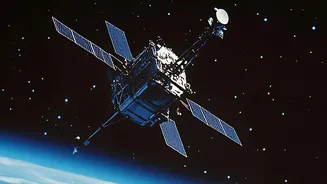
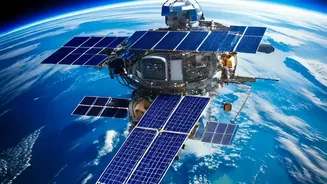
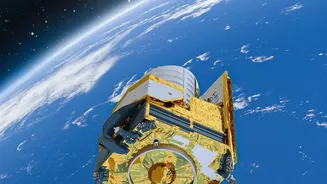
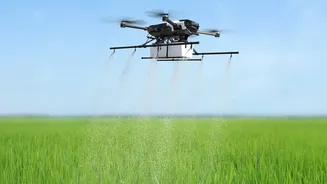
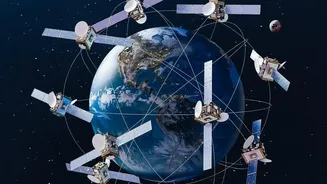
Earth Observation (EO) is the science of gathering information about our planet's physical, chemical, and biological systems from a distance. While this includes drones and aircraft, its most powerful tools are satellites orbiting the globe. These are not
just cameras taking simple pictures. They are equipped with advanced sensors, such as radar and LiDAR, that capture data across different wavelengths of light, day and night, and even through clouds. This technology allows scientists and policymakers to monitor large-scale environmental changes, from deforestation to glacial melt, with incredible detail and frequency. In essence, EO provides a continuous health check-up for the entire planet, giving us the crucial data needed to make informed decisions about its protection.
A Bird's-Eye View of Our Forests
For a country like India, with its diverse and expansive forests, traditional ground surveys are often time-consuming and expensive. Earth Observation provides a revolutionary alternative. Satellites can map and classify different forest types, assess their health, and calculate their density. This data is invaluable for tracking deforestation, whether from illegal logging or urban encroachment, by comparing images over time. For instance, the Forest Survey of India (FSI) uses satellite data to produce its biennial forest cover maps, which are critical for national policy. Furthermore, EO technology is a game-changer for managing forest fires, a frequent threat in states like Uttarakhand. Satellites can detect fires in their early stages and identify fire-prone areas, enabling faster responses and minimising damage.
Uncovering the Secrets of Wetlands
Wetlands are some of India's most productive yet threatened ecosystems, often misunderstood as 'wastelands'. These areas—which include lakes, marshes, mangroves, and estuaries—are vital for biodiversity, water purification, and flood control. However, their dynamic and often remote nature makes them difficult to monitor. Here again, satellite technology is indispensable. EO helps track changes in water levels, detect encroachment, and monitor water quality and vegetation health. Since 1998, India has used remote sensing to create a national inventory of its wetlands, a project led by the Indian Space Research Organisation (ISRO). This ongoing assessment provides the critical data needed to protect vital sites like Chilika Lake in Odisha and the Sundarbans in West Bengal.
India’s Advantage in Space
India is a global leader in space-based Earth Observation. ISRO has one of the largest constellations of remote sensing satellites in the world, starting with the IRS-1A in 1988. Satellites like those in the Resourcesat and RISAT series provide a steady stream of high-resolution data tailored to the country's needs. This sovereign capability means India does not have to depend on other nations for critical environmental data. Furthermore, India is collaborating on international missions, such as the NISAR satellite developed jointly with NASA. NISAR is specifically designed to monitor ecosystems like forests and wetlands, providing unprecedented detail on how they are changing and their role in the global carbon cycle. This positions India at the forefront of using technology for environmental stewardship.
From Data to Decisive Action
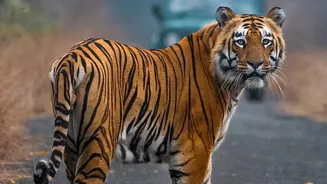
The ultimate goal of Earth Observation is not just to collect data, but to drive action. The insights gained from satellites inform a wide range of activities. They help government agencies enforce regulations against illegal mining and encroachment. They allow conservationists to map wildlife habitats and protect endangered species, like the tigers in Karnataka's reserves. The data also underpins disaster management, helping to predict floods and assess drought conditions. By providing clear, objective evidence of environmental changes, EO empowers policymakers to create more effective conservation strategies and helps hold them accountable. This shift from periodic reports to near real-time monitoring means that environmental management can become more proactive and responsive, protecting our natural resources for future generations.