




Why Situps Are Falling Out of Favour
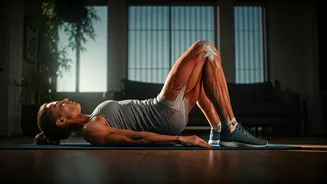
The traditional situp, once a staple of gym classes and military fitness tests, has come under scrutiny from biomechanics experts for good reason. The main issue lies in the movement itself: repeatedly flexing the spine. This motion can place hundreds
of pounds of compressive force on your spinal discs. Over time, this repetitive pressure can lead to discomfort, strain, and even an increased risk of issues like bulging or herniated discs. Prominent spine specialist Stuart McGill has been a vocal critic, noting that this repeated bending puts the spine in a vulnerable position. Furthermore, situps often over-activate the hip flexor muscles, which run from your thighs to your lower back. When these muscles become too tight from overuse, they can pull on the lumbar spine, potentially causing lower back pain. Many people also inadvertently strain their necks by pulling their head forward to complete the movement.
Enter the Forearm Plank: A Smarter Choice
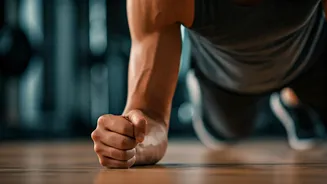
Unlike the dynamic, repetitive motion of a situp, the forearm plank is an isometric exercise. This means you hold a single position, creating tension throughout your muscles without movement. This is key to its effectiveness and safety. By holding your body in a straight line, you engage your core muscles to stabilize your spine, rather than repeatedly bending it. The plank is widely considered superior because it recruits a more balanced array of muscles across the front, sides, and back of your core. This holistic engagement builds functional strength that translates directly to daily activities, from carrying groceries to maintaining good posture at your desk. The plank teaches your core to do its primary job: to act as a stabilizer and resist force, which is crucial for protecting your spine and transferring power efficiently through your body.
What 'Core' Really Means
A truly “bulletproof” core is about more than just the visible “six-pack” muscles (the rectus abdominis) that situps primarily target. Your core is a complex system of muscles that wraps around your entire torso. This includes the transverse abdominis, the deepest layer of ab muscles that acts like a corset to stabilize your spine and pelvis. It also includes the obliques on your sides, which are responsible for rotation and side-bending, and the muscles of your lower back. Planks are exceptional because they challenge this entire system at once. They engage not only your abs but also your glutes, shoulders, back, and legs, making it a full-body exercise that promotes total stability.
Mastering Your Form: A Step-by-Step Guide
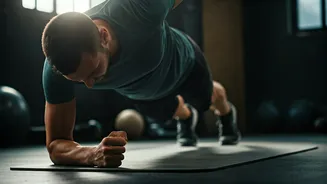
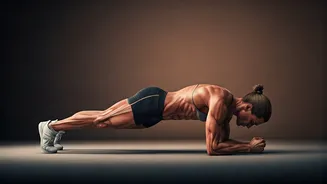
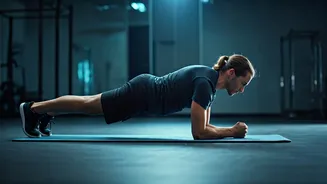
Proper form is everything when it comes to planks. Performing it correctly ensures you get the full benefit while preventing injury. Start by lying on your stomach and then place your forearms on the floor, with your elbows directly under your shoulders and palms facing down. Lift your torso and extend your legs straight behind you, balancing on the balls of your feet. Your body should form a perfectly straight line from your head to your heels. To achieve this, actively engage your core by pulling your belly button in towards your spine. Squeeze your glutes and quads to keep your lower back from arching or sagging. Keep your neck in a neutral position by looking at the floor just in front of your hands. Start by holding this position for 20 to 30 seconds, focusing on maintaining perfect form. As you get stronger, you can gradually increase the duration.
Ready for a Challenge? Plank Variations
Once you can comfortably hold a forearm plank for 60 seconds or more with good form, you can introduce variations to keep challenging your muscles. A side plank is a great next step, as it specifically targets the obliques. To perform one, lie on your side and prop your body up on one forearm, keeping your body in a straight line and your hips lifted. Another effective variation is a plank with a leg lift. While holding a standard forearm plank, slowly lift one leg a few inches off the ground without letting your hips drop, hold for a moment, and then lower it back down before switching sides. These variations introduce instability, forcing your core to work even harder to maintain balance and control.