
Prized for its vibrant colour and delicate, earthy aroma, saffron transforms humble rice into a celebrated delicacy across the globe. This 'red gold' is the star of countless recipes, each telling a story of its region's culture and culinary heritage.
Zarda Pulao (India and Pakistan)
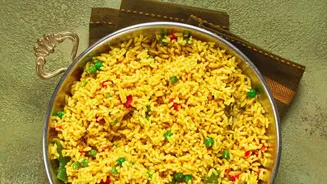
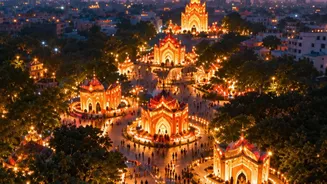
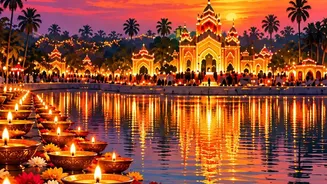
A festive favourite across North India and Pakistan, Zarda Pulao, also known as Meethe Chawal, is a sweet and aromatic rice dish. The name 'Zarda' comes from the Persian word for 'yellow', perfectly describing the beautiful hue saffron imparts to the long-grain basmati rice. This celebratory dish is enriched with ghee, sugar, and whole spices like cardamom, cloves, and cinnamon. It is lavishly garnished with an assortment of nuts and dried fruits, such as almonds, cashews, and raisins, making it a true feast for the senses, often prepared for special occasions like Eid and Diwali.
Risotto alla Milanese (Italy)
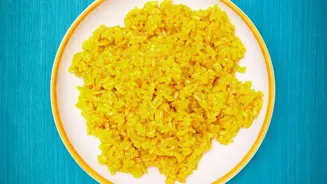
From the Lombardy region of Italy comes a dish renowned for its creamy, velvety texture: Risotto alla Milanese. This iconic Italian risotto gets its signature golden colour and profound flavour from just a few threads of saffron. The dish is traditionally made with short-grain rice like Arborio or Carnaroli, which is slowly cooked in a savoury beef or chicken broth until it reaches a silky consistency. A key step, known as 'mantecatura', involves vigorously stirring in cold butter and grated Grana Padano or Parmigiano-Reggiano cheese at the end to create its famously rich finish. It's often served as a standalone first course or alongside the classic braised veal shank, Osso Buco.
Paella (Spain)
No exploration of saffron rice is complete without mentioning Paella, Spain's most famous culinary export. Originating in Valencia, this one-pan wonder is a festive dish meant for sharing. Saffron is the essential spice that gives the rice its characteristic golden colour and a subtle, earthy flavour that complements the other ingredients perfectly. There are many variations, but a 'Paella Mixta' often includes a vibrant mix of chicken, shrimp, mussels, and clams, all cooked together in a wide, shallow pan. The most prized part for many is the 'socarrat', the layer of toasted, crispy rice that forms at the bottom of the pan.
Tahdig (Iran)
In Persian cuisine, the most coveted part of a rice dish is often the 'Tahdig', which translates to 'bottom of the pot'. It refers to the irresistibly crispy, golden crust of rice that forms during cooking. While many Persian rice dishes have a tahdig, it is a celebrated art form in itself. Saffron is key to achieving the signature golden colour and fragrant aroma. The process involves par-boiling basmati rice, then steaming it over a layer of fat (like butter or oil) in a pot. Sometimes, a mixture of rice, yoghurt, saffron, and egg yolk is spread on the bottom to create an even richer, thicker crust that is then inverted onto a platter for serving.
Tahchin-e Morgh (Iran)
Taking the concept of Tahdig to the next level, Tahchin-e Morgh is a spectacular Persian savoury rice cake. The name describes how ingredients are arranged at the bottom of the pot. It features layers of saffron-infused rice and cooked chicken, bound together with yoghurt and egg. This mixture is then baked or cooked on the stovetop until a thick, crunchy golden crust forms on the outside while the inside remains soft and moist. Often garnished with tart barberries and pistachios, the finished dish is inverted and served in impressive slices, showcasing the beautiful contrast between the crispy exterior and the tender filling.