


The Perfect Culinary Partnership
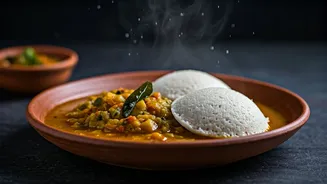
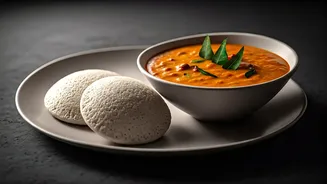
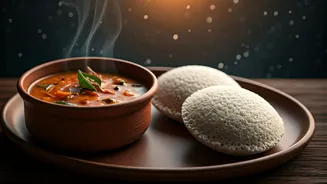
On the surface, it’s a simple concept: soft, pillowy, steamed rice cakes served with a hot, tangy lentil stew. But the magic lies in the contrast. The idli, pristine and mild, acts as the perfect canvas. It’s a neutral base, designed not to overpower
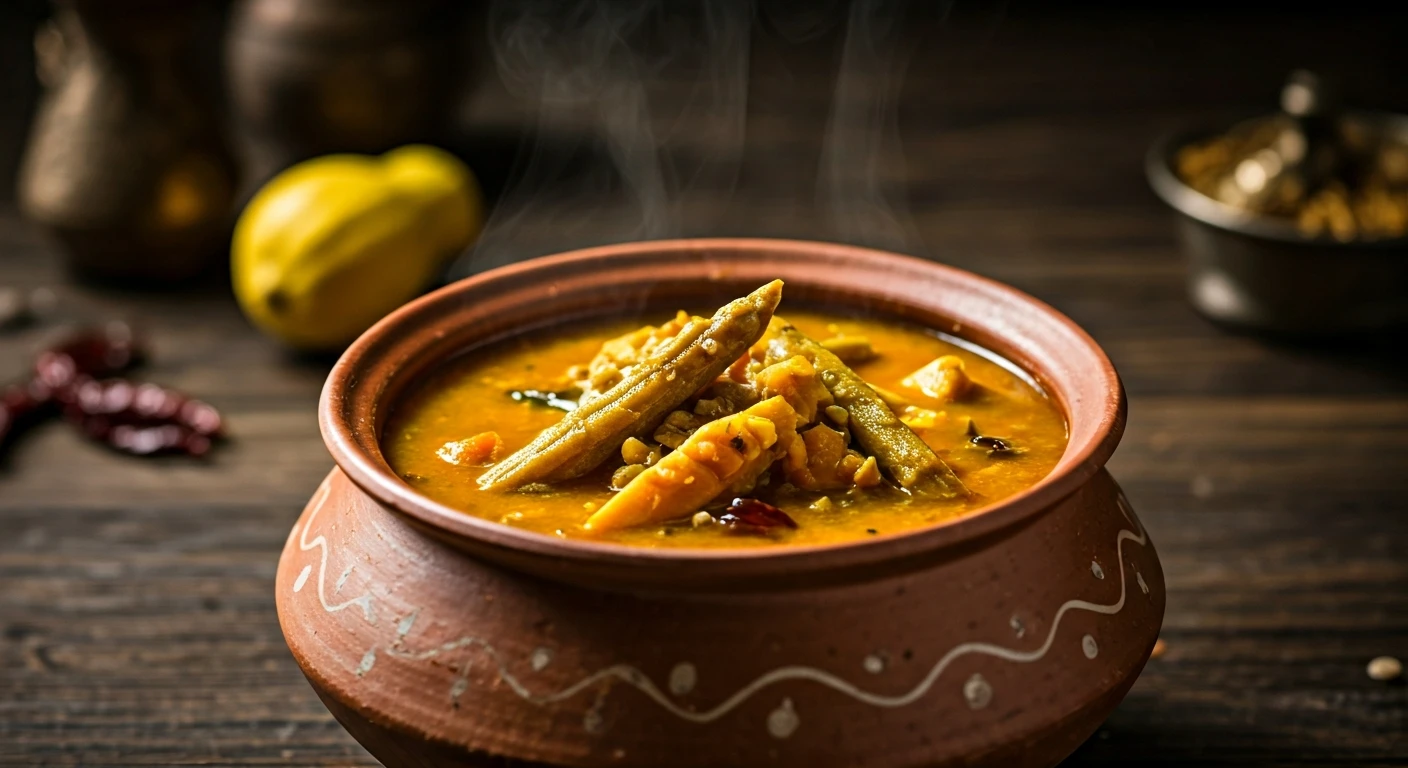
but to absorb. Its porous, cloud-like texture soaks up the sambar, ensuring every bite is a saturated explosion of flavour. The sambar, meanwhile, brings the drama. It is a complex, aromatic broth, a symphony of tamarind’s sourness, jaggery’s subtle sweetness, and a spice blend that varies from one kitchen to the next. It’s this beautiful dance of textures and tastes—the soft yielding to the liquid heat, the bland embracing the bold—that makes the first bite, and every subsequent one, so deeply satisfying.
A Bite of Delicious History
The pairing feels so timeless that it’s easy to assume they were born together. However, culinary historians suggest their union is a relatively modern love story. The idli itself has a fascinating, debated origin. While some texts trace a version of it back to 10th-century Karnataka, others, like food historian K.T. Achaya, point to Indonesian influence. He theorised that Indonesian kings visiting southern India brought their culinary tradition of steamed, fermented rice cakes called 'kedli'. Over centuries, this concept was adapted by local cooks into the idli we know today. Sambar’s own story is tied to the Maratha rulers of Thanjavur, with lore suggesting it was an accidental creation in the royal kitchen, named after the guest of honour, Sambhaji. Whatever their separate journeys, their eventual combination created a culinary icon that transcended regional boundaries.
The Unassuming Nutritional Champion
Beyond its taste, idli-sambar is a nutritional powerhouse disguised as comfort food. The process of fermenting the rice and urad dal batter for idlis does more than create a fluffy texture; it enhances its nutritional profile significantly. Fermentation breaks down complex starches and proteins, making them easier to digest, and increases the bioavailability of nutrients like B vitamins. The combination of rice (cereal) and dal (pulse) makes it a source of complete protein, offering all the essential amino acids our bodies need. Sambar, packed with lentils and a variety of vegetables like drumsticks, pumpkin, and carrots, contributes fibre, vitamins, and minerals. It’s low in fat, gluten-free, and provides sustained energy, making it an ideal meal to start the day or recover with. In a world of fleeting food trends, idli-sambar remains a testament to traditional wisdom about balanced, wholesome eating.
A Dish for Every Mood
Part of its winning formula is its incredible versatility. It’s the quintessential South Indian breakfast, served up in bustling Udupi restaurants and quiet family kitchens alike. It’s a reliable 'tiffin' item, packed into lunchboxes for school and office. For a late-night craving, a plate of mini idlis dunked in sambar is light yet deeply comforting. When you're feeling under the weather, it's the gentle, nourishing meal that your body craves. It’s democratic food, enjoyed by everyone from daily wage earners at roadside stalls to diners in upscale restaurants. This adaptability ensures it’s never out of place, always welcome, and consistently the right choice for almost any occasion.