


A Cosmic Shooting Gallery
Our planet orbits the Sun in a neighbourhood filled with millions of rocky bodies called asteroids. Most keep a safe distance, but some have orbits that bring them close to Earth. These are known as Near-Earth Objects, or NEOs. While the probability of a major
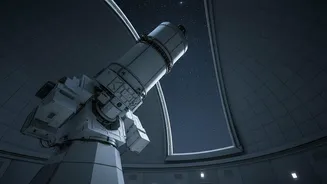
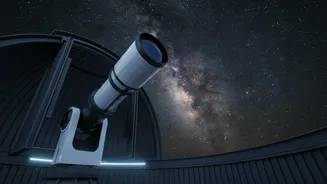
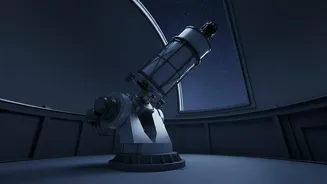
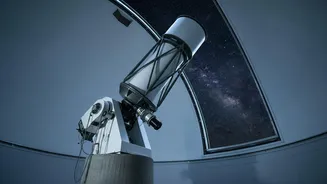
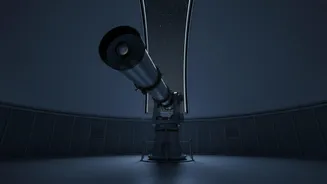
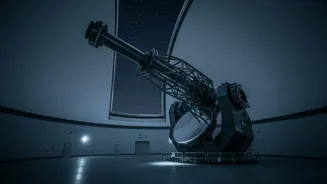
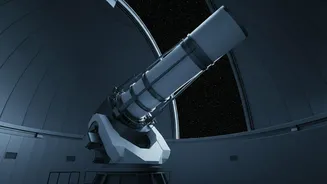
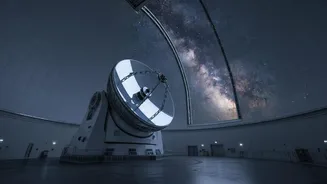
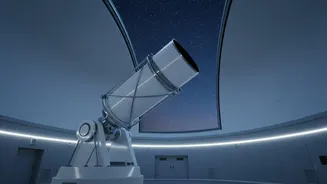
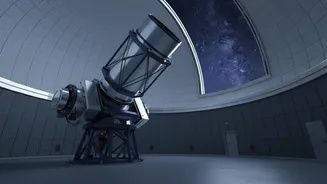
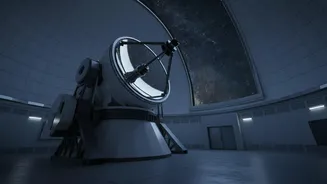
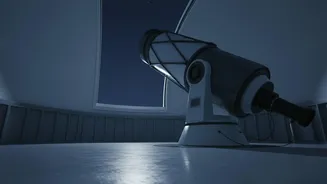
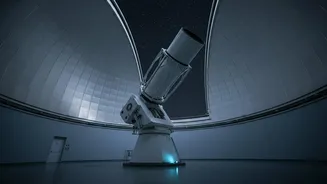
impact is low, the potential consequences are catastrophic, making it essential to find and track these objects. NASA has been tasked with finding at least 90 percent of NEOs that are 140 metres or larger—big enough to cause significant regional devastation. This is no small feat, given the vastness of space and the sheer number of objects to monitor. This global effort, known as planetary defense, relies on a network of sophisticated survey telescopes.
The Shift from Manual to Machine
In the past, discovering an asteroid was a slow, painstaking process. Astronomers would manually compare photographic plates taken hours or days apart, searching for a single point of light that had moved against the backdrop of stationary stars. Today, this task has been handed over to powerful automated systems. These surveys use wide-field telescopes equipped with massive digital cameras to image huge swathes of the sky repeatedly throughout the night. Software then takes over, performing the tedious task of comparing these images almost instantly. By subtracting one image from another, the software can identify anything that has moved, flagging it as a potential NEO candidate for further review.
How Automation Achieves Accuracy
The key to high accuracy is data—specifically, multiple observations over time. A single detection only tells us an object's position at one moment. To plot a trajectory, astronomers need a series of data points. Automated surveys are designed for this. For example, the Asteroid Terrestrial-impact Last Alert System (ATLAS) observes a patch of sky four times in one night, with about 15 minutes between each observation. This provides a short arc of movement, enough to get a preliminary sense of the object's path. These initial findings are sent to the Minor Planet Center, a global clearinghouse for asteroid data. This alerts other observatories worldwide to perform follow-up observations. Each new detection, whether it's minutes, days, or weeks later, helps astronomers refine the object's orbit with increasing precision. The more data points they collect, the smaller the uncertainty, allowing for highly accurate long-term predictions.
A Global Network of Eyes
Planetary defense is a team sport, and no single observatory can do it alone. Major players include the Catalina Sky Survey in Arizona, the Pan-STARRS telescopes in Hawaii, and the globally distributed ATLAS system, which has telescopes in Hawaii, Chile, and South Africa. This geographical spread is crucial. It allows for continuous, 24-hour observation of the sky and covers areas that would be blind spots for a single location. Pan-STARRS has been a particularly prolific discovery machine, finding more than 40% of all new NEOs. Together, these ground-based surveys form a powerful network, sharing data to ensure that once an object is found, it isn't lost again.
The Future is Even Faster
The next leap forward in asteroid detection involves artificial intelligence and new, more powerful observatories. AI algorithms like THOR (Tracklet-less Heliocentric Orbit Recovery) can sift through archival data, finding thousands of previously missed asteroids in old images. This helps build a more complete catalogue of the NEO population. Looking ahead, upcoming facilities like the Vera C. Rubin Observatory in Chile will survey the sky with unprecedented depth and speed. Furthermore, space-based telescopes like the planned NEO Surveyor will give us an even better vantage point. By operating in the infrared spectrum, it will be able to spot dark asteroids that reflect little sunlight and even find objects approaching from the direction of the Sun, a major blind spot for ground-based optical telescopes.