





What is Functional Core Strength?
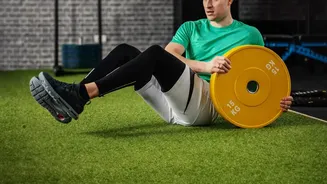
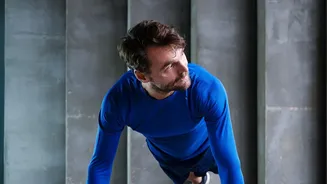
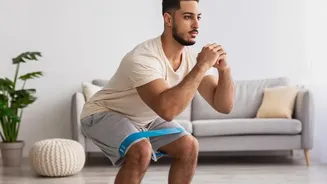
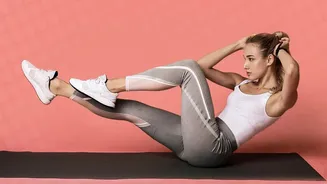
Before we jump into the exercises, let's understand what 'functional' really means. While exercises like crunches isolate your 'six-pack' muscle (the rectus abdominis), functional training engages the entire system of deep and superficial muscles in your torso,
hips, and lower back. This includes muscles like the transverse abdominis and obliques. Think of your core as a natural brace for your body. A strong functional core helps you perform daily tasks with ease and stability, from lifting groceries to maintaining good posture at your desk, all while reducing the risk of lower back pain and injury.
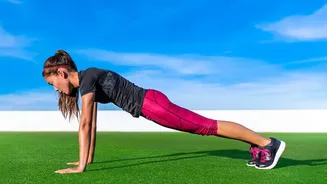
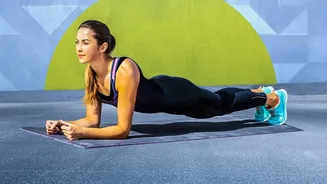
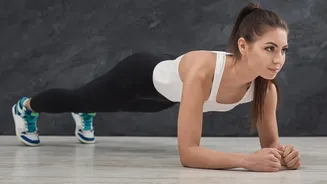
The Plank: The Foundation of Stability
The plank is a classic for a reason: it's a total-body exercise that teaches your core to stabilise your spine. It strengthens your abs, back, and shoulders all at once. How to do it: Start on all fours. You can either be on your forearms with elbows directly under your shoulders or in a high push-up position with hands under your shoulders. Extend your legs back one at a time, keeping your body in a straight line from your head to your heels. Engage your abs by pulling your belly button towards your spine, and squeeze your glutes. Avoid letting your hips sag or rise too high. Hold this position, breathing steadily, for 30 to 60 seconds.
The Dead Bug: Master Your Coordination
The Dead Bug might look simple, but it's a fantastic exercise for developing coordination and deep core control without straining your back. It teaches your core to remain stable while your limbs are in motion. How to do it: Lie on your back with your arms extended towards the ceiling and your legs in a 'tabletop' position (knees bent at 90 degrees, directly over your hips). Press your lower back gently into the floor. On an exhale, slowly lower your right arm and left leg toward the floor, moving them in opposite directions. Go as low as you can without your lower back arching. Inhale to return to the start, then repeat with the opposite arm and leg. That's one rep. Aim for 10-12 reps per side.
The Bird-Dog: Balance and Back Health
The Bird-Dog is another excellent move that challenges your balance and stability, strengthening the core muscles that support your spine. It's particularly good for improving posture and relieving back tension. How to do it: Begin on all fours in a tabletop position, with hands under shoulders and knees under hips. Keep your spine neutral and engage your abdominal muscles. Simultaneously extend your right arm straight forward and your left leg straight back, keeping your hips and shoulders parallel to the floor. Imagine balancing a cup of water on your lower back. Hold for a moment, then return to the starting position with control. Repeat on the other side. Aim for 10-12 reps per side.
The Glute Bridge: Power from the Posterior
A strong core isn't just about the abs; it includes your glutes and lower back. The Glute Bridge activates and strengthens your entire posterior chain, which provides support for your spine and improves hip mobility. How to do it: Lie on your back with your knees bent, feet flat on the floor about hip-width apart, and your arms by your sides. Tighten your abdominal and glute muscles. Press through your heels to lift your hips off the floor until your body forms a straight line from your shoulders to your knees. Squeeze your glutes at the top and hold for a few seconds before slowly lowering your hips back down. Avoid arching your back. Perform 15-20 repetitions.
Mountain Climbers: Add a Cardio Burst
Mountain Climbers are a dynamic exercise that not only strengthens the core but also elevates your heart rate for a cardiovascular benefit. They challenge your core's ability to stay stable during a faster-paced movement. How to do it: Start in a high plank position, with your hands directly under your shoulders and your body in a straight line. Engage your core and drive your right knee towards your chest. Quickly switch legs, bringing your left knee towards your chest as you extend your right leg back. Continue alternating legs in a 'running' motion while keeping your hips level and your back flat. Aim to maintain a steady pace for 30-45 seconds.