



Why Scent Work is So Rewarding
A dog's nose is a marvel, containing up to 300 million olfactory receptors compared to our mere six million. Engaging this powerful sense provides incredible mental stimulation that can be more tiring than a long walk. Scent games, also known as nose work,
give dogs a purposeful job, which helps reduce boredom, burn excess energy, and even lower stress levels. For shy or fearful dogs, these games can be a major confidence booster because they are in charge, using their natural instincts to solve a puzzle independently. It's an activity that strengthens your bond as you learn to read your dog's body language and work together as a team.
The Golden Rule: Start with Success
When introducing any new game, you want your dog to understand the rules and, most importantly, have fun. The fastest way to do this is by making the first few rounds incredibly easy. If a dog gets frustrated or confused early on, they may develop a negative association with the activity and lose interest. By starting with visible or very simple hides, you guarantee they will succeed quickly. These initial easy wins create a positive, enthusiastic response. Your dog learns that “find it” means a fun, rewarding game is about to happen, building motivation and a desire to play again. Confidence is cultivated through repeated success, and that foundation is crucial before you add any challenges.
Your First Scent Game: A Simple Guide
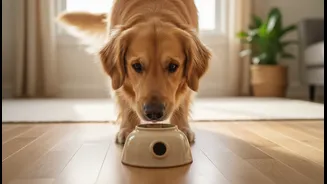
You don't need much to get started: some high-value, smelly treats (like small pieces of chicken or cheese) and a few cardboard boxes or plastic cups. Begin in a quiet room with minimal distractions. While your dog is watching, place a treat under one of three cups. Give your verbal cue, such as “Find it!” and encourage them to investigate. When they sniff or paw at the correct cup, immediately praise them and lift the cup so they can have the treat. Another easy starting point is to simply toss a treat a few feet away, say “Find it,” and let them see where it lands. Keep these initial sessions short—just three to five minutes—and always end on a high note while your dog is still engaged.
From Visible Hides to Box Searches
Once your dog understands the basic game, you can slightly increase the challenge. Use several cardboard boxes, but only place a treat in one. At first, leave the boxes open so your dog can easily see and retrieve the treat. Let them explore on their own without you pointing to the right box. Your role is to be an excited cheerleader when they make a find. As they get more confident, you can begin placing the treat in a box while they are out of the room, so they must rely entirely on their nose. This teaches them to systematically check each container, building focus and problem-solving skills.
Knowing When and How to Add Difficulty
The key to making scent games harder is to do it gradually. Overloading your dog with a challenge that is too complex too soon is a common pitfall that can lead to frustration. Once your dog is acing the box searches, you can start hiding treats around a room without containers—behind a furniture leg, under the edge of a rug, or on a low, stable surface. From there, you can move to outdoor searches, which are naturally more difficult due to competing environmental smells. Other ways to increase the challenge include creating a scent trail by dragging a treat along the grass or hiding treats at different heights. Always watch your dog's engagement level. If they seem confused or start to disengage, simply go back to an easier level for a few rounds to rebuild their confidence before trying again.