
From Theory to Certainty
Not long ago, the idea of planets orbiting other stars belonged more to science fiction than to science fact. While philosophers have speculated about other worlds for millennia, the first confirmed detection of an exoplanet only happened in 1992. That
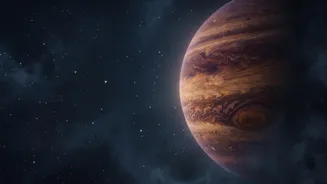
discovery, and the trickle that followed, fundamentally changed astronomy. It moved the study of exoplanets from a theoretical exercise to an observational one. Early discoveries were often of massive 'Hot Jupiters' orbiting incredibly close to their stars, simply because these were the easiest to detect. This created a skewed initial picture, suggesting such extreme systems might be typical. But as our methods improved, a far more varied and interesting portrait of the galaxy began to emerge, hinting that planets weren't just possible, but perhaps plentiful.
The Kepler Revolution
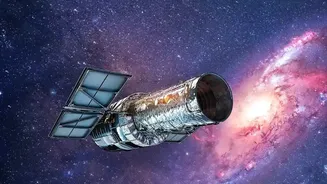
The game truly changed with NASA's Kepler Space Telescope. Launched in 2009, its mission was simple but ambitious: to stare at a single patch of sky and look for the tiny dips in starlight caused by planets passing in front of their stars. Instead of finding a few, Kepler found thousands. Its data provided the first large-scale statistical look at the galactic planetary population. The key takeaway was revolutionary: there are more planets than stars in the Milky Way. Studies based on Kepler's observations estimated that nearly every sun-like star hosts at least one planet. Suddenly, our solar system no longer seemed like a cosmic exception. The data suggested that billions of rocky, potentially habitable worlds could exist in our galaxy alone.
Refining the Picture with Webb
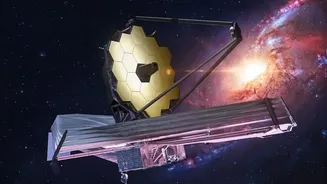
If Kepler provided the census, the James Webb Space Telescope (JWST) is providing the character study. Launched in 2021, Webb's powerful infrared instruments are not just finding planets; they are analyzing their atmospheres and observing their formation. Recent research using JWST has peered into protoplanetary disks — the swirling clouds of gas and dust where planets are born. These studies are revealing that the building blocks of rocky planets, like silicates, are abundant. Other research is showing how the process of planet formation is a 'race against time', as gas giants must form before the star's wind blows the raw material away. This new level of detail helps scientists understand not just if planets form, but how and where. For instance, recent findings suggest even neighboring planets like Earth and Mars may have formed through different dominant processes, one by accreting pebbles and the other through collisions of larger bodies.
A Planet for Every Star?
The consensus today is that planets are not rare; they are the standard outcome of star formation. Data from multiple observatories strongly indicates that most, if not practically all, sun-like stars have planetary systems. The focus has now shifted from 'how many planets' to 'how many of a certain type'. Analyses suggest that about half of all sun-like stars could host a rocky planet in the 'habitable zone' where liquid water could exist on the surface. The most common type of star in the galaxy, the M-dwarf, also appears to host planets in abundance, potentially increasing the number of habitable worlds even further. In fact, planets might form in even more exotic locations than we thought. A 2026 study even proposed that millions of planets could form in the dusty disks surrounding supermassive black holes at the centers of galaxies.
The Next Frontier: From Common to Living
Knowing that planets are common is just the first step. The next grand challenge is determining which of these countless worlds might be habitable, or even inhabited. This involves moving beyond simply detecting a planet's size and orbit. With JWST, scientists are beginning to parse the chemical makeup of exoplanet atmospheres. Finding signs of an atmosphere on a rocky 'lava world', for example, helps scientists understand how planets can retain atmospheres even in extreme conditions. Future telescopes will build on this, searching for biosignatures — gases like oxygen or methane that could indicate the presence of life. The latest research tells us we live in a galaxy overflowing with worlds. The question is no longer whether other planets exist, but whether any of them share the one quality that, so far, makes Earth unique: life.