




A Village Reaching for the Stars
Deep in the Surgana taluka of Nashik district, the tribal village of Udmal is taking a stand against a pervasive but often overlooked form of pollution: light. The community is actively working towards being certified by DarkSky International, a global
authority on preserving night skies. This initiative, backed by the district administration with a sanctioned fund of ₹42.1 lakh, aims to protect the area's pristine night skies from artificial light, setting the stage for it to become a unique astro-tourism destination. The village's Gram Sabha has passed a formal resolution under the Panchayats (Extension to Scheduled Areas) Act, or PESA, marking a community-led commitment to this celestial cause. This makes Udmal a trailblazer, not just for Maharashtra, but for all of India.
What Exactly is a Dark Sky Community?
The term isn't just a poetic description. A Dark Sky Community is a formal designation given by DarkSky International to towns or cities that have shown an exceptional commitment to preserving the night sky. This involves adopting and enforcing quality outdoor lighting ordinances, promoting education about light pollution, and gaining widespread citizen support. It’s different from a Dark Sky Reserve, like the one in Hanle, Ladakh. A Reserve is typically a large, remote, and often uninhabited area with a dark core and a protective buffer zone. A Community, on the other hand, is a populated area where people actively work to live in harmony with the night sky by implementing responsible lighting practices within their own town.
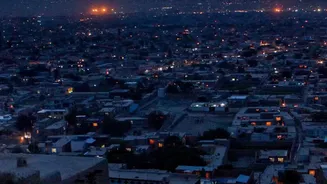
The Pervasive Problem of Light Pollution
For most of human history, a canopy of brilliant stars was a nightly spectacle. Today, for a vast majority of the global population, the Milky Way is completely invisible due to light pollution. This excess artificial light does more than just obscure our view of the cosmos. It has documented negative effects on wildlife, disrupting the migratory patterns of birds and the life cycles of nocturnal animals. In humans, excessive exposure to artificial light at night has been linked to sleep disorders and other health issues. Furthermore, it represents a significant waste of energy. By implementing smart lighting—using shielded fixtures that direct light downwards where it's needed and using warmer-toned bulbs—communities can reduce energy consumption, cut costs, and restore a piece of our natural heritage.
How Udmal is Making It Happen
Udmal’s journey is a grassroots effort. The community, in collaboration with the NGO Astronera, is undertaking several concrete steps. This includes conducting a night sky quality assessment and, crucially, retrofitting public lighting. Instead of high-mast lamps that scatter light in all directions, the plan is to use shielded, downward-facing lights that illuminate streets and paths without creating upward glare. Public awareness campaigns are also a key part of the project, educating residents and training local tribal youth in the principles of dark sky preservation and the basics of astronomy. The initiative isn’t about eliminating light but about using it wisely and efficiently, ensuring safety and visibility without sacrificing the starry view.
A New Dawn for Astro-Tourism
The benefits of becoming a Dark Sky Community extend far beyond a beautiful view. For Udmal, this status promises to create sustainable livelihood opportunities for the local tribal community through astro-tourism. Nashik is already a popular tourist destination, known for its vineyards and temples, but this adds an entirely new dimension to its offerings. The vision is for Udmal to host stargazing sessions, astrophotography workshops, and educational programs, drawing a new type of tourist seeking authentic, nature-based experiences. The region also has a historical connection to astronomy, with the 12th-century astronomer Bhaskaracharya associated with the area, adding a layer of cultural heritage to the project. Udmal could become a model for how rural communities can leverage their natural assets for economic development while simultaneously preserving them.