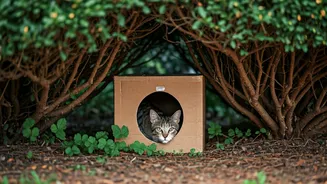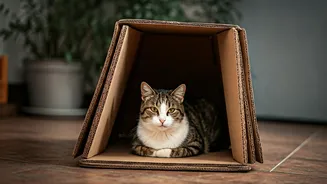









Why a Simple Box Matters
For a stray cat, a dry, insulated place to rest is more than just a convenience—it's a critical survival tool. Exposure to rain and cold can lead to hypothermia, illness, and a weakened immune system. A temporary shelter provides a safe space to escape
the elements, conserve body heat, and rest without fear. While not a permanent solution, these DIY shelters offer immediate relief and significantly increase a stray's chances of surviving harsh weather. It's a small act of compassion that has a massive impact on the well-being of the animals who share our neighbourhoods.
Step 1: Gather Your Materials
You don’t need to be an expert builder or spend a lot of money. Most of the necessary materials can be found around your home. Start with a sturdy cardboard box—the kind used for appliances or heavy deliveries is ideal. You’ll also need a box cutter or strong scissors, waterproof packing tape, and large plastic garbage bags or a plastic tarpaulin sheet. For insulation, gather dry straw (the best option as it resists moisture), shredded newspaper, or old, dry clothes that you no longer need. The goal is to create a structure that is both insulated and waterproof.
Step 2: Construct the Basic Shelter
Begin by reinforcing the box. Use the packing tape to securely seal all the bottom flaps and seams to prevent drafts and add stability. Next, cut an entrance. The opening should be just large enough for a cat to fit through, roughly 15 cm by 15 cm. A smaller entrance helps trap body heat inside and keeps larger predators out. To prevent rain from getting in, it's best to cut the entrance on one of the narrower sides of the box, a few inches above the ground, rather than in the centre.
Step 3: Make It Weatherproof
This is the most critical step, especially during the Indian monsoon. A wet cardboard box is worse than no shelter at all. To waterproof your creation, wrap the entire box, top to bottom, in thick plastic garbage bags or a tarpaulin sheet. Overlap the plastic generously and use plenty of packing tape to seal every seam, corner, and edge. Pay special attention to the areas around the entrance. This plastic shell will act as a barrier against rain and moisture, keeping the interior dry and warm. For added protection, you can create a small overhang or 'awning' above the entrance using a piece of plastic or extra cardboard.
Step 4: Insulate for Warmth
Once the structure is waterproof, it's time to make it cosy. The best insulation is straw because it allows cats to burrow in and it wicks away moisture. If straw isn't available, shredded newspaper or mylar blankets are good alternatives. Avoid using towels, blankets, or pillows. While they seem comfortable, these materials absorb moisture, get damp, and can actually pull heat away from a cat's body, making them colder. Fill the bottom third of the shelter with your chosen insulating material, creating a warm bed for the cat.
Step 5: Choose the Right Location
Where you place the shelter is just as important as how you build it. Find a quiet, discreet location away from heavy foot and vehicle traffic. Good spots include a sheltered corner of your garden, under a porch, or near a low-lying hedge. The shelter should be placed on a few bricks or a wooden pallet to raise it off the cold, wet ground. This prevents water from seeping in from below and helps keep the interior insulated. Face the entrance away from prevailing winds or towards a wall to provide extra protection from drafts and rain.
Step 6: Maintenance and Care
A cardboard shelter is a temporary fix and will require some upkeep. After heavy rain or strong winds, check on the shelter to ensure it is still dry, intact, and in place. The bedding inside should be checked periodically and replaced if it becomes wet or soiled. Alongside the shelter, you can leave a bowl of fresh, clean water. Building a shelter is a wonderful first step in community animal care. If you notice a cat is injured, ill, or appears to be a lost pet, please contact your local animal welfare organization or a nearby veterinarian for assistance.