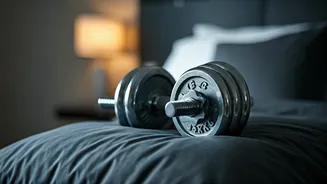







Sleep: The Ultimate Performance Enhancer
Think of sleep as the overnight shift manager for your body's recovery operations. While you're resting, your system is hard at work repairing tissue, regulating hormones, and consolidating memories. For anyone serious about their gym performance, sleep isn't
a passive activity but a fundamental pillar of training, just as crucial as nutrition and exercise. Without adequate, high-quality sleep, the physical stress from workouts can't be effectively repaired, leading to diminished returns on your effort and an increased risk of injury. It's during these quiet hours that the body transitions from a state of breakdown to one of building up, setting the stage for strength and progress.
The Science of Muscle Repair
Every time you lift weights, you create microscopic tears in your muscle fibers. The process of repairing these tears is what makes muscles stronger and larger. This critical repair work happens primarily during sleep, specifically during the deep, non-REM (NREM) stages. In this phase, your brain activity slows, allowing for increased blood flow to your muscles. This enhanced circulation delivers the oxygen and nutrients necessary for healing. Most importantly, deep sleep triggers the pituitary gland to release a significant surge of human growth hormone (HGH). This powerful hormone is essential for stimulating tissue regeneration and protein synthesis, the very process that rebuilds your muscles stronger than before. Inadequate sleep means less HGH, slower recovery, and stunted muscle growth.
Finding Your Hormonal Edge
Achieving elite status at the gym is also a hormonal game, and sleep is the master regulator. Consistent sleep helps optimize the body's anabolic (muscle-building) environment. It not only boosts HGH but also supports healthy testosterone levels, another key hormone for muscle mass and strength. Conversely, sleep deprivation can have a catabolic (muscle-breaking) effect. Lack of sleep elevates levels of cortisol, a stress hormone that promotes muscle protein breakdown and can hinder recovery. Studies have shown that even a few nights of restricted sleep can lead to a significant increase in cortisol and a decrease in muscle protein synthesis, effectively working against your fitness goals. By prioritising sleep, you ensure your hormonal profile is working for you, not against you.
The Mental Reps Count, Too
Physical strength is only half the battle; the other half is fought in the mind. High-quality sleep sharpens the cognitive functions that are vital for an elite workout. This includes focus, motivation, and reaction time. When you're well-rested, you can push through a tough set with greater determination and maintain proper form, reducing the risk of injury. Furthermore, sleep, particularly REM sleep, is crucial for motor learning. It’s when your brain consolidates the new movement patterns you practiced, helping to perfect your technique for complex lifts like squats or deadlifts. Studies have consistently shown that sleep deprivation leads to decreased accuracy, slower reaction times, and a higher perceived effort, making workouts feel harder and less effective.
Aiming for the Elite Sleep Window
So, how much sleep is enough to unlock these benefits? While the general recommendation is 7-9 hours for adults, athletes and those engaging in intense regular training often need more. Some studies on collegiate and professional athletes have shown significant performance improvements—in accuracy, speed, and reaction time—when they extend their sleep to 10 hours a night. While 10 hours may be unrealistic for most, consistently getting at least 8 hours of quality, uninterrupted sleep should be the goal. Think of it as a non-negotiable training session. Skipping it means you're not just tired; you're actively compromising your potential to be elite.