



What is the SPEARS Project?
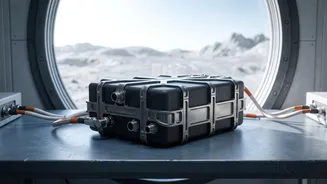
SPEARS stands for Solid Power for Extreme Environment Adaptability and Resilience in Space. It is an early-stage research and technology development project led by NASA's Glenn Research Center, with collaboration from the agency's Langley and Ames research centers.
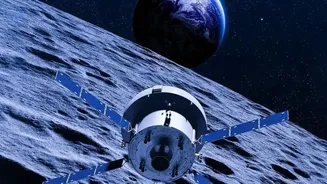
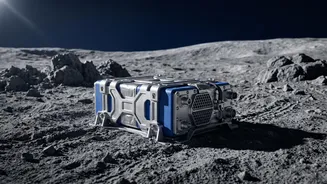
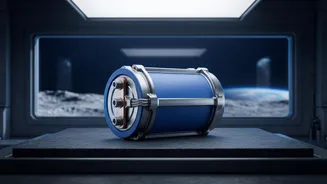
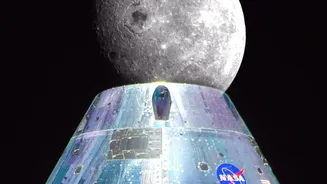
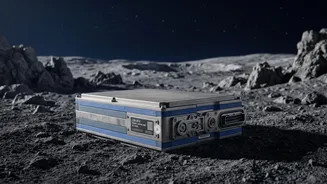
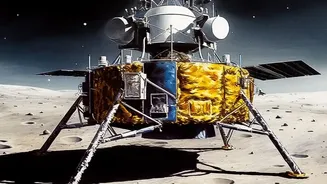
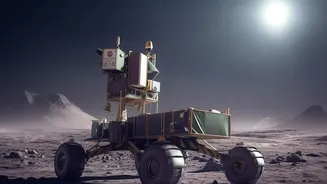
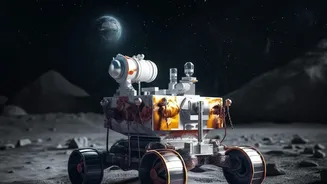
The project, which began in 2026, is focused on creating a new generation of batteries that can reliably and safely operate in the harsh environment of the Moon, a critical step for enabling the long-term goals of the Artemis program. Unlike a formal mission, SPEARS is a foundational effort to mature a technology that could one day power everything from astronaut equipment to lunar rovers.
The Challenge of the Lunar Night
The primary obstacle SPEARS aims to overcome is the extreme cold of the lunar night. For roughly 14 Earth days at a time, parts of the Moon, especially the South Pole region where NASA plans to build a presence, are plunged into darkness and temperatures can plummet to minus 200 degrees Celsius (minus 328 degrees Fahrenheit). Standard lithium-ion batteries, like those in our phones and cars, rely on a liquid electrolyte to function. In such intense cold, this liquid would freeze, damaging the battery and rendering it useless. Conversely, daytime temperatures can reach 100°C (212°F), which also poses a challenge. Current solutions require heavy, bulky, and power-hungry heating units to keep batteries warm, which adds significant mass and complexity to any lunar mission.
A Solid Solution to a Liquid Problem
The core innovation of the SPEARS project is the development of solid-state batteries. These batteries replace the vulnerable liquid electrolyte with a solid, durable material, such as a ceramic or polymer. This fundamental change offers several game-changing advantages. First, solid electrolytes do not freeze, which means the batteries can survive the extreme cold of the lunar night without being damaged. Recent thermal vacuum tests at NASA Langley showed that prototype cells survived exposure to temperatures as low as minus 170°C (minus 274°F). While they cannot operate at such a low temperature, the key is that they remain intact. With small, efficient heaters, they can be warmed up to an operational temperature only when needed, rather than requiring continuous heating throughout the entire lunar night. This could dramatically reduce the energy and mass allocated to thermal management systems.
Current Progress and Next Steps
The SPEARS project is still in its early stages, focusing on technology development with small, coin-cell prototypes. The results so far are promising. During recent tests, the cells operated successfully at temperatures ranging from minus 60°C to 80°C (minus 76°F to 176°F). They even functioned with reduced performance down to minus 80°C (minus 112°F). The principal investigator, Donald Dornbusch of NASA Glenn, has noted that batteries will be essential for lunar life, and this technology is being developed to meet that need. The next phase of research will focus on improving performance, expanding the operational temperature range, and scaling up the technology from small cells to larger, more complex battery systems. NASA's Ames Research Center is working on developing the flight hardware and electronics needed to test these batteries in a true space environment.
Beyond the Moon
While designed for the extreme conditions of space, the technology developed under the SPEARS project has the potential for significant applications back on Earth. The research is an evolution of a previous NASA project that focused on batteries for aeronautics. The adaptable nature of solid-state chemistry means batteries could be tuned for different purposes, whether for high power, long-term energy storage, or durability. This could eventually translate into better, safer, and more resilient batteries for electric vehicles, drones, and portable electronics, especially those used in extreme cold-weather environments on our own planet. The research is also highly relevant for other space agencies, including for future joint missions like the planned Lunar Polar Exploration Mission (LUPEX) between India and Japan.