



The Science of Sweetness and Scoopability
Before diving into the alternatives, it's crucial to understand sugar's role in ice cream. It does more than just sweeten the mix. Sugar is the magic ingredient that lowers the freezing point of the ice cream base. This prevents the formation of large,
crunchy ice crystals, ensuring the final product is smooth and scoopable rather than a rock-solid, icy block. When we swap out traditional sugar, the challenge is to replicate this textural effect. Many natural sweeteners have different chemical structures and molecular weights, which directly influences the texture and softness of the final product. The goal isn't just to replace sweetness but to manage the freeze.
Whole Fruit Sweeteners: Dates and Bananas
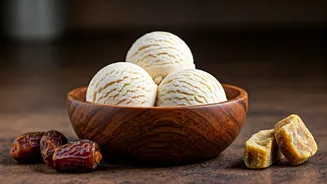
For a truly wholesome approach, whole fruits are a fantastic starting point. Dates, in particular, are a powerhouse for homemade ice cream. When soaked and blended into a paste, they provide a rich, caramel-like sweetness and a good amount of fibre. This fibre and their natural sugar composition help create a dense, creamy texture reminiscent of traditional kulfi. Similarly, ripe, frozen bananas can be blended to create an instant 'nice cream' with a wonderfully creamy base and inherent sweetness. These options not only replace refined sugar but also add nutrients and complex flavours.
Liquid Golds: Maple Syrup and Honey
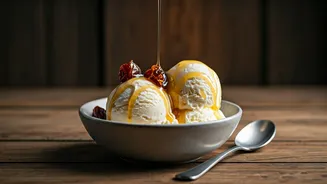
Maple syrup and honey are popular liquid sweeteners that do more than just sweeten; they contribute their own distinct, delicious flavours. Both have a lower glycemic index than white sugar and contain beneficial antioxidants. Because they are liquids, they integrate smoothly into an ice cream base. They also act as 'invert sugars', which are excellent at keeping ice cream soft and preventing crystallisation. However, their strong flavours work best when you want to complement them, such as in a vanilla, nut, or spice-based ice cream. A key tip is to slightly reduce other liquids in your recipe to compensate for the added moisture from the syrup.
The Zero-Calorie Contenders: Stevia and Monk Fruit
For those focused on cutting calories and sugar intake, stevia and monk fruit are go-to options. Both are intensely sweet, plant-derived extracts with virtually zero calories and no impact on blood sugar, making them popular in India for health-conscious consumers. However, they present a challenge in ice cream making. Because you only need a tiny amount for sweetness, they don't provide the bulk needed to create a creamy texture. Ice creams made with only stevia or monk fruit can freeze very hard and lack the classic mouthfeel. They are often best used in combination with another sweetener, like erythritol or allulose, to achieve both sweetness and structure.
The Modern Marvel: Allulose
Allulose is a 'rare sugar' that is rapidly gaining fans in the world of low-carb and keto desserts. It tastes remarkably like sugar but has almost no calories and does not raise blood sugar levels. Its superpower in ice cream is its significant ability to lower the freezing point, even more effectively than table sugar. This means it can produce an exceptionally soft, scoopable ice cream straight from the freezer. Unlike erythritol, another popular sugar alcohol, allulose does not have a 'cooling' aftertaste and doesn't recrystallise, preventing a gritty texture. While it can be more expensive and harder to find, its performance in frozen desserts is transforming what's possible for sugar-free ice cream.