





The Moon's Harsh Reality
Living on the Moon is no simple task. Without a protective atmosphere, future inhabitants would face a barrage of deadly threats. The first is radiation. The surface is constantly bombarded by galactic cosmic rays and unpredictable solar particle events,
which can be lethal to unprotected astronauts. Then there are the temperature extremes. During the long lunar day, temperatures can soar to 120°C, only to plummet to a frigid -130°C during the two-week-long night. Finally, the surface is continuously pelted by micrometeoroids traveling at incredible speeds, posing a constant impact risk to any habitat. Even the dust, a fine, abrasive material called regolith, is a hazard, capable of damaging equipment and posing serious health risks if inhaled.
Nature's Unexpected Shelter
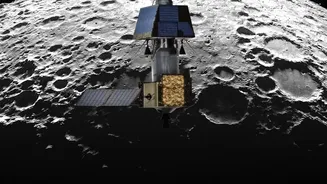
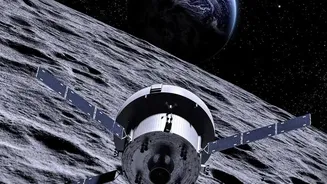
The most promising solution to these dangers may be found right beneath the lunar surface. For years, scientists have theorized about the existence of lava tubes—vast, hollow caverns left behind by ancient volcanic activity. These form when the outer crust of a lava flow cools and solidifies while molten rock continues to flow underneath, eventually draining away to leave a tunnel. Evidence from orbiters, like Japan's Kaguya and NASA's Lunar Reconnaissance Orbiter, has identified hundreds of 'skylights' or pits on the surface which appear to be collapsed sections of these tubes. One such feature, the Marius Hills Pit, is a hole roughly 90 metres across that could be an entrance to a much larger subterranean network.
The Subterranean Advantage
The appeal of these caves is immense. They offer natural and robust protection from the hazards above. A thick ceiling of basalt rock would act as a powerful shield, drastically reducing exposure to harmful radiation to levels comparable to Earth. Inside a lava tube, the extreme temperature swings of the surface would vanish, replaced by a stable, constant temperature, estimated to be around -20°C. This thermal stability would make it far easier to regulate the climate of a habitat. Furthermore, these caves would provide a perfect shield from the constant threat of micrometeoroid impacts. For future lunar settlers, these natural shelters could save enormous costs and risks associated with constructing heavily reinforced habitats on the surface.
NASA's Investigative Missions
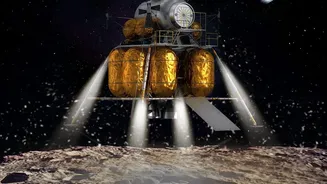
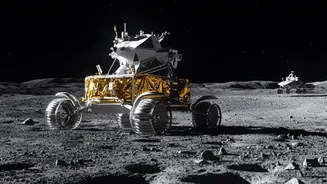
While the potential is clear, the existence and accessibility of these lava tubes must be confirmed. NASA is actively pursuing this through its Payloads and Research Investigations on the Surface of the Moon (PRISM) program. A recently selected mission, fittingly named GIMLI (Geophysical Instruments for Marius Lunar pit Investigation), will land near the Marius Hills Pit to find out what lies beneath. The mission will use a rover equipped with ground-penetrating radar, seismic sensors, and a gravimeter to scan the subsurface and determine if the pit connects to a larger lava tube. This will provide the first on-the-ground evidence and help map the potential cave's structure without having to descend into it. These investigations are a critical part of the CLPS (Commercial Lunar Payload Services) initiative, which uses private companies to deliver scientific payloads to the Moon.
Challenges and the Road Ahead
Even if GIMLI confirms the existence of a vast lava tube, significant challenges will remain. Future missions will need to deploy robotic explorers, and eventually rovers, capable of navigating the dark and potentially rugged terrain inside the caves. Setting up a base would involve sealing sections of the tube to create a breathable atmosphere and figuring out how to generate power in a location devoid of sunlight, likely relying on nuclear power sources or beaming energy from surface solar arrays. However, confirming that these geological safe havens exist is the first, crucial step. It could fundamentally change the blueprint for humanity's future on the Moon, shifting the focus from building on the dangerous surface to thriving within it.