





What is Soil Salinization?
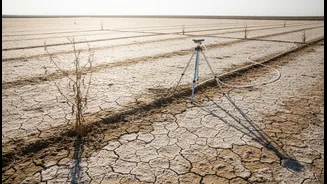
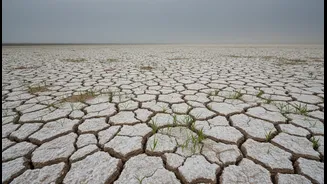
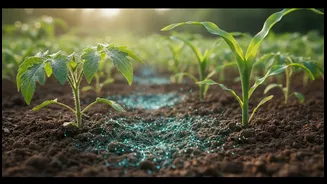
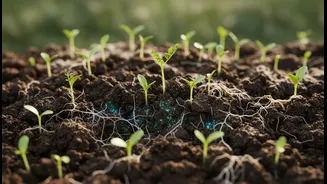
Soil salinization is the increase of salt concentration in the soil. While salts are a natural component of earth and water, an excessive accumulation becomes toxic to most plants. This buildup can occur through natural processes like mineral weathering
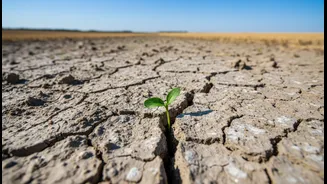
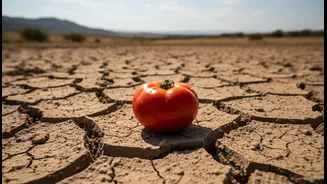
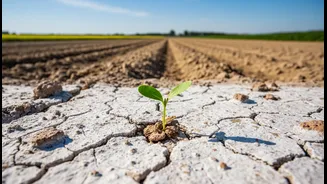
and proximity to the sea, where salt is deposited by wind and water. However, human activities have dramatically accelerated the problem. In arid and semi-arid regions, high evaporation rates leave salts behind on the soil surface. Practices like over-irrigation with salt-rich groundwater, poor drainage that leads to waterlogging, and the overuse of certain chemical fertilizers contribute significantly to turning productive land saline. Once the salt concentration gets too high, it hampers the ability of plants to absorb water, leading to a kind of physiological drought even in moist soil.
A Creeping Crisis for Indian Agriculture
In India, soil salinity is no longer a distant threat; it is a present-day disaster impacting an estimated 6.74 million hectares of land. Projections warn that by 2050, up to 50% of the country's arable land could be salt-affected. States like Gujarat, Uttar Pradesh, Maharashtra, West Bengal, and Rajasthan are among the most affected. This creeping crisis poses a direct threat to national food security, with estimates suggesting India loses nearly 17 million tonnes of crops annually due to salinity. For farmers, the consequences are devastating. As soil health degrades, crop yields plummet. A farmer in Maharashtra reported his sugarcane harvest dropping by over 56% in a decade, forcing him to take a second job as a security guard to manage his mounting debt. This story is echoed across the country, as farmers find themselves using more fertilizers and water with diminishing returns, caught in a vicious cycle of debt and despair.
How Salt Sabotages Our Food
Excess salt in the soil wages a multi-front war on crops. Firstly, it creates 'osmotic stress', making it difficult for plant roots to draw water from the soil, essentially causing the plant to die of thirst even when water is present. Secondly, the high concentration of ions like sodium and chloride can be directly toxic to plants, disrupting essential metabolic processes. This 'ionic stress' also interferes with the uptake of vital nutrients like potassium and calcium, leading to stunted growth, yellowing leaves, and drastically reduced yields. For major crops, yields in salt-stressed environments can be 20-50% lower than their potential. The result is not just less food, but also food of potentially lower nutritional quality, impacting the entire agricultural value chain.
From Crisis to Opportunity
The challenge of soil salinity has spurred a wave of innovation in Indian agriculture. The Indian Council of Agricultural Research (ICAR) and its dedicated Central Soil Salinity Research Institute (CSSRI) have been at the forefront since 1969, developing technologies for reclamation and management. Solutions range from land management techniques to biological interventions. Technologies like gypsum-based reclamation for sodic soils and sub-surface drainage for waterlogged saline lands have already helped reclaim over 2 million hectares, adding 17 million tonnes of foodgrains to the nation's basket annually. Other strategies include 'biosaline agriculture,' which focuses on using salt-tolerant plants to manage and reclaim degraded land. The government has also launched schemes like the Soil Health Card to help farmers better understand and manage their soil's health.
The Promise of Salt-Loving Crops
One of the most exciting frontiers in tackling salinity is the use of plants that are naturally adapted to high-salt environments. These 'halophytes' don't just survive in saline soils; some thrive. Species like Salicornia, which can be used for oilseed and even as a vegetable, represent a potential new category of crops for previously unusable land. Alongside this, scientists are making remarkable progress in conventional crop breeding. ICAR-CSSRI has developed and released numerous salt-tolerant varieties of crucial crops like rice, wheat, and mustard. Rice varieties like CSR36 and CSR10 can tolerate high levels of salinity and sodicity, while wheat varieties like KRL 210 have been specifically bred for salt-affected soils. These 'super crops' are not just a scientific achievement; they are a lifeline for farmers in affected regions, allowing them to continue cultivating their land productively.