




In a world drowning in fast fashion, the fate of old clothes is a growing concern. But what if the solution wasn't just recycling, but reincarnation? Across India, a quiet revolution is taking place, rooted in ancient wisdom and artistry.
From Discarded to Divine
Long before 'upcycling'
and 'sustainability' became global buzzwords, they were a way of life in many Indian households. The idea of throwing away fabric was unthinkable when it could be given a second, often more beautiful, existence. This philosophy is now experiencing a powerful resurgence as consumers and designers look for more meaningful ways to engage with fashion. Upcycling isn't merely about reusing; it's about transformation. It’s the art of taking something of low value—a worn-out sari, a faded dhoti, or fabric scraps—and through skill and creativity, turning it into a product of higher value and beauty. Regional textile crafts are the engine of this transformation, offering a rich palette of techniques to mend, layer, and embellish old cloth into one-of-a-kind treasures.
The Storytelling Stitch of Kantha
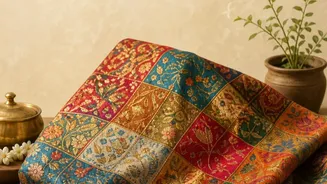
Perhaps no craft embodies this spirit more than Kantha, an embroidery style originating from West Bengal and Bangladesh. Traditionally, women would layer old cotton saris and dhotis, stitching them together with a simple running stitch, known as the 'kantha phor'. This wasn't just for reinforcement; it was for storytelling. The stitches would form intricate motifs depicting nature, mythology, and scenes from daily life. What began as a practical method for creating soft quilts ('lep') for babies and blankets for the family was, in essence, an act of recording memory in thread. Today, contemporary designers have embraced Kantha, not just for quilts and cushion covers, but for creating stunning jackets, flowing dupattas, and unique garments that carry the soul of their repurposed fabrics.
The Communal Warmth of Godhadi
In Maharashtra, a similar tradition of resourcefulness is found in the making of Godhadi quilts. These multi-layered blankets are hand-stitched from old clothes, with worn saris often forming the soft outer layers and smaller fabric scraps tucked inside for warmth and weight. The making of a Godhadi is a communal and laborious process, often undertaken by women in a village during quiet afternoons. Each quilt is a testament to shared stories and collective effort. While traditionally made for personal use, the Godhadi is gaining recognition as a cultural phenomenon. Artisans and social enterprises are now creating these 'memory quilts' for a wider audience, transforming personal histories into functional art that can be cherished in modern homes as blankets, throws, and even stylish bags.
Sujani: A Legacy of Layered Fabric
From Bihar comes Sujani, another craft born from the need to repurpose. The name itself combines 'su' (facilitating) and 'jani' (birth), referencing its origin in making soft, protective quilts for newborns from layers of old cloth. Like Kantha, Sujani uses the running stitch to bind the fabric layers, but the embroidery often tells elaborate stories, sometimes even serving as a medium for social commentary on issues like dowry or education. This tradition of turning discarded textiles into a canvas for expression is a powerful example of early upcycling. Today, Sujani has a Geographical Indication (GI) tag, and the craft is being kept alive by hundreds of women who create everything from wall hangings to contemporary apparel, blending heritage with modern aesthetics.
A Stitch in Time for a Sustainable Future
These crafts do more than just save textiles from landfills; they provide vital economic empowerment. Many of these art forms are practiced by rural women artisans, for whom this work is a crucial source of livelihood and a means of preserving their cultural identity. By choosing a product made through these techniques, consumers are not only buying a unique item but are also supporting these artisan communities directly. As the global fashion industry grapples with its environmental impact, these regional Indian crafts offer a compelling and beautiful path forward. They remind us that the most innovative solutions are sometimes hidden in plain sight, stitched into the fabric of tradition.