





Maharashtra's coastline is dotted with majestic sea forts, once formidable military bastions that are now treasured heritage sites. This piece delves into the story of one of the most remarkable among them, a fortress that was never conquered.
The Unconquerable Fort of the Sea
Rising from
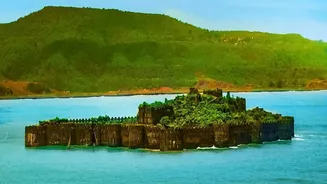
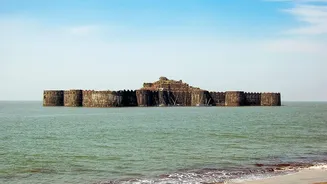
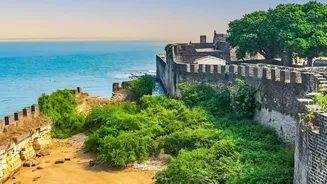
an oval-shaped rock in the Arabian Sea, Murud-Janjira is a name that echoes through Indian history with a unique distinction: it is India's only unconquered sea fort. For centuries, this island fortress off the coast of Murud village repelled every major power that tried to capture it. The mighty Marathas under Chhatrapati Shivaji Maharaj, the Portuguese, and the British all mounted numerous attacks but failed to breach its formidable defences. Its rule only ended with its political integration into India after 1947, never through military defeat. This legacy of invincibility makes it a standout monument, not of heroic last stands, but of enduring, unbeaten strength.
A Masterpiece of Strategic Design
What made Murud-Janjira so impregnable? Its strength lies in a brilliant combination of natural geography and ingenious architecture. Built in the 16th century by the Siddis, rulers of Abyssinian descent, the fort's 40-foot-high walls seem to grow directly out of the sea. Its main gate is ingeniously hidden and only becomes visible when a boat is extremely close, a feature designed to confuse approaching enemy ships. The fort is ringed by 19 imposing, rounded bastions, many of which still house the massive cannons that once protected it. Inside its walls, it was a self-sufficient township with palaces, quarters for officers, mosques, and most critically, two large freshwater lakes, ensuring it could withstand long sieges.
The Siddi Stronghold
The history of Janjira is inseparable from the Siddis, who controlled it for centuries. Originally a wooden structure built by local fishermen to defend against pirates, it was transformed into a formidable stone fortress by Malik Ambar, a regent of the Ahmadnagar Sultanate, in the 1500s. The Siddis, renowned as fierce maritime warriors, used the fort as a strategic base to control naval traffic and trade routes along the western coast. It served not just as a defensive post but as a centre of power, enabling them to assert their dominance in the Arabian Sea against much larger empires. The fort's interior still holds the ruins of their rule, including palaces and tombs.
Visiting Janjira Today: A Trip Back in Time
Today, Murud-Janjira is a major tourist destination, drawing visitors who come to marvel at its history and architecture. The only way to reach the fort is via a short sailboat ride from the Rajapuri jetty, a journey that echoes the approach of traders and warriors centuries ago. Once inside, visitors can explore the crumbling ruins, walk along the high ramparts, and see the legendary cannons, including the massive 'Kalal Bangadi'. The panoramic views of the Arabian Sea from the top of the bastions are breathtaking. While time and the salty air have taken their toll, exploring the labyrinthine passages and vast complex offers a tangible connection to its storied past.
Conservation and The Future
Like many historic coastal structures, Murud_Janjira faces the constant challenge of preservation against the relentless forces of the sea and weather. The ruins, while evocative, require ongoing efforts to prevent further decay. As a protected monument, it represents the delicate balance between promoting tourism and conserving a priceless piece of heritage. Several sea forts in Maharashtra, including Janjira, have been proposed for UNESCO World Heritage Site status to highlight their historical significance and bolster conservation efforts. For visitors, this adds a layer of responsibility: to appreciate the fort not just as a tourist spot, but as a fragile link to India's incredible maritime history.