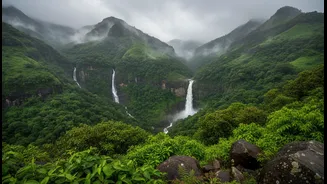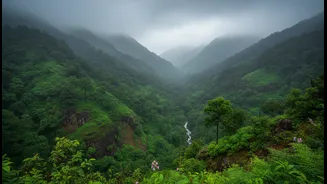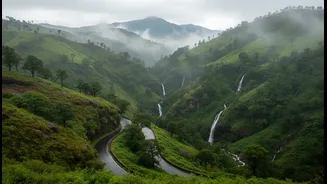







Know Before You Go: Check the Forecast and Local Advisories
The first step to a safe monsoon trip is staying informed. Before you even start packing, become a diligent follower of weather forecasts. The India Meteorological Department (IMD) issues specific, colour-coded alerts (yellow, orange, red) for heavy rainfall
across the Western Ghats, especially in the coastal regions of Karnataka, Kerala, and Maharashtra's Konkan area. A red alert for your destination should be a non-negotiable reason to reconsider your plans. In recent years, authorities have become stricter, often closing popular trekking spots, forts, and waterfalls in response to heavy rain warnings. For instance, in early July 2026, heavy rains forced closures of Tamhini Ghat and Sinhagad Fort near Pune to prevent accidents. Always check with local district administration websites or police for the latest updates on road closures and restricted areas, as popular ghats like Charmadi, Shiradi, and Agumbe are frequently monitored and may be shut down with little notice.
Vehicle Preparation: Your First Line of Defence
Your vehicle must be in top condition to handle the challenging monsoon roads. Driving in the Ghats involves steep inclines, sharp turns, and often, poor visibility. Get your car serviced before you leave, paying special attention to three key areas: tyres, brakes, and wipers. Ensure your tyres have sufficient tread depth (at least 2-3 mm) to grip wet roads and reduce the risk of aquaplaning—where a layer of water builds up between the tyre and the road, causing a loss of traction. Check and replace worn-out brake pads, as braking distances are much longer on wet surfaces. Similarly, old or hardened wiper blades are a major hazard in a downpour; replace them for a clear view. Finally, check all lights—headlights, tail lights, and indicators—to ensure you can see and be seen.
Mastering the Monsoon Drive: Techniques for Tricky Roads
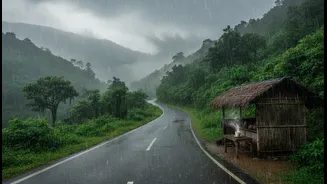
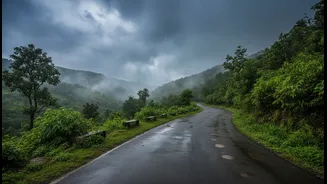
Driving in the Western Ghats during a downpour is not for the faint of heart. The key is to be slow, steady, and defensive. Reduce your speed significantly and maintain at least double the usual distance from the vehicle in front. Heavy rain can reduce visibility to near zero, so always drive with your low-beam headlights on, even during the day. Be extremely cautious on winding ghat sections, which are prone to falling boulders and mudslides. Avoid stopping your vehicle on steep inclines or in areas with hillsides directly above. If you encounter a waterlogged patch, do not attempt to drive through it unless you are certain of its depth. If you must cross, do so slowly in a low gear to prevent your engine from stalling. If visibility becomes dangerously low, it is safest to pull over at a secure spot, away from the main road, and wait for the rain to subside.
Understanding the Greatest Risk: Landslides
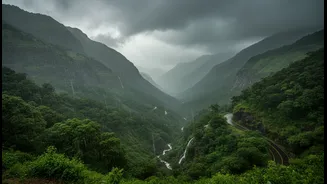
The Western Ghats are India's second most landslide-prone region, a fact that becomes starkly evident during the monsoon. The geology of the area, characterized by steep slopes with thick lateritic soils over hard rock, makes it highly susceptible to slope failure when saturated with heavy rain. Human activities like road widening and deforestation have further increased this vulnerability. High-risk zones include many popular hill stations like Lonavala and parts of Wayanad, Coonoor, and Munnar. The tragic Wayanad landslide in July 2024 is a sober reminder of these dangers. Always be aware of your surroundings. Avoid travelling at night when it's harder to spot debris or changes in the road. Heed local warnings and never attempt to cross a road that has been recently affected by a slide.
Packing Smart: The Monsoon Essentials Kit
What you pack is crucial for comfort and safety. Prioritise quick-drying synthetic fabrics over cotton, which takes a long time to dry in high humidity. A lightweight waterproof jacket and a sturdy umbrella are non-negotiable. For footwear, opt for waterproof sandals or trekking shoes with excellent grip; avoid flip-flops or shoes that trap water. Your emergency kit should include a first-aid kit, a powerful flashlight, a car phone charger or power bank, and basic tools. Pack extra food and water in case you get stranded by a road closure. Waterproof bags or pouches are essential to protect your electronics, documents, and other valuables from the pervasive dampness. Also consider packing anti-leech socks if you plan on short walks in forested areas, and an antifungal powder or cream.
In Case of Emergency: Important Numbers to Save
Despite all precautions, emergencies can happen. Before you lose network connectivity in remote ghat sections, save these crucial numbers. The national emergency number for police, fire, and ambulance services is 112. Other important numbers include 100 for Police, 101 for Fire, and 102 for Ambulance. For disaster management services, the number is 108, and for natural calamities, it is 1070. The road accident helpline is 1073. It's also wise to have the numbers of your hotel, a local taxi service, and your roadside assistance provider saved. Always inform a friend or family member of your itinerary and check in with them regularly.