


The Celebrated Vegetarian Feast
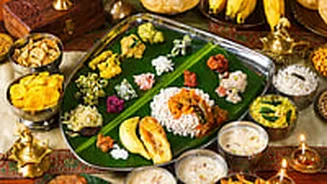
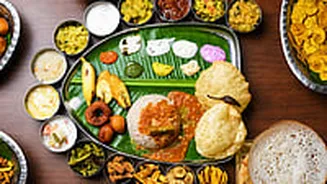
The Onam Sadya is, without question, a cultural masterpiece. A meticulously arranged vegetarian banquet served on a banana leaf, it can feature anywhere from 20 to over 30 dishes. This feast, central to the harvest festival of Onam, is a testament to the state's
agricultural abundance, showcasing a harmony of flavours—sweet, salty, sour, and spicy. Dishes like Avial, a mixed vegetable stew in a coconut and yogurt base, Thoran (stir-fried vegetables with grated coconut), and various 'pachadi' and 'kichadi' (yogurt-based sides) make it an unforgettable experience. It represents the pinnacle of Kerala's Hindu vegetarian cooking, a tradition of balance, community, and celebration. However, this is just one chapter in a much larger story.
The Spice-Scented Malabar Coast
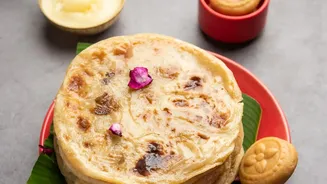
Travel north to the Malabar region, and you enter a completely different culinary world heavily shaped by centuries of trade with Arab, Persian, and European merchants. This is the heartland of Mappila (Muslim) cuisine, celebrated for its complex, aromatic, and predominantly non-vegetarian dishes. The star of the show is arguably the Thalassery Biryani, which uses short-grain Kaima rice instead of Basmati and is cooked using the 'dum' method to seal in moisture and flavour. Beyond biryani, the Mappila kitchen offers an array of delights, from flaky 'parottas' and soft rice-flour 'pathiris' to meat-stuffed 'chatti pathiri', a layered pancake dish akin to a savoury lasagne. The use of spices like fennel, cardamom, and black pepper, along with a preference for chicken, mutton, and seafood, gives this cuisine its distinct and robust character.
Central Travancore's Christian Heritage
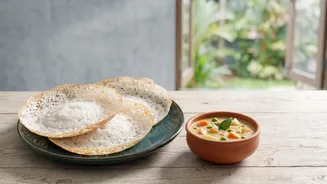
In Central Travancore, the culinary landscape is defined by the traditions of the Syrian Christian community. Their cuisine is a hearty and flavourful blend of local Kerala ingredients and Western influences. Coconut milk is a staple, but it is often used to create rich, mildly spiced stews and gravies for meat and fish. Signature dishes include Appam—a soft, bowl-shaped fermented rice pancake with a fluffy centre and crisp edges—often paired with a gentle chicken or vegetable stew. This region is also famous for its masterful meat preparations, such as duck roast, 'erachi olarthiyathu' (a spicy beef fry), and the iconic Fish Molee, a creamy fish curry with a coconut milk base that showcases Portuguese influence. These dishes are a cornerstone of celebrations like Christmas and Easter, reflecting a rich culinary identity.
A Bounty From the Sea
With a long coastline along the Arabian Sea, it’s no surprise that seafood is the lifeblood of Kerala’s everyday cuisine. The variety is astounding, from tiny prawns and sardines to majestic kingfish and pomfret. Preparations vary from the simple 'meen varuthathu' (fish fry with a spice marinade) to more complex creations. One of the most iconic dishes is 'Karimeen Pollichathu', where pearl spot fish is marinated in spices, wrapped in a banana leaf, and then grilled or pan-fried. This technique seals in the flavours and creates a smoky, aromatic delicacy. Tangy and fiery fish curries, often made with tamarind or raw mangoes, are a staple, enjoyed with rice or 'kappa' (tapioca).
The Soulful Everyday Breakfasts
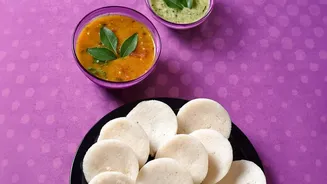
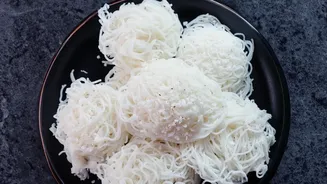
While festival food gets the spotlight, the true soul of a cuisine is often found in its daily fare. Kerala’s breakfast dishes are a universe in themselves, offering a variety of textures and flavours that go far beyond the standard idli and dosa found elsewhere. Puttu, a steamed cylinder of rice flour and grated coconut, is a humble yet beloved staple, typically served with 'kadala' (black chickpea) curry. Idiyappam, or string hoppers, are delicate rice noodles that pair beautifully with both sweet coconut milk and savoury curries. These breakfasts are not just nourishing; they are an integral part of daily life and a delicious entry point into the state's diverse food culture.