








What is a Natural Clay Wash?
Forget standard acrylic paint. A natural clay wash, often referred to as clay paint or a type of plaster, is a wall finish made primarily from natural clay, minerals, and pigments. Unlike conventional paints that form a plastic-like film on the surface,
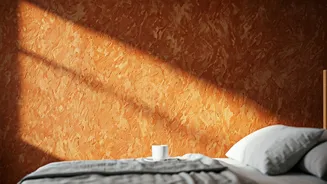
clay washes are breathable coatings that bond with the wall itself. The most popular variants, like those with a terracotta hue, are derived from rich, earthy clays. They are mixed with water to form a liquid or paste that is then applied to the walls, typically with a brush. The result isn't a uniform, flat colour, but a surface with subtle variations in tone and a soft, matte, and slightly chalky texture that catches the light beautifully.
The Allure of Imperfect Texture
The main draw of a clay-washed wall is its incredible visual depth. The application technique, which often involves cross-hatch brush strokes, creates a sense of movement and softness that makes a room feel instantly more sophisticated and inviting. This textured, 'imperfect' finish is a core tenet of design styles like Wabi-Sabi, which finds beauty in transience and imperfection. In a bedroom, this translates to a calming, cocooning atmosphere. The earthy tones, ranging from pale terracotta to deep rust, evoke a sense of grounding and warmth, turning the bedroom into a true sanctuary. It moves away from the sterile, perfect finish of modern paints and embraces a more organic, handcrafted aesthetic.
Health and Home Benefits
Beyond its good looks, a clay wash offers significant benefits for your home's environment. First and foremost, these finishes are typically zero-VOC (Volatile Organic Compounds), meaning they don't release harmful chemicals into the air during or after application. This makes them an excellent choice for bedrooms, where air quality is paramount for restful sleep. Furthermore, clay is naturally hygroscopic, meaning it can absorb excess moisture from the air and release it when the air is dry. This property helps to regulate humidity levels in the room, which can inhibit the growth of mould and mildew and create a more comfortable living space. It's a finish that literally breathes with your home.
The Art of Application
Achieving that coveted earthy look isn't quite as straightforward as rolling on a coat of paint. Applying a clay wash is a more artisanal process. While some confident DIY-ers tackle the job, many homeowners opt to hire a professional plasterer or painter experienced with natural finishes. The material is typically applied with a specialised block brush in broad, overlapping strokes. The way the brush is moved and the thickness of the application determine the final texture and tonal variation. This hands-on process is why no two clay-washed walls are exactly alike; each one is a unique piece of art. It’s important to prepare the wall surface correctly, often with a specific primer, to ensure the wash adheres properly and delivers its signature finish.
What to Consider Before Committing
While the benefits are compelling, there are a few practicalities to consider. Natural clay finishes can be more expensive than conventional paints, both in terms of material cost and professional labour. They are also generally less durable and scrubbable. Unlike a tough acrylic paint, a clay wall can be more susceptible to scuffs, scratches, and stains. It’s not ideal for high-traffic areas or places prone to splashes, like a kitchen backsplash, but it's perfectly suited for a feature wall in a master bedroom or a cosy reading nook. Touch-ups can also be more complex, sometimes requiring a re-coating of the entire wall to avoid visible patches. It's a commitment to a certain aesthetic and a gentler way of living with your walls.