





The 'Why' Before the 'How'
Before diving into gear and schedules, it helps to remember why you're bothering. Exercising in the cold comes with unique benefits that can serve as powerful motivation. Your body works harder to regulate its temperature, which can lead to a slight increase
in calorie burn. Exposure to natural light, even on overcast days, can help combat the winter blues or Seasonal Affective Disorder (SAD). Moreover, studies suggest that consistent physical activity helps boost your immune system, which is especially helpful during a season known for colds and flu. Building the mental toughness to get out the door on a chilly morning is a reward in itself, creating a sense of accomplishment that can power you through the rest of the day.
Dress Smarter, Not Heavier
The single most important factor for comfortable winter exercise is proper clothing. The key isn't to bundle up in your heaviest jacket, but to dress in strategic layers. The classic three-layer system is your best friend. The base layer, which sits against your skin, should be made of a moisture-wicking synthetic fabric like polyester or merino wool. Its job is to pull sweat away from your body to keep you dry. Avoid cotton at all costs, as it holds moisture and will make you feel cold and damp. The middle layer provides insulation. Fleece or a light wool pullover works perfectly to trap your body heat. The outer layer is your shield against the elements—wind, rain, or snow. A lightweight, breathable, and waterproof or water-resistant jacket is ideal. This system allows you to remove a layer if you start to overheat, giving you control over your body temperature.
Protect Your Extremities and Be Seen
Your body prioritises keeping your core warm, which means your hands, feet, and ears are often the first to feel the bite of the cold. Invest in good quality thermal socks (perhaps choosing shoes a half-size larger to accommodate them), insulated gloves or mittens, and a hat or headband that covers your ears. Winter also means fewer daylight hours, so visibility is a major safety concern. If you're exercising in the early morning or evening, wear bright colours and reflective gear. A headlamp or carrying a small light can help you spot uneven or icy patches on your path while also ensuring that drivers and cyclists can see you clearly.
Warm Up Inside, Then Head Out
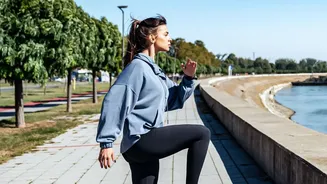
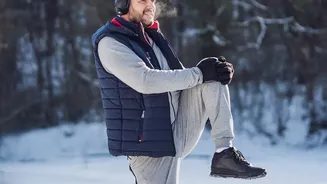
Cold muscles are less pliable and more prone to injury. Instead of doing static stretches in the cold, perform a dynamic warm-up indoors for 5 to 10 minutes before you head out. This gets your blood flowing and gradually prepares your body for movement. Simple exercises like arm circles, leg swings, torso twists, high knees, and bodyweight squats are perfect. This pre-workout ritual not only protects you from strains and pulls but also makes the initial shock of the cold air feel far less jarring, making it mentally easier to get started.
Adjust Your Expectations and Activities
Winter might not be the season for setting new personal records, and that’s perfectly fine. The primary goal is consistency, not peak performance. Listen to your body and be prepared to modify your workouts. Icy paths might mean swapping a run for a brisk walk or finding a cleared trail. Some activities are naturally well-suited for the season, like brisk hiking, cross-country skiing, or even snowshoeing if you have access to them. The key is to have a flexible mindset. If the weather is truly too harsh, having a backup indoor workout, like a bodyweight strength circuit or an online yoga class, ensures you don't miss a day entirely. It's about maintaining momentum, not breaking records.