


The Ultimate Recycling Challenge
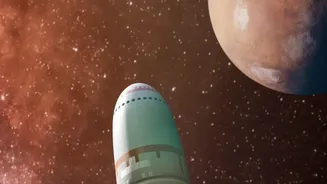
When planning a trip, we pack what we need. For a weekend away, it’s easy. For a multi-year mission to Mars, it’s impossible. Every kilogram launched into space costs a fortune, and the sheer volume of oxygen and water required to keep a crew alive for years
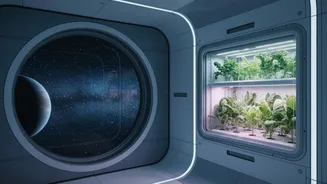
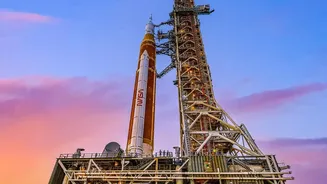
would be astronomical. The solution? Don't pack everything; recycle it. This is the core principle behind the Environmental Control and Life Support System (ECLSS), a sophisticated set of hardware designed to create a self-sustaining, closed-loop environment. For Artemis missions, which aim for a sustained human presence on the Moon and beyond, a reliable and highly efficient ECLSS isn't just a goal; it's the foundation upon which every other ambition is built.
From Wastewater to Breathable Air
The process of making air in space begins, surprisingly, with water. The International Space Station's Water Recovery System can already recycle over 90% of the water on board, harvesting it from every possible source: the crew's breath, sweat, and even urine. This reclaimed water is then purified to standards more stringent than most municipal water supplies on Earth. A portion of this pristine water is fed into the Oxygen Generation System. Here, a process called electrolysis uses electricity to split water molecules (H2O) into their constituent parts: breathable oxygen (O2) and hydrogen (H). The oxygen is vented into the cabin for the crew to breathe, completing a life-giving cycle that turns waste into a vital resource.
Capturing Every Exhale
Making oxygen is only half the battle; the other half is removing what we leave behind. Every breath an astronaut exhales releases carbon dioxide (CO2), a toxic gas that can be deadly in a sealed environment. Early space missions used single-use chemical filters, like lithium hydroxide canisters, but for long-duration missions, a regenerative solution is essential. Modern systems use adsorbent materials, like zeolites or amines, that act like molecular sponges, trapping CO2 molecules while letting oxygen and nitrogen pass through. But the real breakthrough lies in what happens next. Instead of just venting the captured CO2 into space, engineers are perfecting systems like the Sabatier reactor. This device combines the captured CO2 with the hydrogen leftover from oxygen generation. The resulting chemical reaction produces two things: water, which can be looped back into the system to create more oxygen, and methane, which is currently vented but could one day be used as rocket propellant.
The Difficult Pursuit of Perfection
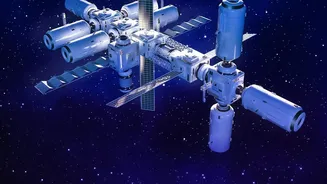
While these systems work well on the International Space Station, engineers are pushing to make them smaller, more reliable, and far more efficient for Artemis. The goal is to close the loop as much as possible, aiming for near 100% recovery of oxygen and water. This involves tackling numerous challenges. Systems must run flawlessly for years with minimal maintenance. They need to be more compact to fit into the smaller confines of the Orion spacecraft and future lunar habitats. Engineers are also developing new technologies, such as liquid sorbents and advanced catalysts, that promise higher efficiency and greater reliability than current hardware. Each improvement brings NASA closer to a truly self-sustaining life support system, one that can operate for years with minimal resupply from Earth.
A Blueprint for Future Worlds
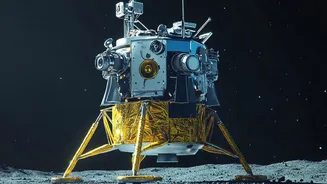
The technology being perfected for the Artemis program has implications far beyond just keeping astronauts alive. The principles of creating a closed-loop system are directly applicable to building sustainable habitats on Earth. Furthermore, the ability to generate oxygen is a key component of In-Situ Resource Utilization (ISRU), the concept of living off the land on other worlds. Future plans involve extracting oxygen directly from lunar soil or the Martian atmosphere, which can then be used for both life support and as a critical component of rocket oxidizer. The lessons learned from perfecting these intricate life support systems are not just about surviving in space; they are about learning how to thrive, turning barren landscapes into outposts of human exploration.