



The Self-Driving Martian
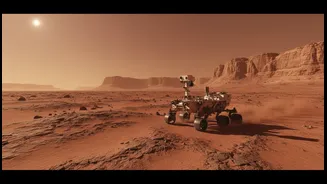
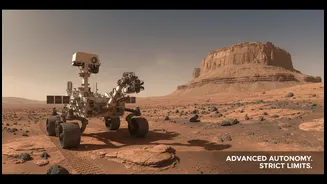
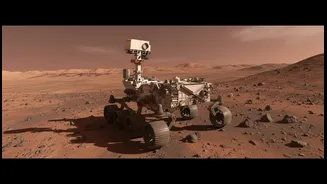
Perseverance isn't just a remote-controlled car; it's a robotic explorer with a mind of its own. Due to the significant time delay for signals to travel between Earth and Mars, direct, real-time control is impossible. This is where autonomy becomes critical.
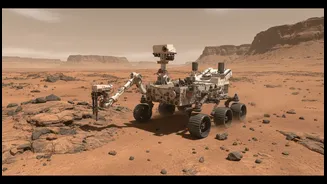
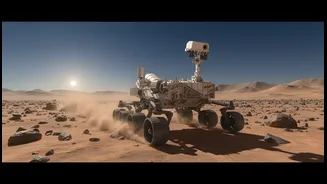
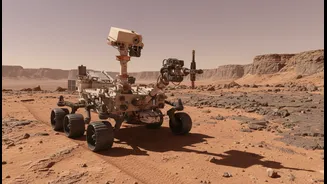
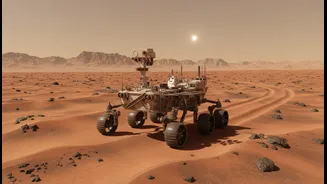
The rover employs a sophisticated self-driving system called AutoNav, which allows it to make its own decisions on the fly. Using a pair of computer brains, Perseverance creates 3D maps of the terrain ahead, identifies potential hazards like large rocks or sand traps, and plots the safest, most efficient path forward without waiting for instructions from mission control. This capability has allowed the rover to shatter driving records, covering distances far faster than its predecessors. In fact, Perseverance has driven the equivalent of a marathon in less than half the time it took the Opportunity rover. This enhanced autonomy means less time spent waiting for human input and more time dedicated to its primary scientific mission: searching for signs of ancient life.
The Loneliest Mechanic
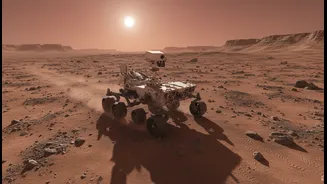
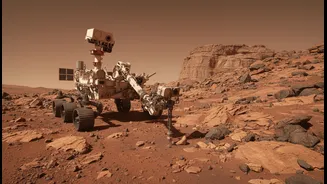
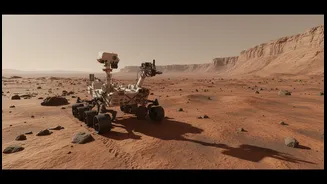
On Mars, there are no service appointments. Perseverance must be its own mechanic, enduring an environment of extreme temperature swings, corrosive salts, and abrasive dust. With no way to perform physical repairs, long-term maintenance is a game of preservation and clever problem-solving. NASA engineers designed Perseverance with durability in mind, learning from past missions. Its aluminum wheels, for instance, are thicker, larger, and more robust than those on the Curiosity rover, which sustained significant damage on the rocky terrain. The rover is also equipped to monitor its own health, and when issues arise, the team on Earth must devise creative workarounds. In 2024, when a dust cover on a key scientific instrument (SHERLOC) became stuck, the team used careful movements of the robotic arm to jiggle it open, eventually restoring the instrument's function. Power is another crucial factor. Unlike older, solar-powered rovers that were vulnerable to dust storms, Perseverance runs on a Multi-Mission Radioisotope Thermoelectric Generator (MMRTG), a nuclear power source that provides a steady supply of electricity and heat for an expected lifespan of over a decade.
Going the Distance
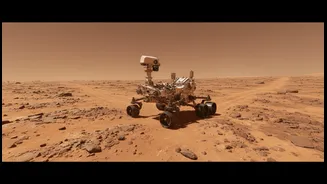
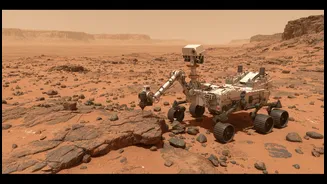
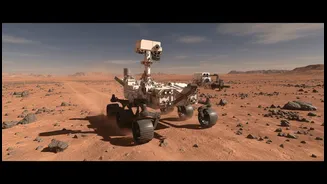
The ultimate goal of the Perseverance mission is to explore diverse geological sites within Jezero Crater, searching for compelling rock and soil samples to cache for a potential future return mission to Earth. This requires extensive travel across a hazardous landscape. Long-duration mobility isn't just about speed; it's about endurance and intelligent navigation. Every kilometer driven introduces wear and tear on its wheels and systems. The rover's ability to drive farther and for longer periods autonomously is directly tied to its ability to know precisely where it is. To solve this, NASA implemented a new technology called Mars Global Localization. This system allows Perseverance to compare images from its own cameras with orbital maps to pinpoint its location with incredible accuracy, reducing the uncertainty that previously limited long, autonomous drives. This combination of a long-lasting power source, robust hardware, and advanced autonomous navigation gives Perseverance the tools it needs to continue its marathon journey. Each drive pushes the boundaries of robotic exploration, expanding our understanding of the Red Planet and providing a blueprint for the even more advanced explorers that will follow.