


A Phantom Menace Above
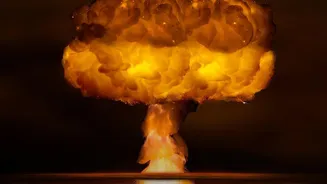
The idea of a nuclear bomb in space sounds like something from a Cold War thriller, but it is a recognised military threat with a historical precedent. In 1962, the United States detonated a 1.4-megaton warhead 400 kilometres above the Pacific Ocean in a test
called Starfish Prime. The effects were far greater than anticipated. It not only caused electrical damage on the ground in Hawaii, over 1,400 kilometres away, but it also disabled or damaged at least a third of the few dozen satellites then in orbit. Today, with over 13,000 satellites in Low Earth Orbit (LEO) forming the backbone of our global infrastructure, the stakes of a similar event are immeasurably higher. The threat isn't science fiction; it's a vulnerability that modern defence agencies are taking very seriously.
The Silent Satellite Killer
Contrary to what movies might show, a nuclear explosion in the vacuum of space doesn't destroy satellites with a fiery shockwave. The primary kill mechanism is far more insidious: radiation. A high-altitude nuclear explosion (HANE) releases a flood of high-energy electrons that get trapped by Earth's magnetic field, forming an artificial and intense radiation belt. This belt can persist for months or even years. Satellites, particularly the thousands of commercial models that are not 'hardened' against radiation, are not instantly fried. Instead, as they repeatedly orbit through this invisible hazard, their sensitive electronics and solar panels are degraded. It's a death by a thousand cuts, leading to widespread, cascading failures across entire satellite constellations over days, weeks, and months.
The Digital Doomsday Model
Recent simulations, including a notable un-peer-reviewed study from researchers at the University of Wisconsin-Madison and Princeton University, have painted a grim picture of this scenario in the modern era. By modelling a one-megaton detonation at an altitude of 500 kilometres, they found the results would be catastrophic. Within a single day, 25% of the satellites in their modelled LEO fleet would be disabled. After a week, that number jumps to a staggering 98%. Even assuming satellites were three times more resistant to radiation than they are, the model still predicted 97% would be inoperable within two weeks. The simulation highlights that one detonation doesn't just affect one target; it poisons a vast region of space, threatening the entire global infrastructure that passes through it.
A World Without Satellites
The loss of 98% of LEO satellites would trigger a severe and prolonged degradation of modern life. In India, as elsewhere, the consequences would be felt immediately. The GPS network, critical for everything from ride-hailing apps and food delivery to commercial shipping and military navigation, would vanish. Financial markets and banking systems, which rely on the precise timing signals from GPS satellites to synchronise transactions, would face massive disruption. Global communications, including satellite internet services like Starlink and long-distance phone calls, would be crippled. Weather forecasting would become far less accurate, impacting agriculture and disaster preparedness. It wouldn't be an immediate societal collapse, but a slow-motion crisis as the systems we take for granted fail one by one.
An Unsolvable Debris Problem
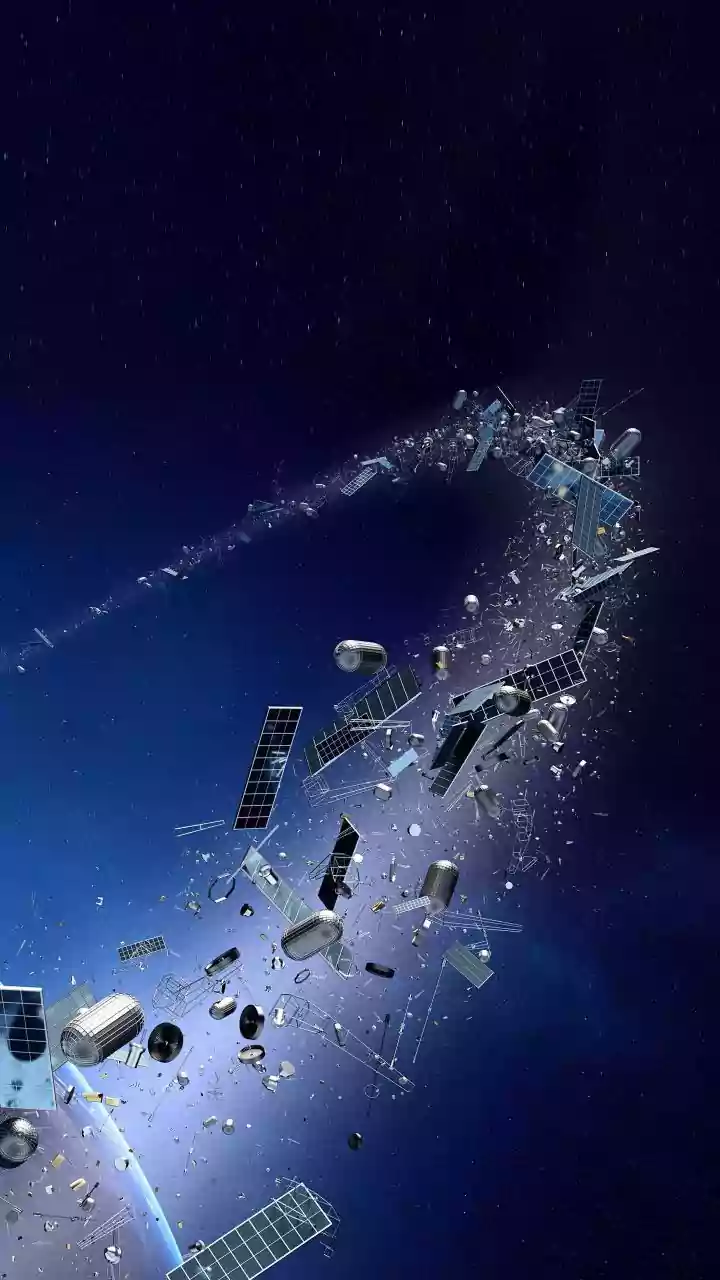
The problem wouldn't end with the initial wave of failures. Once disabled, thousands of satellites would become uncontrollable space junk. The models predict this would lead to a sharp increase in orbital collisions, with around 20 collisions expected in the first two years alone. Each collision creates thousands more pieces of debris, further polluting the orbital environment in a cascading chain reaction known as the Kessler Syndrome. This would make launching replacement satellites incredibly difficult and dangerous. New satellites sent up to rebuild the network would not only have to navigate a minefield of debris but would also be exposed to the same lingering radiation that destroyed their predecessors, drastically shortening their operational lives.