






The New Study Partner in Your Browser
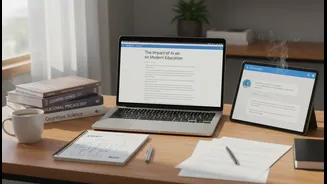
Not long ago, editing help meant relying on a friend's keen eye or a basic spell-checker. Today, AI-powered tools have evolved into sophisticated digital editors. Platforms like Grammarly, Paperpal, and others go far beyond correcting typos. They analyze
sentence structure, suggest improvements for clarity and tone, and help refine arguments. For students juggling multiple deadlines, these AI assistants can significantly boost productivity by generating outlines, proposing ideas, and helping to overcome writer's block. Think of it less as a simple proofreader and more as an on-demand writing coach, available 24/7 to provide instant feedback and help organise thoughts.
Beyond Grammar and Spelling
The real game-changer is the depth of assistance these tools provide. Advanced AI can help students make their writing more concise, check for a consistent tone, and even offer stronger synonyms to improve vocabulary. Some tools are designed specifically for academic work, helping with the complex task of generating citations and ensuring bibliographies are correctly formatted in styles like APA or MLA. For multilingual learners or those less confident in English, these platforms can be transformative, offering language assistance that helps level the playing field. Research shows that when students actively engage with AI suggestions—analyzing and revising them rather than blindly accepting—they develop a deeper understanding of writing mechanics.
Navigating the Ethical Maze
With great power comes great responsibility. The rise of AI editors has ignited a fierce debate in academia about the line between assistance and cheating. When does refining a sentence become ghostwriting? The core issue is academic integrity. In India, the University Grants Commission (UGC) has advised that while AI can be used for tasks like language correction, the core intellectual contribution must come from the student. Many universities are still developing their formal policies, but the consensus is clear: using AI to generate entire essays is a form of plagiarism, and disclosure of AI use is often required. Students bear the full responsibility for the originality and accuracy of their submitted work, regardless of the tools they used to create it.
The Smart Way to Use Your Digital Editor
Experts agree that the most effective way to use AI is as a collaborator, not a replacement for thinking. The best practice is to start with your own ideas, arguments, and research. Use AI to help structure your thoughts or suggest ways to phrase a complex idea, but the core writing should be yours. Studies show that students rarely accept AI-generated text without editing it themselves, instead engaging in a process of rewriting and refining that allows them to maintain ownership of the work. It's crucial to fact-check any information or citations provided by an AI, as they are known to 'hallucinate' or invent sources. Always review and validate the AI's suggestions to ensure they align with your argument and voice.
A Tool, Not a Shortcut
Ultimately, AI writing assistants offer immense benefits, including reducing anxiety, improving confidence, and helping students learn better writing habits through immediate feedback. However, they also come with risks, including over-reliance, potential for bias in AI-generated content, and data privacy concerns, as many tools require personal information to create an account. The most successful students will be those who learn to harness these tools intelligently. By treating AI as a guide to enhance their own skills—not a shortcut to avoid doing the work—they can produce stronger, clearer, and more polished submissions while upholding the principles of academic honesty. The final check, the critical thought, and the unique voice must always remain human.