




What Exactly Is a Smoke Point?
Before the main event, let's clarify the terminology. The 'smoke point' is the temperature at which a fat stops shimmering and starts to smoke. When this happens, the oil is literally breaking down. This process not only creates a bitter, burnt taste
but also releases potentially harmful compounds like acrolein. Keeping your cooking fat below this temperature is crucial for both flavour and health. Indian cooking techniques like deep-frying and tadka often involve high heat, making the smoke point of your chosen fat an especially important consideration.
The Case for Ghee: Tradition and Tolerance
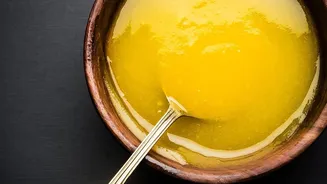
Ghee is essentially clarified butter, a process that removes milk solids and water. This purification gives it one of the highest smoke points of any common cooking fat, typically around 250°C (482°F). This makes it exceptionally stable and ideal for high-heat applications like searing, tadkas, and deep-frying. Infusing ghee with spices like garlic, turmeric, or herbs adds a layer of flavour without significantly reducing its smoke point, as long as the solids are strained out. Nutritionally, ghee is a source of fat-soluble vitamins like A, E, and K, and butyric acid, which is known to support gut health.
The Rise of Cold-Pressed Oils
Cold-pressed oils have surged in popularity for good reason. Extracted mechanically without heat or chemicals, this method helps retain the oil's natural nutrients, antioxidants, and flavour. The Indian market offers a wide variety, with mustard, groundnut, coconut, and sesame being the most prevalent. Unlike refined oils, which are processed to be neutral, each cold-pressed oil carries the distinct character of its source seed, nut, or fruit. Their nutritional profiles are celebrated for being rich in monounsaturated (MUFA) and polyunsaturated (PUFA) fats, which are linked to heart health.
The Smoke Point Showdown
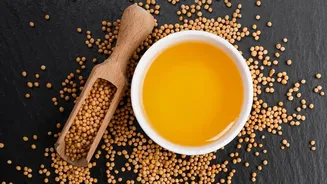
Here's where the battle gets interesting. While ghee boasts a consistently high smoke point of around 250°C, the performance of cold-pressed oils varies dramatically. Cold-pressed mustard oil and groundnut oil are also high-heat champions, with smoke points around 250°C and 230°C respectively. This makes them suitable for most Indian frying tasks. However, other popular choices like cold-pressed coconut oil and sesame oil have much lower smoke points, around 177°C. This makes them better suited for lower-temperature cooking like light sautéing, but not ideal for deep-frying. So, while 'cold-pressed' is a mark of quality, it doesn't automatically mean 'high-heat'.
Beyond Heat: Flavour and Nutrition
The choice isn't just about temperature. Ghee offers a rich, nutty flavour that's indispensable in sweets and dals. Cold-pressed oils bring their own unique personalities: mustard oil has a signature pungency essential for Bengali fish curries and Punjabi saag, while groundnut oil is more neutral, and coconut oil lends a sweet, coastal character. Nutritionally, it's a tie with different strengths. Ghee provides certain vitamins and beneficial fatty acids. Meanwhile, cold-pressed mustard oil is a rare plant-based source of omega-3s, groundnut oil is high in Vitamin E, and sesame oil contains unique antioxidants. Relying on just one type of fat means missing out on the benefits of the others.
The Verdict: A Place for Both in Your Pantry
The 'battle' between infused ghee and cold-pressed oils doesn't need a single winner. The smartest strategy for a modern Indian kitchen is to have an arsenal of fats and deploy them strategically. Use your plain or infused ghee for high-heat searing, deep-frying, and flavourful tadkas where its stability shines. Reserve cold-pressed groundnut and mustard oil for frying and everyday sabzis where their high smoke points and specific flavours are desired. Use delicate cold-pressed coconut and sesame oils for medium-to-low heat cooking, or as finishing oils and in dressings to preserve their nutrients and taste. This approach allows you to match the right fat to the right job, optimising for flavour, health, and cooking performance.