





A Blueprint For Balance
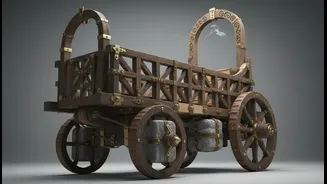
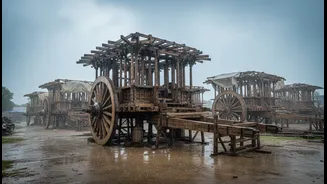
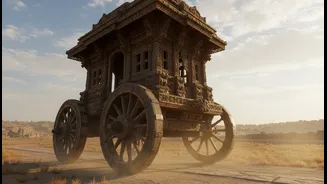
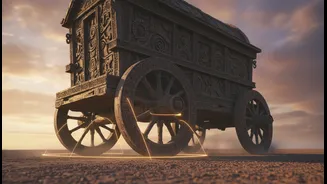
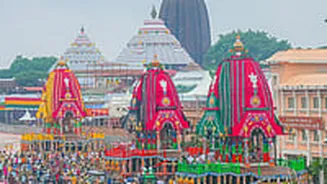
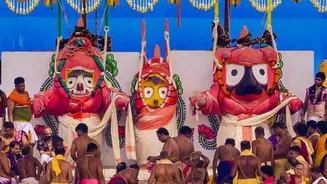
The stability of the three chariots—Nandighosha for Lord Jagannath, Taladhwaja for Lord Balabhadra, and Darpadalana for Devi Subhadra—begins with their very design. These are not just decorative floats; they are massive, meticulously engineered structures.
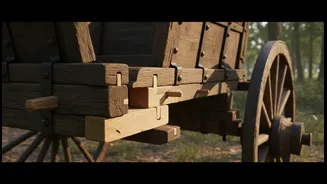
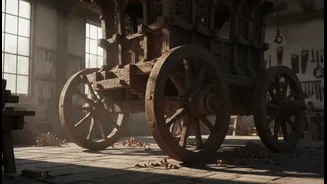
Nandighosha, the largest, stands about 45 feet tall with a square base of roughly 35x35 feet. The other two are slightly smaller. This wide, heavy base is the first clue to their stability. The construction, passed down through generations of carpenters known as Biswakarmas, uses specific woods like Phassi and Dhausa. The entire process is a tradition of precision, ensuring that the final structure is robust enough to withstand the immense forces it will encounter.
The Physics of a Low Centre of Gravity
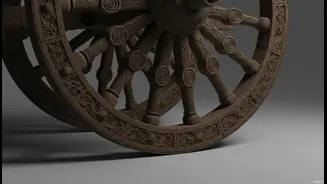
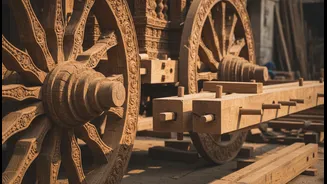
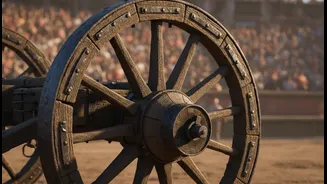
The single most important factor preventing the chariots from tilting is their extremely low centre of gravity. Think of a pyramid: wide and heavy at the bottom, light and narrow at the top. The chariots follow this exact principle. The base, including the massive wooden wheels and axles, forms the heaviest part of the structure. Lord Jagannath's Nandighosha has 16 wheels, Lord Balabhadra's Taladhwaja has 14, and Devi Subhadra's Darpadalana has 12. Each wheel has a diameter of about seven feet. This concentration of mass low to the ground means that a very large force would be required to tip the chariot over. The upper portions, including the decorative canopies, are significantly lighter, ensuring the overall balance is maintained even when the chariot is in motion.
Distributing the Load
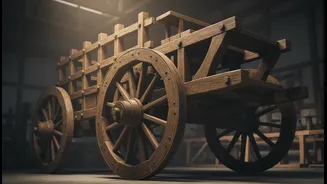
The sheer weight of these chariots is immense. Distributing this weight effectively is crucial for both movement and stability. The large number of broad wheels on each chariot spreads the load over a wider surface area of the Bada Danda, the Grand Road of Puri. This prevents any single point from being over-stressed and reduces the risk of a wheel sinking or breaking on uneven ground. The axles are also made of solid wood, which provides a degree of natural flexibility, acting as a primitive form of suspension. This allows the chariot to absorb minor bumps and dips in the road without transferring the shock violently to the main structure, further reducing the risk of instability.
The Human Element of Control
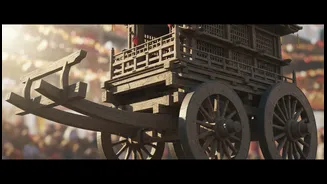
While the design is brilliant, the control exerted by the devotees and sevayats (servitors) is the final piece of the puzzle. The chariots are pulled by thousands of devotees using thick coir ropes. This distributed force ensures a slow, steady pull rather than a sudden jerk that could destabilize the structure. Furthermore, skilled servitors manage a traditional braking system. This system involves lowering large wooden logs in front of the wheels to slow down or halt the chariot's movement, especially at turns. The charioteer, or Sarathi, perched atop the chariot, directs these operations, ensuring the colossal structures navigate the path safely. This combination of collective force and guided control is a dynamic system of checks and balances that works in concert with the chariots' inherent physical stability.