


The Building Blocks: Amino Acids
First, a quick science lesson. Proteins are complex molecules essential for virtually everything our bodies do, from building muscle to creating enzymes and hormones. These proteins are made up of smaller units called amino acids. There are 20 different
amino acids, nine of which are called 'essential amino acids' because our bodies cannot produce them. We must get them from the food we eat. A food source that contains all nine of these essential amino acids in sufficient quantities is known as a 'complete protein'. Animal products like milk, eggs, and meat are typically complete proteins.
The Plant Protein Puzzle
Most plant-based foods, while rich in nutrients, are 'incomplete' proteins, meaning they are low in one or more of the essential amino acids. This specific amino acid that is lacking or present in the smallest amount is called the 'limiting amino acid' because it limits the body's ability to build its own proteins. For many health enthusiasts, especially in India where vegetarianism is widespread, this poses a challenge: how do you ensure you're getting high-quality, complete protein from plants alone?
A Perfect Partnership: Grains and Legumes
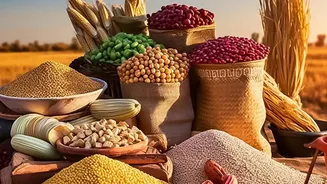
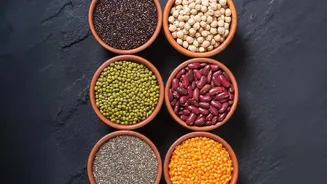
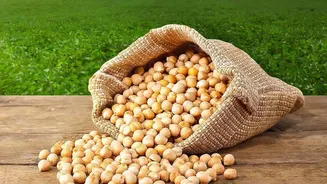
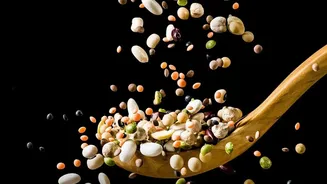
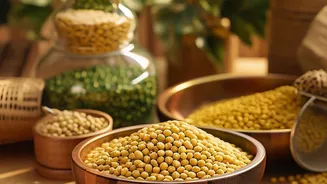
This is where the magic of food combining, or 'protein complementation', comes in. It turns out that different plant food groups have different limiting amino acids that perfectly complement each other. Cereal grains like rice and wheat are generally low in the essential amino acid lysine. On the other hand, legumes—a food group that includes all our dals, chickpeas, and beans—are rich in lysine but are typically low in the sulfur-containing amino acid methionine. When you eat them together, the strengths of one food make up for the weaknesses of the other. The lysine from the dal completes the protein in the rice, and the methionine from the rice completes the protein in the dal. Together, they provide all nine essential amino acids, creating a complete protein duo.
Decoding Protein Quality Scores
This improvement is scientifically measured using systems like the Protein Digestibility Corrected Amino Acid Score (PDCAAS). This score evaluates a protein's quality based on both its amino acid profile and its digestibility. A score of 1.0 is the highest possible, indicating that the protein provides 100% or more of the essential amino acids required by humans after accounting for how well the body can absorb it. While a single plant source like wheat might have a lower score on its own, a combined meal of cereal and legume has a significantly higher score, bringing it much closer to the perfect 1.0. This is because the combined amino acid profile is far more complete and balanced, enhancing its nutritional value.
Ancient Wisdom Meets Modern Science
The brilliant part is that this isn't a modern health hack; it's a practice deeply woven into the fabric of Indian cuisine for centuries. Our ancestors may not have known the terms 'lysine' or 'methionine', but they understood the nutritional synergy intuitively. This is why some of our most beloved and comforting meals are also perfect examples of complete protein pairings. Think about it: Dal Chawal: The quintessential Indian meal, pairing lentils with rice. Roti and Dal: Combining whole wheat flatbread with any lentil preparation. Rajma Chawal: A North Indian favourite of kidney beans served with rice. Idli/Dosa with Sambar: A South Indian staple where fermented rice and urad dal batter is paired with a lentil-based stew. * Khichdi: A one-pot meal of rice and moong dal, celebrated for being both nutritious and easy to digest.