




More Than a Moon Mission
Following the historic success of Chandrayaan-3, ISRO is setting its sights higher with Chandrayaan-4. The primary goal is ambitious: to land on the moon, collect surface and sub-surface samples, and return them safely to Earth. If successful, India will
join an exclusive club of nations—the US, Russia, and China—that have accomplished a lunar sample return. However, the real story of Chandrayaan-4 isn't just about bringing back a piece of the moon. It's about mastering the incredibly complex process required to do so, a process that involves multiple spacecraft working in perfect harmony millions of kilometres from home. The mission is designed as a crucial technology demonstrator for India's future space ambitions.
The Delicate Dance of Space Docking
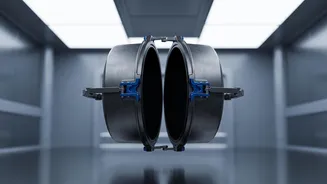
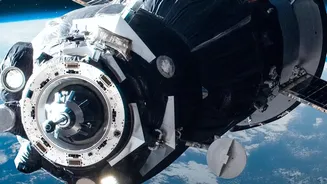
At the heart of Chandrayaan-4's complexity is automated rendezvous and docking. Imagine trying to thread a needle where both the needle and the thread are moving at thousands of kilometres per hour, without direct human control. That gives you a sense of the challenge. Space docking is the process where two separate spacecraft are precisely manoeuvred to meet and join together in orbit. This isn't just a gentle nudge; it's a high-stakes, autonomous operation that relies on flawless navigation, communication, and robotic systems to align and form a secure connection. There is absolutely no margin for error. Mastering this capability is not optional for nations with serious spacefaring goals; it's fundamental.
How Chandrayaan-4 Will Do It
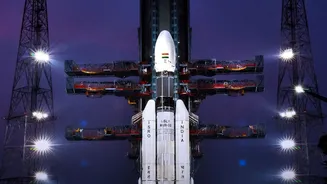
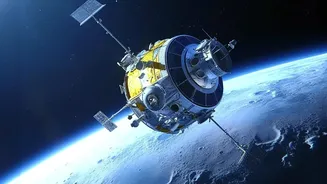
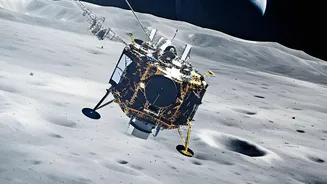
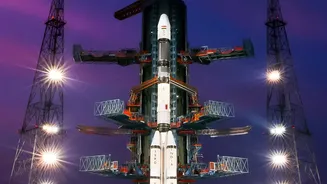
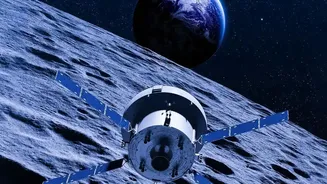
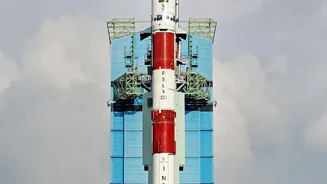
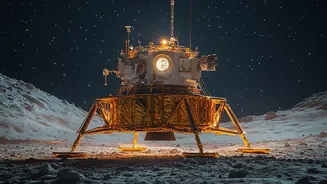
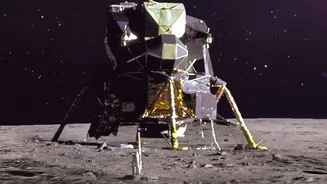
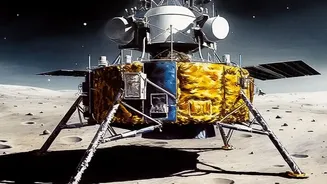
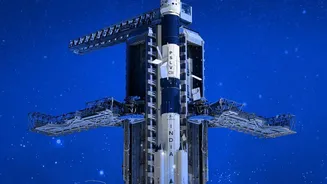
The mission's architecture is a multi-act play. Due to its massive weight, the entire system will be launched in two parts using LVM3 rockets. These parts will first dock in Earth orbit before proceeding to the moon. Once in lunar orbit, a lander module will descend to the surface. After collecting up to 3 kg of lunar soil and rock, a smaller 'ascender' module will launch from the moon's surface, using the lander as a launchpad. This is where the main event happens: the ascender must autonomously find, approach, and dock with the transfer module waiting in lunar orbit. Once docked, the samples are transferred, and the transfer module begins its long journey back to Earth, eventually releasing a re-entry capsule to deliver its precious cargo.
Unlocking India's Future in Space
Proving this docking capability is the key that unlocks the door to India's grandest space ambitions. Prime Minister Narendra Modi has laid out a vision that includes establishing the Bharatiya Antariksha Station (BAS) by 2035 and landing an Indian astronaut on the moon by 2040. Neither of these is possible without mastering automated docking. A space station, by its very nature, is modular and assembled piece by piece in orbit. The BAS will be constructed from several modules launched separately and joined together in space. Docking is essential for this construction and for future crew and supply missions.
A Stepping Stone for Gaganyaan
Beyond the space station, docking capability is critical for expanding the scope of the Gaganyaan human spaceflight programme. While initial missions will be direct flights, more complex future missions, such as long-duration stays in orbit or journeys to the moon, will depend on the ability to dock with other spacecraft. This could be for transferring crew, refuelling, or connecting to larger habitation modules. ISRO has already begun testing this technology with its Space Docking Experiment (SPADEX), a precursor mission designed to validate the systems that Chandrayaan-4 will use. The success of these experiments proves India's readiness to take on these next-level challenges and become a self-reliant space power.